Exhibitions
Santiago Yahuarcani and the Amazonian memory
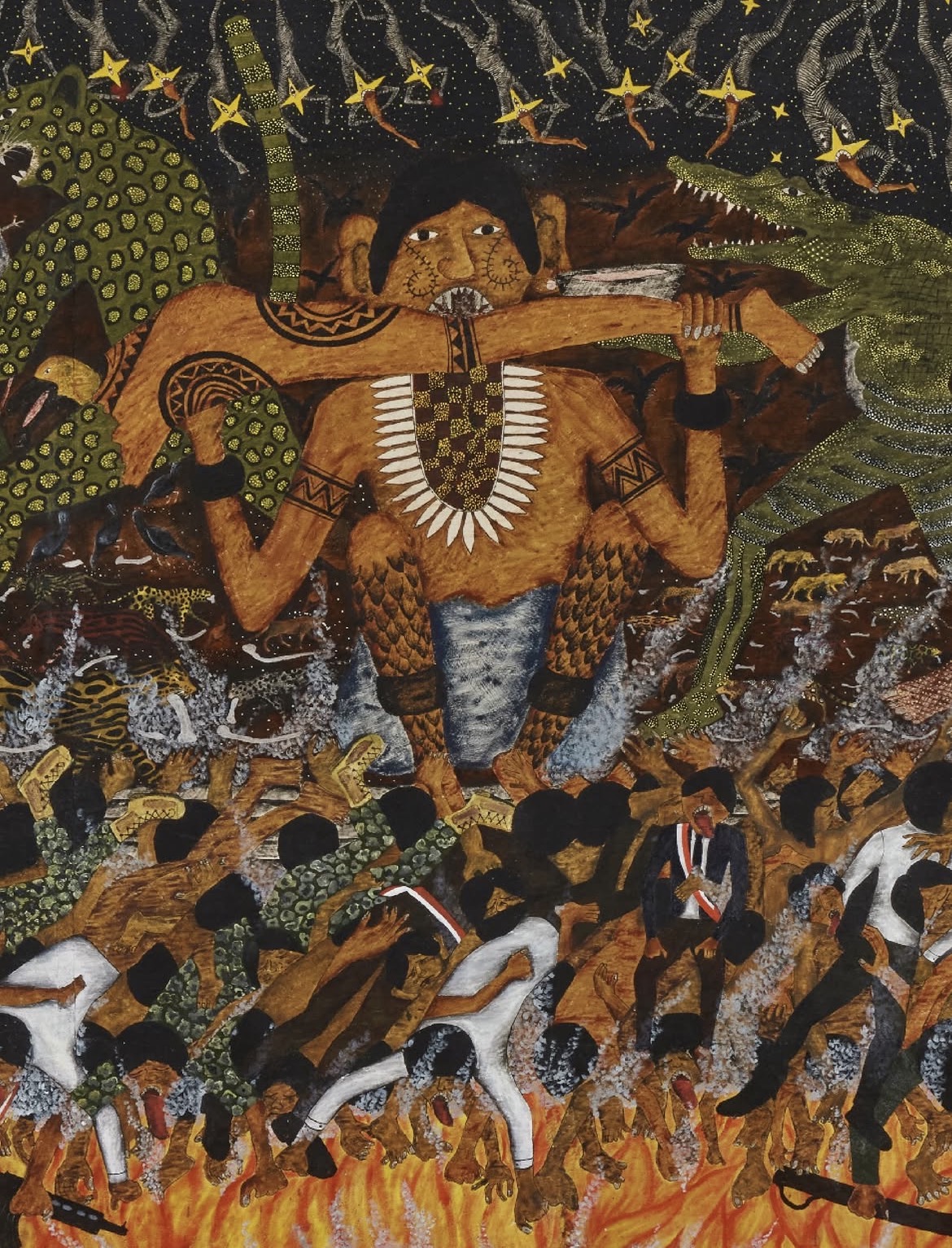
The most recent exhibition dedicated to Santiago Yahuarcani (Pebas, Peru, 1960), curated by Amanda Carneiro at the São Paulo Museum of Art Assis Chateaubriand, brings together nearly thirty paintings—including previously unseen works—and confirms the artist's growing international recognition. This momentum intensified after his participation in the 60th Venice Biennale, where his work captured the attention of both the public and art critics.
Originally from Pebas, in the Peruvian Amazon, Yahuarcani belongs to the Uitoto people. His painting practice is deeply rooted in the oral traditions, cosmology, and visual culture of his community. More than an aesthetic exploration, his work constitutes a form of knowledge: a space where family memory, history, and imagination converge to give rise to new ways of narrating Indigenous experiences.
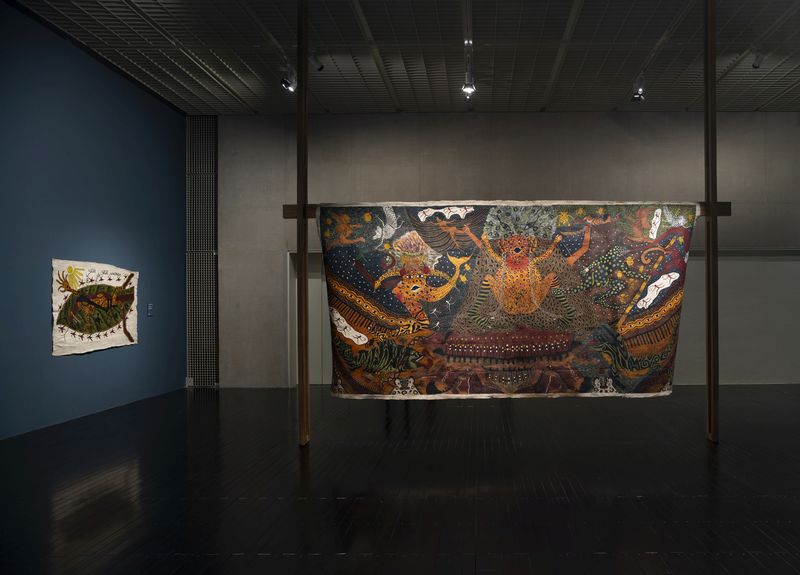
One of the central themes of her work is the story of her own family, marked by displacement, violence, and survival during the rubber boom in the Amazon. Far from being presented as a linear narrative, these experiences emerge in her paintings as dense, symbolically charged images that function simultaneously as an archive and an act of resistance. In them, Yahuarcani reconfigures history from a situated perspective, challenging hegemonic narratives.
The use of traditional materials—such as natural pigments and llanchama, a fabric made from the bark of Amazonian trees—reinforces her connection to the land and underscores the political dimension of her practice. The very materiality of the work becomes a testament to a living relationship with the rainforest, far removed from the extractive practices that have historically affected the region.
Organized in collaboration with the Museo Universitario del Chopo (Mexico City) and The Whitworth (Manchester), the exhibition, on view until August 2, not only expands the artist's reach but also places Indigenous narratives at the center of contemporary debate as legitimate and urgent forms of knowledge production. In this sense, Yahuarcani's work not only engages with global contemporary art but also challenges it, proposing alternative ways of seeing, remembering, and telling stories.

You may be
interested
...