Exhibitions
Constellations in Motion: Rewriting Latin American Art from the FEMSA Collection
In the context of its 50th anniversary, the FEMSA Collection presents Constellations and Drifts: Latin American Art from the FEMSA Collection , an exhibition that deliberately departs from traditional chronological models to propose a critical reinterpretation of one of the most significant collections of 20th- and 21st-century Latin American art. On view at the Museum of Contemporary Art of Monterrey from March 20 to August 9, 2026, the exhibition not only celebrates an institutional milestone but also proposes an epistemological repositioning of the very concept of a collection.
Far from being organized as a linear archive of artistic progress, the exhibition adopts the “constellations” model, a curatorial strategy that prioritizes the relationship, friction, and simultaneity between works from different historical and geographical contexts. This approach, developed by curators Eugenia Braniff, Paulina Bravo, and Beto Díaz Suárez—from the FEMSA Collection—along with independent curator Adriana Melchor, suggests that Latin American art cannot be understood as a single narrative, but rather as a dynamic network of interconnections in constant reconfiguration.

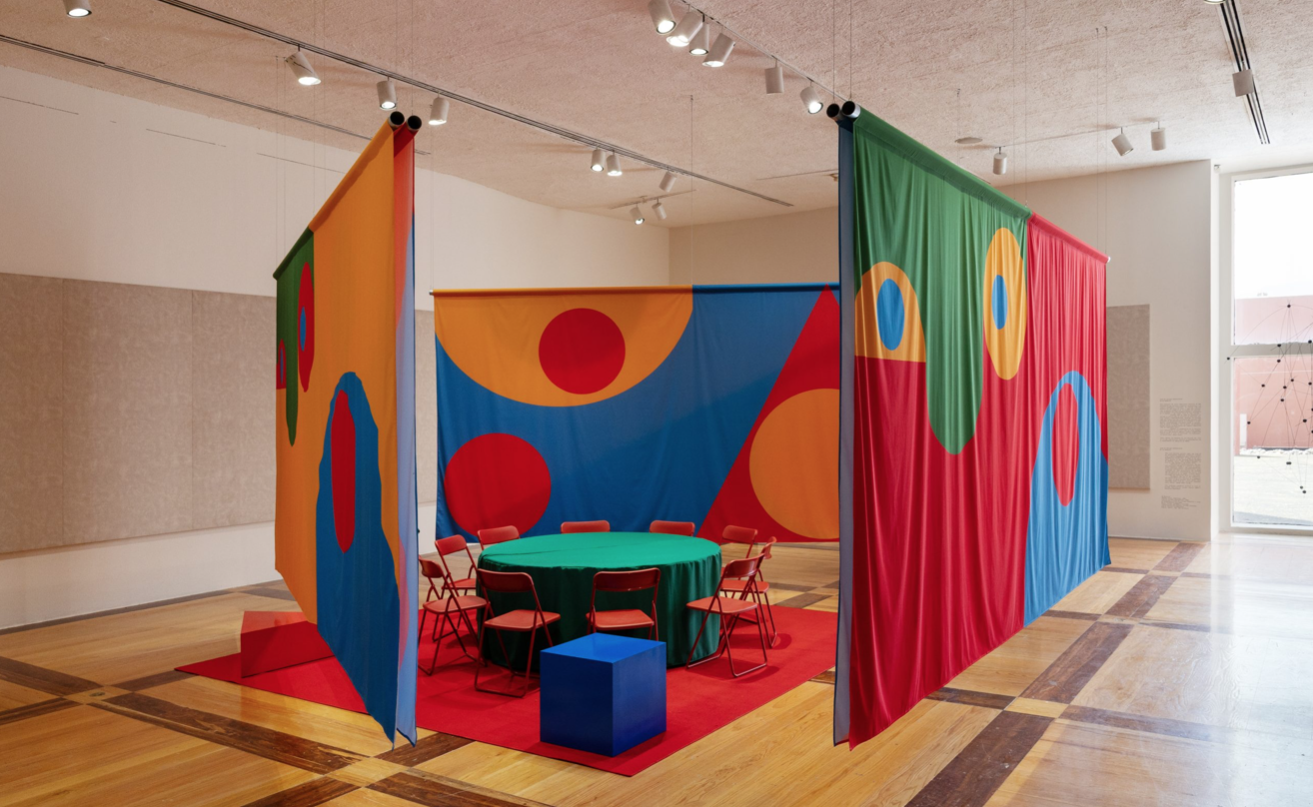
Exhibition view of Constellations and Drifts: Latin American Art from the FEMSA Collection. Museum of Contemporary Art of Monterrey, 2026. Courtesy of the FEMSA Collection. Photograph by Michelle Lartigue.
The exhibition is structured around five lines of inquiry—Territories, Colonial Structures, Debating Abstraction: Geometry and Form in Latin America, Alchemy, and Identities—which function as conceptual cores rather than closed categories. These constellations allow for unexpected dialogues between works and artists, challenging established hierarchies and proposing new critical genealogies.
Featuring 174 works by more than 100 Latin American artists, this is the most comprehensive presentation of the collection held in Mexico to date. The selection includes key figures such as Jesús Rafael Soto, Rufino Tamayo, María Izquierdo, Diego Rivera, and Joaquín Torres-García, whose works engage in dialogue with those of artists like Fanny Sanín, Helen Escobedo, and Gego, as well as with recent acquisitions that expand the collection's reach into contemporary practices.
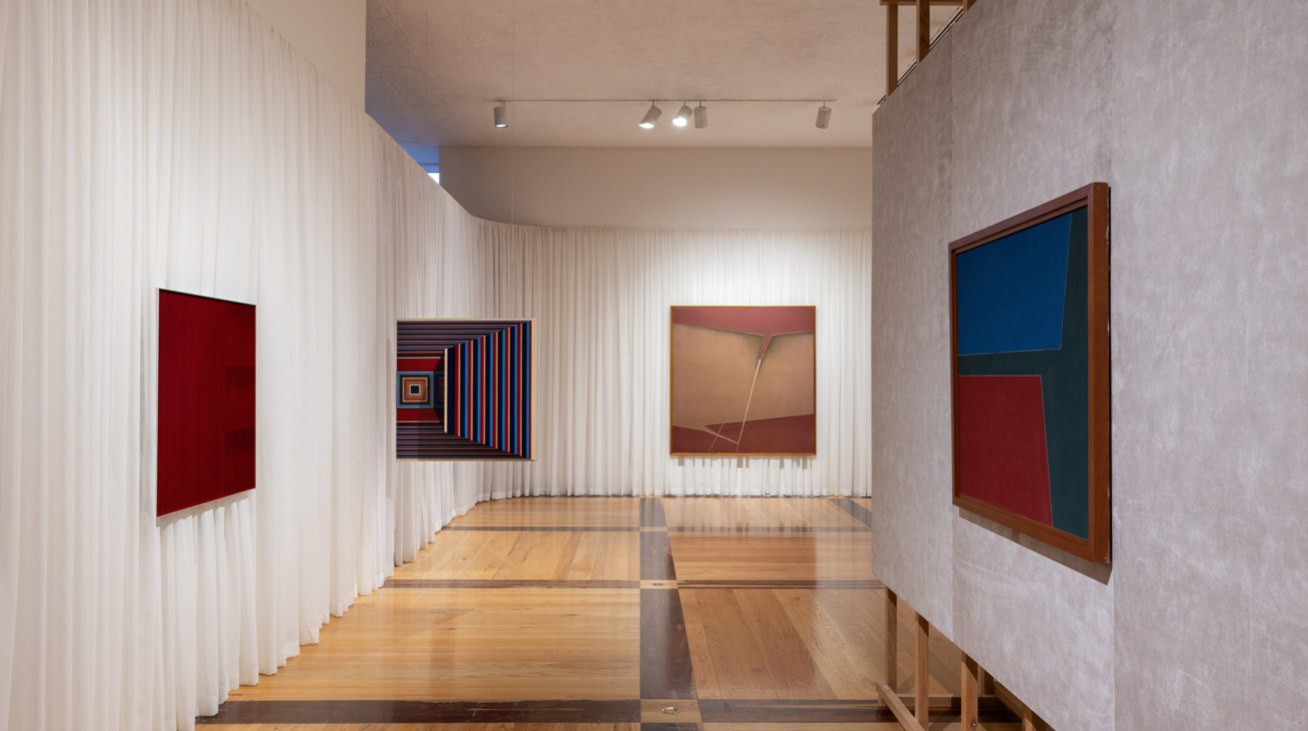
Exhibition view of Constellations and Drifts: Latin American Art from the FEMSA Collection. Museum of Contemporary Art of Monterrey, 2026. Courtesy of the FEMSA Collection. Photograph by Michelle Lartigue.
In this sense, the exhibition not only revisits the past but also projects the future of the collection, questioning the criteria of representation and legitimation in Latin American art. As Beto Díaz Suárez points out, the constellation model allows us to understand that “there is no single history of Latin American art,” but rather multiple narratives that intersect, create tension, and are reinterpreted.



You may be
interested
...