Exhibitions
Mechanical gardens: fictions of the body in the age of false progress
In a present marked by the insistent promise of progress—technological, economic, systemic—a critical sensibility emerges, almost as an involuntary reflex, that distrusts its benefits. Mechanical Gardens at the Enlace Gallery in Lima is situated precisely on that threshold: that of regressive progress, the kind that privileges a few while producing new forms of precarity, control, and alienation. Far from offering a direct denunciation, the exhibition articulates a more ambiguous and suggestive response: a dreamlike, feverish atmosphere where body and object intertwine until they become indistinguishable.
The exhibition, on view until April 7, proposes a hybrid terrain where human, animal, and plant cease to be stable categories. Instead, a constantly mutating ecosystem unfolds, where forms reorganize themselves to explore alternative modes of existence. In this context, the works of Carlos Revilla, Héctor Delgado, and James Jessiman not only engage in dialogue with one another but also collectively construct a disquieting cartography of the present.
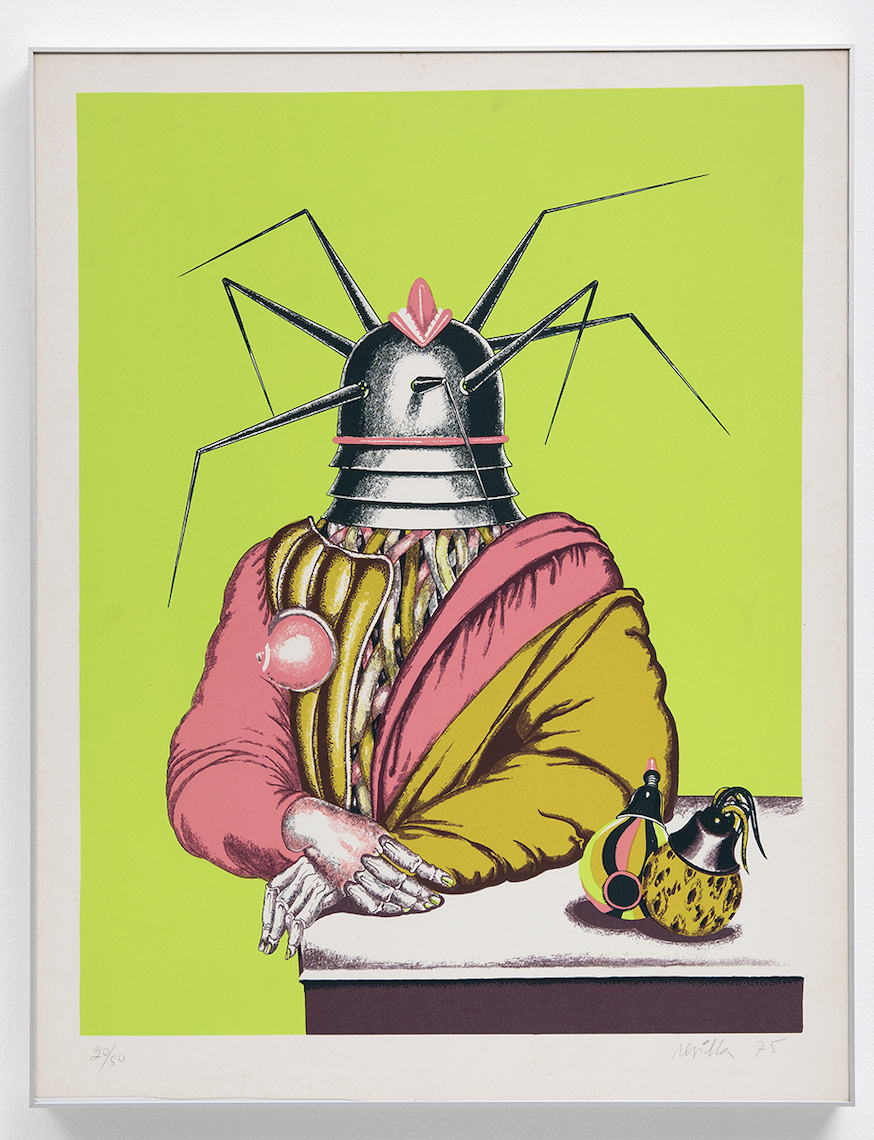
In the work of Carlos Revilla, the viewer enters a kind of sensory laboratory where body and machine coexist on the same plane of intensity. Formed under the influence of postwar European surrealism, Revilla developed an acerbic and skeptical visual language, imbued with an erotic charge that subverts the technological promises of his time. His figures—composed of movable limbs, prostheses, and mechanical structures—evoke both the tradition of the surrealist automaton and an anticipatory critique of the fragmentation of the modern subject.
However, rather than denouncing, Revilla seems to suggest: sensuality seeps into rigidity, the organic bursts into the artificial, and desire persists even in contexts of control. His compositions thus reveal an unresolved tension between fascination and rejection of the machine, where the body appears simultaneously empowered and disarticulated.
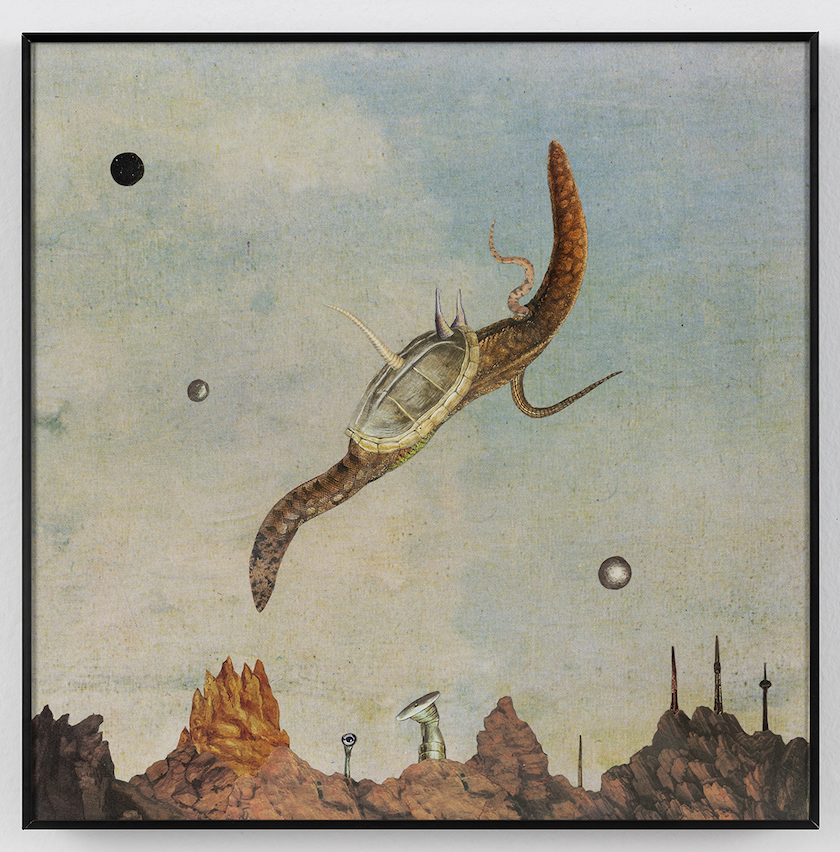
While in Revilla the crisis manifests itself in the body's interiority, in Héctor Delgado the collapse becomes landscape. His collages construct post-catastrophe scenarios: arid, almost sterile territories inhabited by mutant creatures that seem to emerge from the remains of an exhausted world. However, far from settling into an aesthetic of chaos, Delgado proposes alternative systems of organization.
Each piece functions as an autonomous micro-ecosystem, governed by internal logics where the marginal takes center stage. The impure, the residual, the non-human cease to be signs of degradation and become active agents of recomposition. In this sense, her work can be read as a radical ecological speculation: an imagining of futures where life persists not despite waste, but rather because of it.
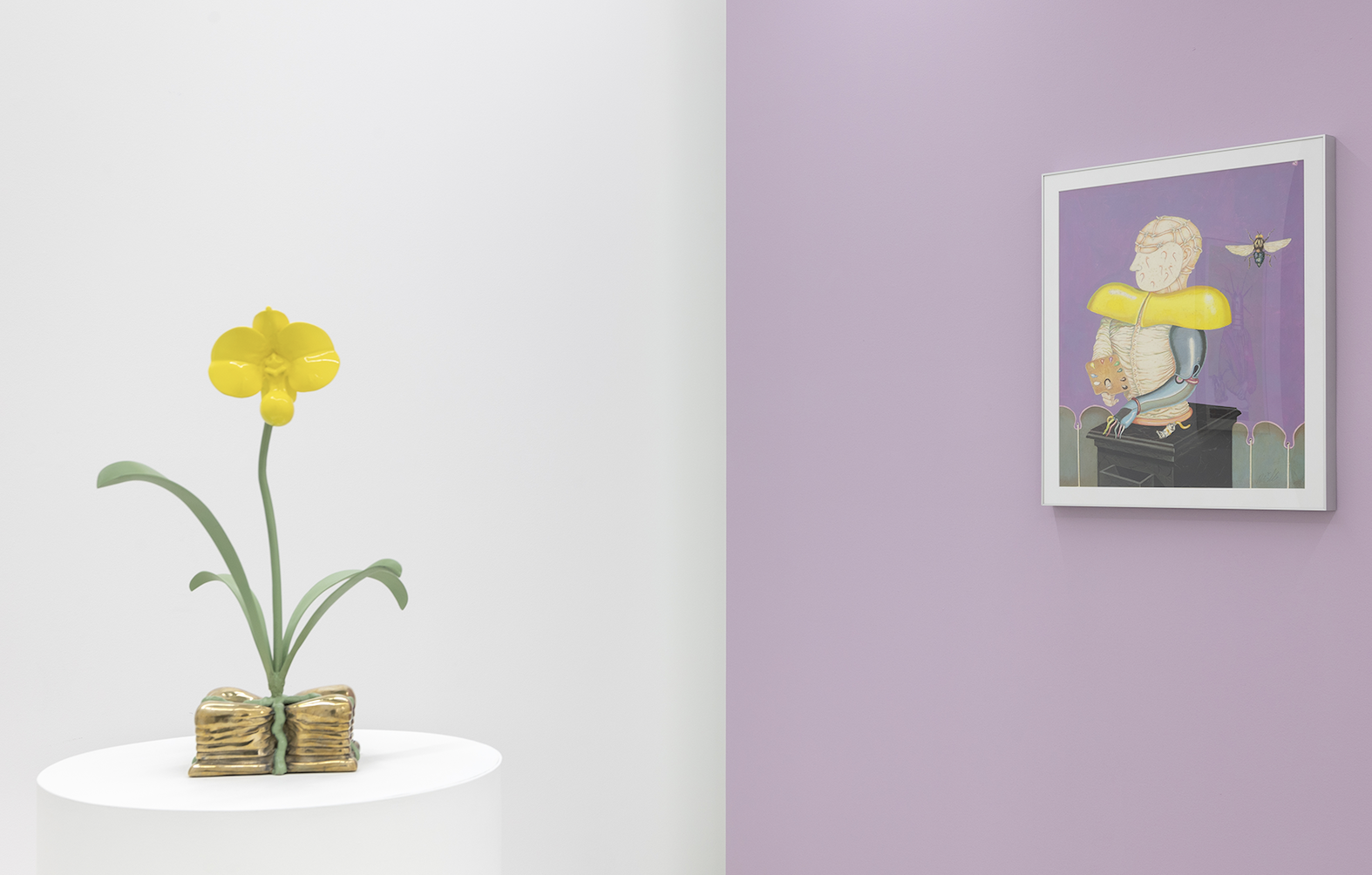
James Jessiman, for his part, introduces a different dimension, linked to displacement, research, and the collection of narratives. His bronze sculptures—where batteries and orchids intertwine, forming improbable circuits—condense a series of mythologies gathered during his travels through Peru. In contrast to the extractive logics associated with power, Jessiman proposes artifacts that operate from an affective perspective.
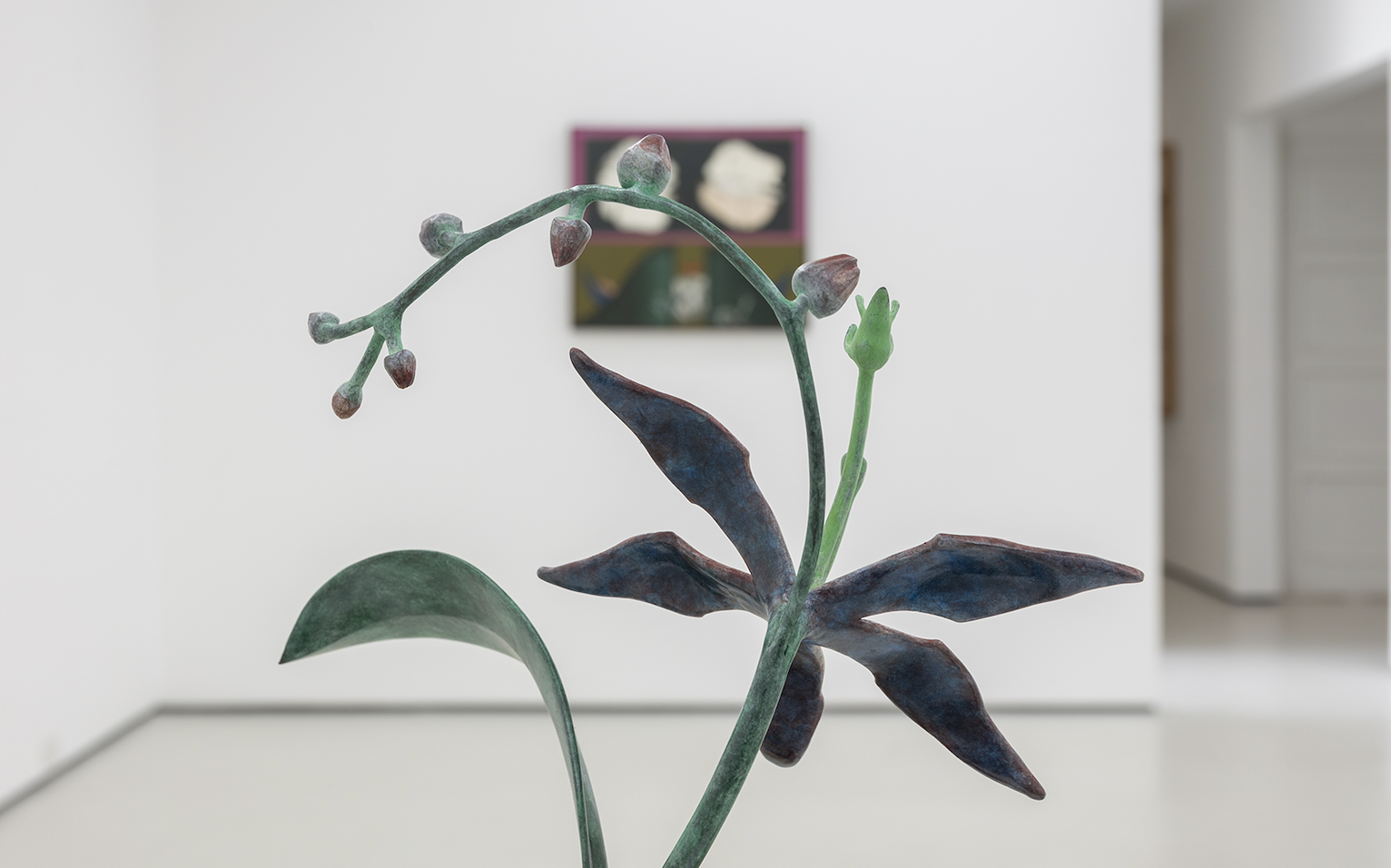
In her pieces, the machine ceases to be an instrument of domination and becomes a sensitive device: motors that operate based on desire, transmitters that capture emotional signals. By blurring the boundary between tool and organism, Jessiman opens a space where technology no longer opposes life, but rather integrates into it through a relational logic.
Overall, Mechanical Gardens does not present a simplistic opposition between nature and technology, but rather explores the gray areas where both contaminate each other. The exhibition thus offers a critique of the linear notion of progress, but also an invitation to consider other forms of coexistence.



You may be
interested
...