Exhibitions
Before the law of the gaze: Lluís Hortalà at the CGAC
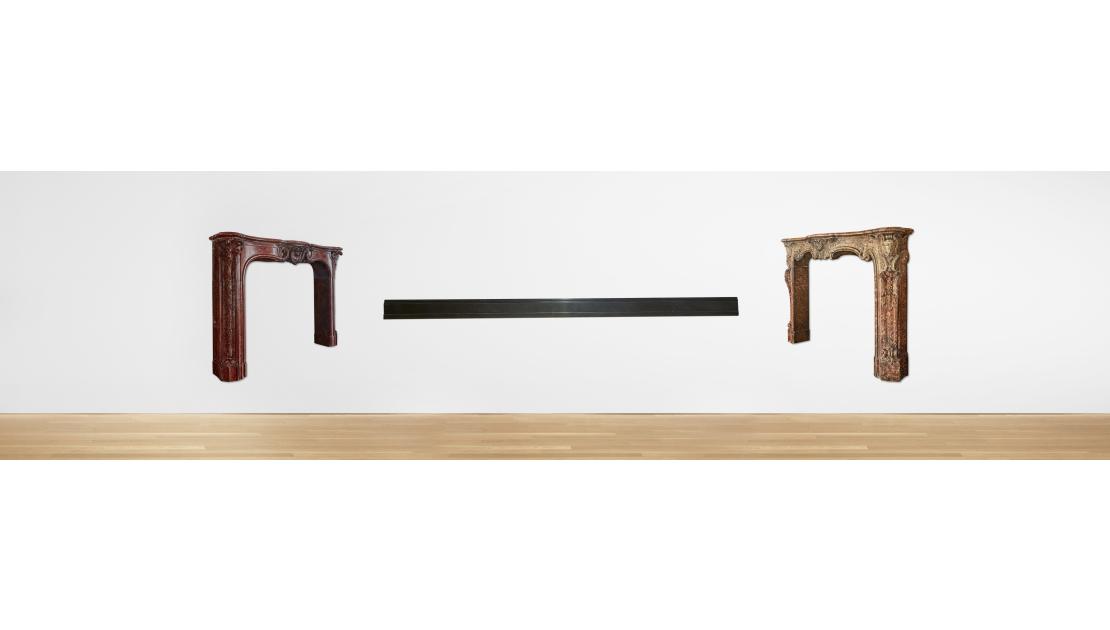
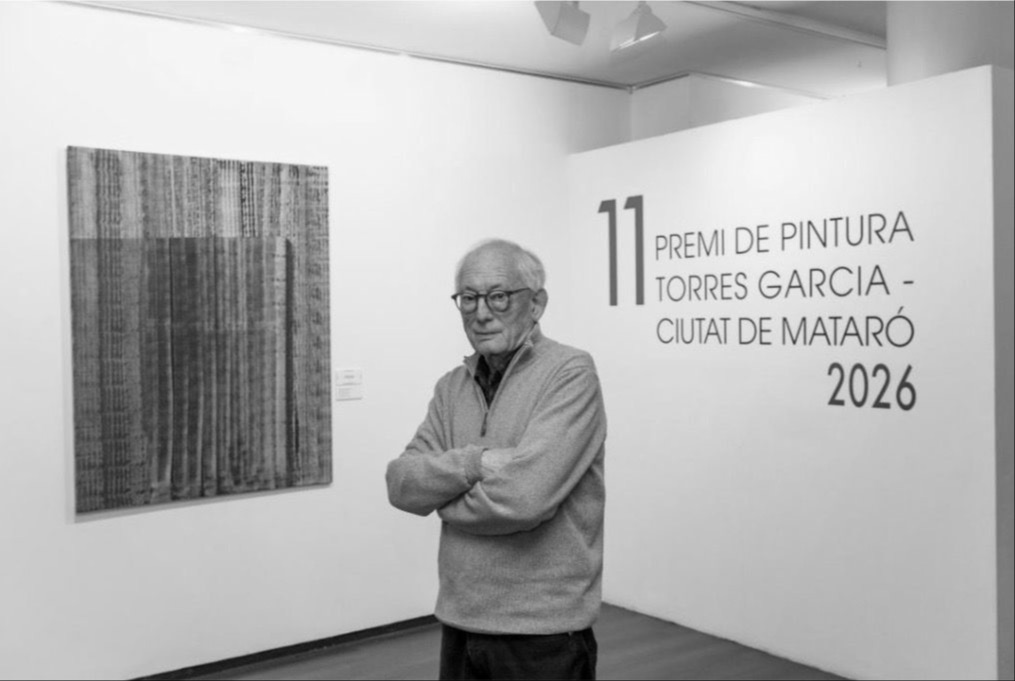
The Galician Center for Contemporary Art is hosting Ante a Lei , the new exhibition by Catalan artist Lluís Hortalà, a show that brings together his most recent works and can be visited in Santiago de Compostela until May 31. The exhibition was presented by the Director General of Culture, Anxo M. Lorenzo, who highlighted its relevance within the regional program As exposicións de 2026 (Exhibitions of 2026 ), one of the cultural pillars linked to the Galicia Calidade brand.
Born in Olot (Girona) in 1959, Hortalà has developed a unique career based on questioning the way we see. His work delves into trompe l'oeil with almost obsessive precision: marbles, veins, sheens, and stone surfaces are recreated with such fidelity that the painting seems to transcend the visual, activating the viewer's tactile memory. The cold density of the stone, its polished or rough texture, emerges on the canvas as a convincing illusion. At first glance, one might think that everything rests on technical skill—impeccable, meticulous—however, beneath this virtuoso surface lies a complex network of meanings.
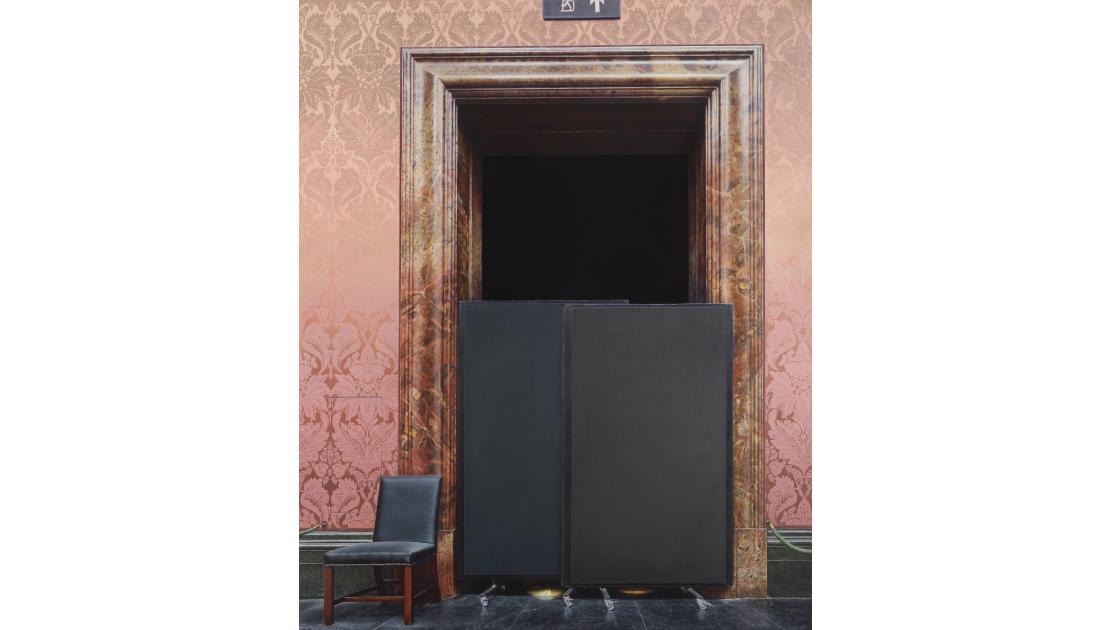
Each work functions as a narrative device that challenges history, especially the history of art and culture understood as systems of legitimation. The exhibition's title explicitly alludes to Franz Kafka's famous story Before the Law , one of the author's most widely read texts, along with The Metamorphosis (also known as The Transformation ). From this literary reference, Hortalà activates a reflection on the tension between access and prohibition, between the visible and the forbidden. The door that never quite opens in Kafka's universe finds its visual counterpart here in walls, thresholds, and architectural structures that promise an entrance that may never materialize.
Curated by Santiago Olmo, the exhibition unfolds as a journey through the shifting laws of taste. The itinerary begins with a dialogue between Rococo and Neoclassical fireplaces, whose ornamental profiles symbolically anticipate the silhouette of the guillotine, evoking the life-or-death trials of the French Revolution. Later, the gaze shifts to the fabric-covered walls, doors, and rooms of major European museums, such as the Prado Museum and the National Gallery. In Hortalà's interpretation, these institutions become veritable cultural tribunals from which not only art is consecrated, but also the national narratives that underpin it.
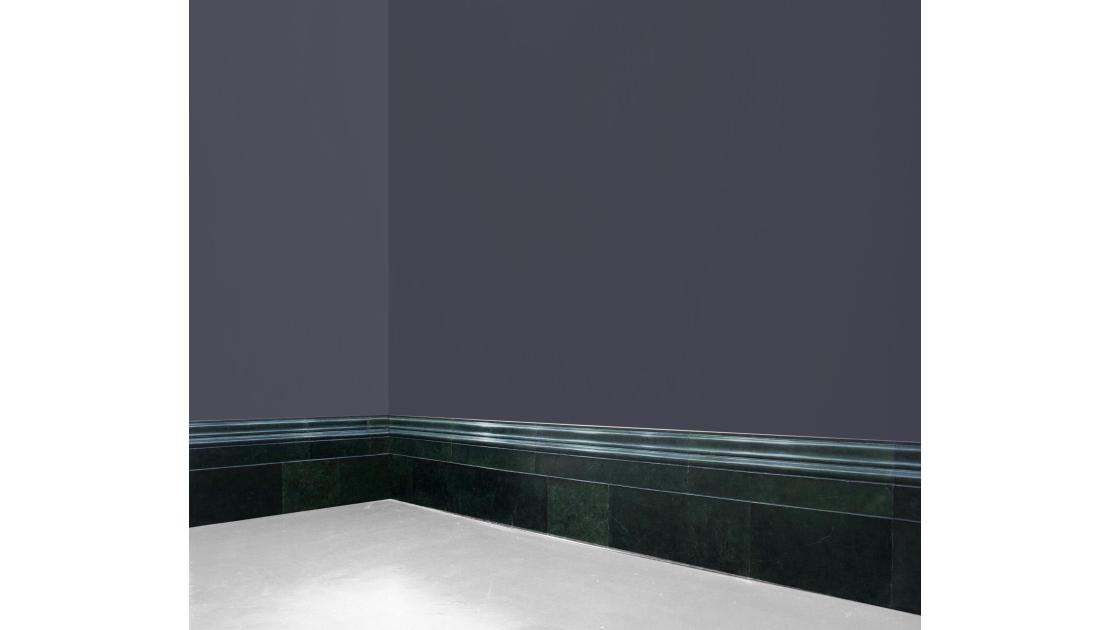
The installation, conceived in chapters, links each section to the next, creating a chronological journey that invites leisurely immersion. Visitors move through a space where every detail—every painted vein, every simulated gleam—functions as a metaphor for the power structures that regulate visibility and recognition. Among the exhibited pieces are several works created specifically for the CGAC, reinforcing the dialogue between the artist and the institutional context that hosts him.


You may be
interested
...