interviews
Josep Fèlix Bentz: “We grow without losing our essence”
“The entire journey responds to a very clear idea: to return the Circle to its rightful place within the cultural life of Barcelona.”
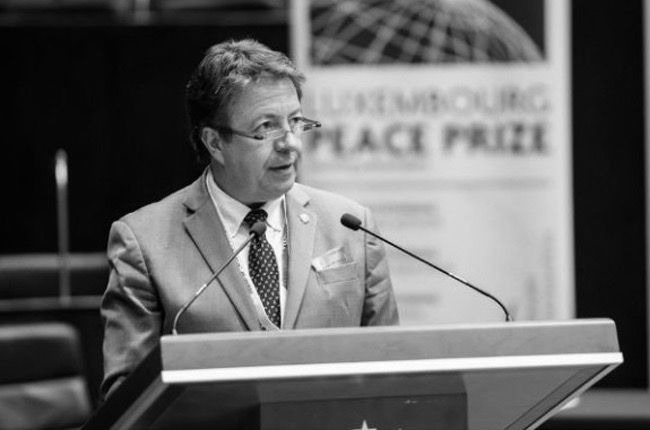
Josep Fèlix Bentz is the current president of the Reial Cercle Artístic, one of the most historic cultural institutions in Barcelona, founded in 1881. Linked to the entity also by family tradition, he assumed the presidency in 2009, after having joined the board on the occasion of its 125th anniversary.
Since then, he has led a profound structural, economic and cultural transformation of the Circle: the recovery of the building's spaces, a comprehensive renovation that has exceeded eight million euros, the revitalization of the artistic programming and international projection through major exhibitions and institutional alliances.
He is also one of the promoters of the Palau Martorell project, conceived as a new reference center for international exhibitions in Barcelona.
Interview with Fèlix Bentz, president of the Real Cercle Artístic
Revitalizing a historic institution and projecting it into the future
Since 2009, the president of the Royal Artistic Circle has led a profound transformation of the entity, both in the cultural and structural and institutional spheres. What began as a one-off collaboration in the celebration of the 125th anniversary has become a stage of almost two decades marked by revitalization, openness and international ambition.
“The Circle was home”
The connection with the Circle goes back a long way. “My grandfather was one of the first members; my mother was also a member, as were my sisters. For me, the Circle was home.”
In 2006, President Abelló asked him to join the 125th anniversary committee. He was the youngest of the group, but that experience—organizing activities with few resources but a lot of imagination—marked his active return to the organization. Shortly after, he joined the board, assumed the vice presidency, and, following Abelló's sudden death in 2008, assumed the acting presidency. In 2009, after elections were called, he officially began his term.
The challenge: rescuing the Circle of Anonymity
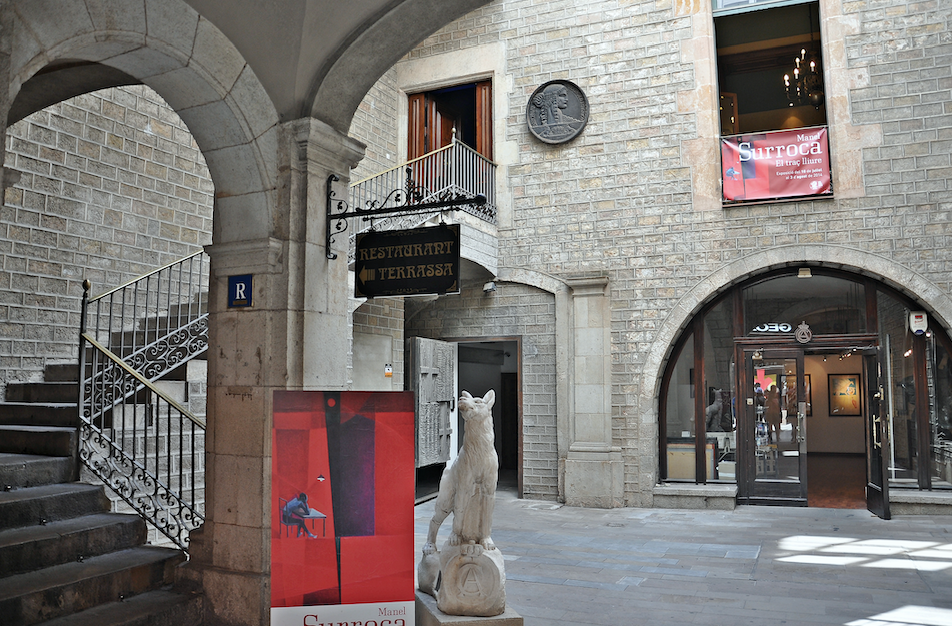
When he took over as president, the situation was delicate. The organization was going through financial difficulties and had lost its presence in Barcelona's cultural life.
“The objective was clear: to revitalize the Circle and give it back its visibility.”
The task began from within: stabilizing management, defining a coherent project and recovering institutional self-esteem. From there, work was done to reposition it in the city, reinforcing its foundations —the visual arts: painting, sculpture, drawing— but also expanding the offer towards music, poetry and cinema. The Cineclub, which celebrates its fifteenth anniversary this year, is an example.
The will was clear: to maintain the historical essence of the Circle —the same one that figures such as Ramon Casas or Santiago Rusiñol had frequented— but to adapt it to the present.
Recovering the house: a structural transformation
One of the bravest decisions was to recover the spaces in the building, many of which were rented to third parties. Those leases guaranteed fixed income, but limited the capacity for cultural activity.
“If we wanted to grow, we had to get the house back.”
Added to this situation was the need to update the building —founded in 1881— to current regulations. The result has been a comprehensive remodeling carried out in phases, with an investment of over eight million euros, mainly undertaken with own resources and external financing.
The transformation, therefore, has not only been cultural but also architectural, administrative and economic.
The restaurant as a strategic lever
A turning point came with the renovation of the restaurant. The decision to open it to the general public allowed it to attract a solvent operator and turn it into a key asset.
“Many partnerships are born around a table,” he says.
The restaurant has become a meeting space and a fundamental source of income to cover the credits derived from the renovation.
Weaving a network: from invisibility to cultural centrality
In the institutional sphere, the relationship with the administrations was initially almost non-existent. Sustained work was begun to establish bridges with the City Council, the Generalitat and other organizations, as well as with private entities.
The incorporation into Esport Cultura Barcelona symbolizes this return to the decision-making and relationship spaces of the city. “It's not just about doing things, but doing them with quality and ambition.”
Today, the Cercle is a recognized player in the Barcelona cultural scene.
The international leap: from the Cercle to the Palau Martorell
One of the most ambitious strategic projects has been the involvement in the Palau Martorell, conceived as a stable space for major international exhibitions.
The seed dates back to an exhibition dedicated to Albrecht Dürer, which highlighted the limitations of the Circle's space. Later, the exhibition dedicated to MC Escher would arrive at the Maritime Museum, already at the end of the pandemic, with notable success.
The conclusion was clear: a dedicated space was needed to consolidate a stable project of major exhibitions. The Palau Martorell represents this new stage.
Building prestige with rigor
From the very beginning, the guideline has been clear: excellence and coherence.
“The big names have to trust you.”
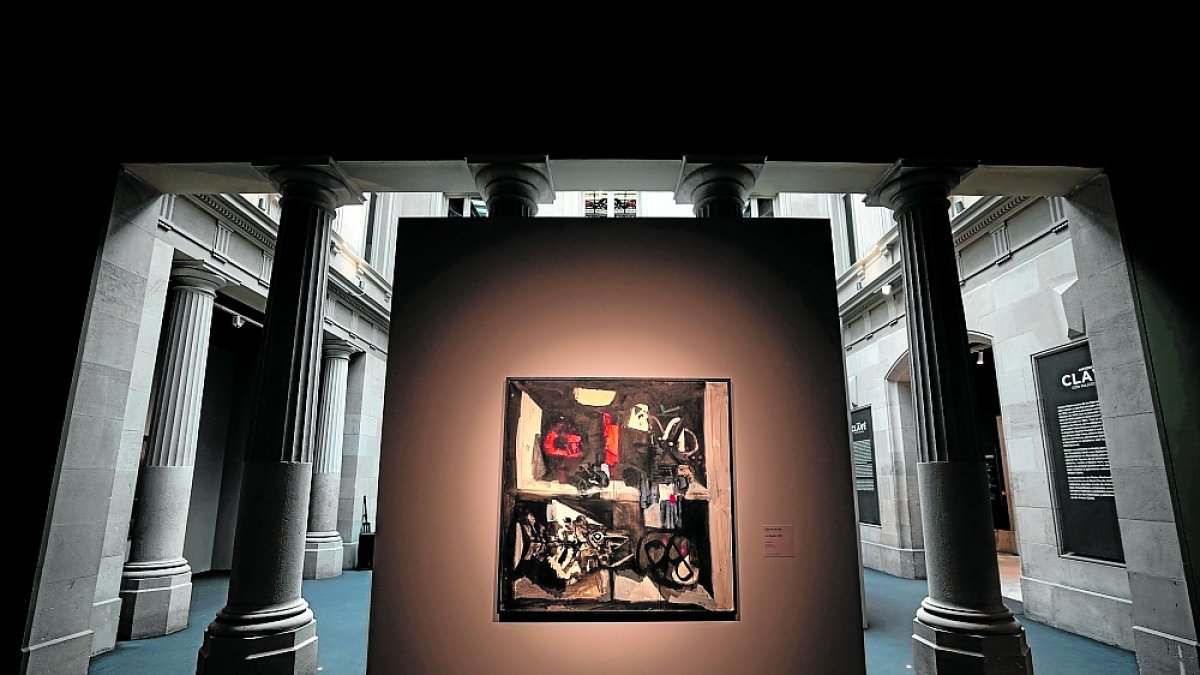
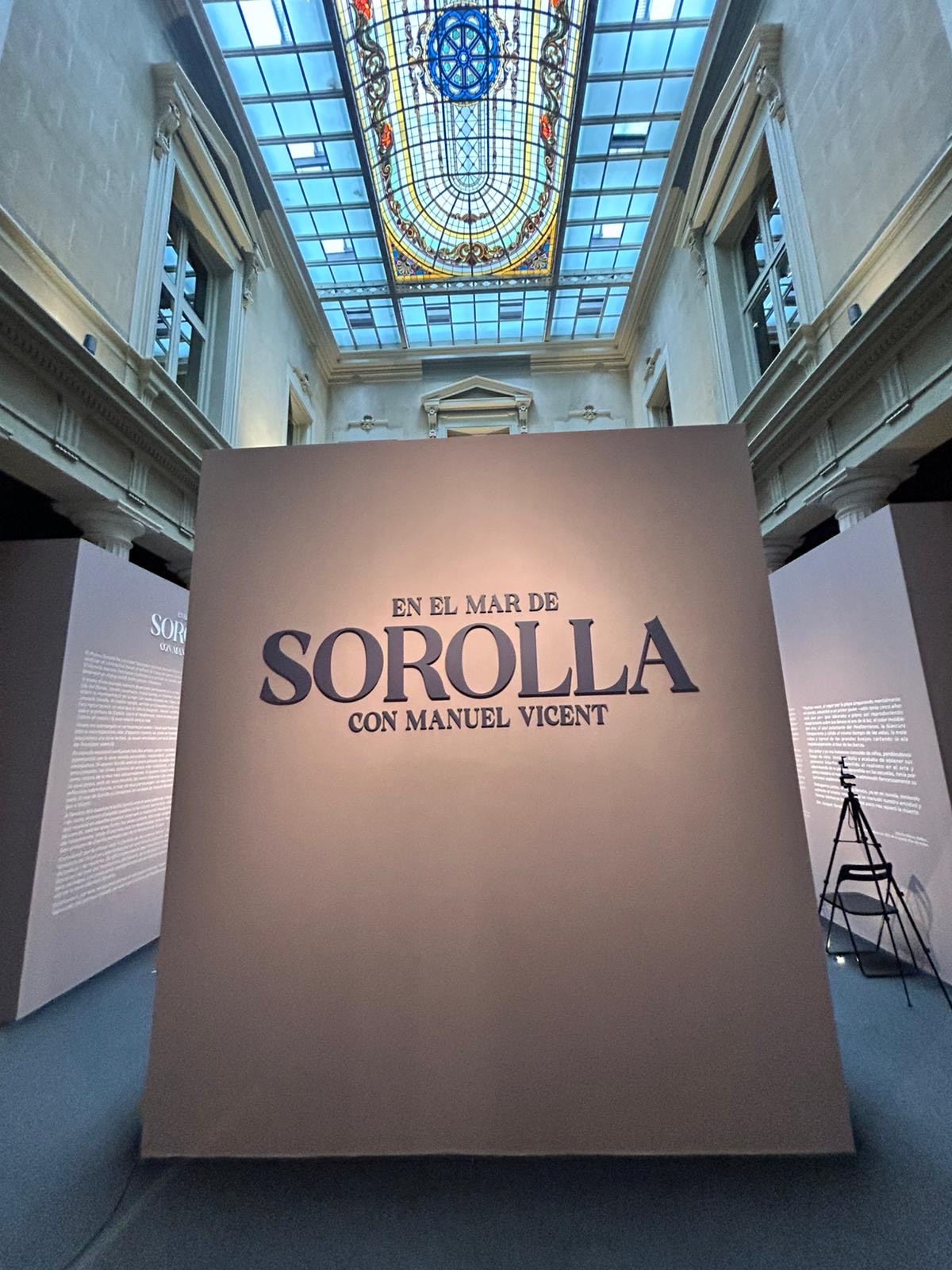
The exhibitions have been developed in official collaboration with foundations and committees of artists such as Marc Chagall, Alphonse Mucha, Antoni Clavé or Joaquín Sorolla, working with archives and reference institutions.
Museography is conceived as an immersive experience: specific scenography, chromatic study of walls, custom-designed lighting and high-level technical production. Each exhibition has its own identity.
Build public loyalty and regenerate the environment
The model is based on constant renewal. Unlike a museum with a permanent collection, here everything changes every four or five months: content, story, shop, merchandising.
The project has a team of around ninety professionals and has managed to build loyalty among the local public, while attracting international visitors. Exhibitions such as Sorolla's, with 120,000 visitors, have also had a positive impact on the urban environment.
The expansion with a new space of 500 square meters —with offices, cafeteria, bookstore and event hall— allows us to strengthen the community dimension and open new lines such as corporate events.
Organic and transversal growth
In parallel, the Circle has promoted its own orchestra, which is now self-sustainable, and has established collaborations with festivals such as the International Fantastic Film Festival of Catalonia and the Girona Film Festival.
The philosophy is clear: grow without losing the essence. Open new lines, establish alliances and strengthen the sustainability of the project while maintaining rigor and excellence.
Looking to the future
After almost two decades at the helm, the balance is that of a profound transformation: a historic institution that has managed to modernize itself, regain centrality and project itself internationally.
“The entire journey —the reforms, the alliances, the exhibitions— responds to a very clear idea: to return the Cercle to its rightful place in Barcelona's cultural life. And to do so with ambition, but also with coherence and respect for its history.”

You may be
interested
...