Exhibitions
Alberto Greco: the artist who designated life as a work of art
The Museo Nacional Centro de Arte Reina Sofía is dedicating an ambitious retrospective to the work of Alberto Greco, a pivotal figure in the transition from modern to contemporary art and a key artist for understanding the conceptual shifts of the second half of the 20th century. The museum holds a significant collection of pieces by the Argentine artist, whose importance was already highlighted in the exhibition Heterotopia. Half a Century Without a Place: 1918-1968 (2000), within the Southern Versions series, where his work engaged with the so-called “Conceptual Constellation.”
The retrospective Alberto Greco. Viva el arte vivo (Long Live Living Art ), curated by Fernando Davis and open from February 11 to June 8, 2026, on the ground floor of the Sabatini Building, offers a comprehensive overview of his artistic and literary output. Manuel Segade has noted that Greco, in addition to being a key figure in the artistic paradigm shift of the 20th century, left a profound mark on the Spanish generation that followed Informalism during his time in the country.
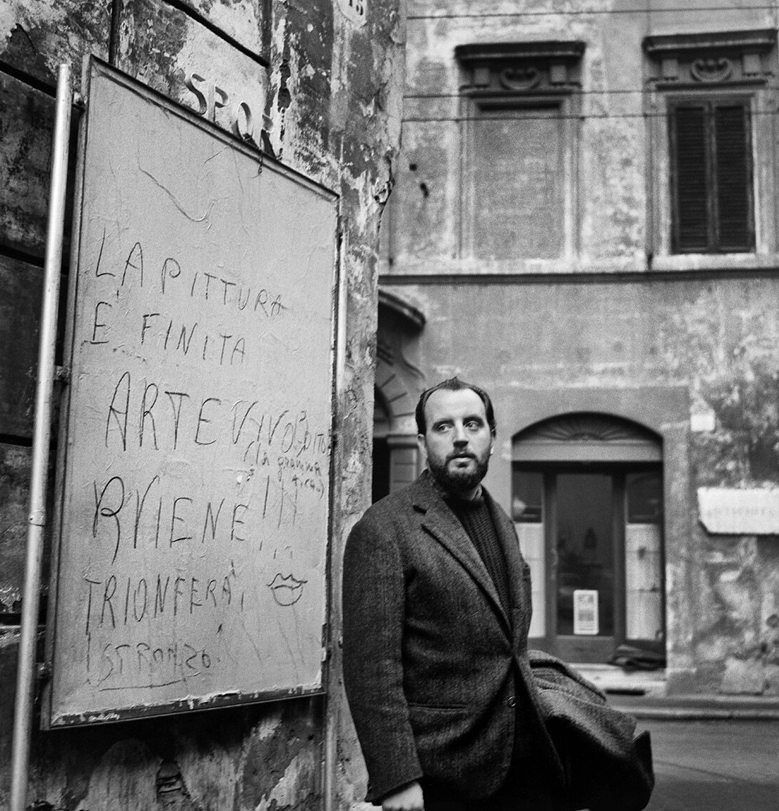
A radical artist who always operated outside the official circuits, Greco proclaimed the foundation of living art in 1962, a declaration of principles according to which the creator should not limit himself to showing a painting, but rather "teach people to see with their finger" what happens in everyday life. This gesture was formulated in the Manifesto Dito dell'Arte Vivo (Manifesto of Living Art ), published in Genoa that same year, where he argued that art should not be confined to the gallery, but rather recognized in its daily occurrence: in the movements, conversations, smells, and situations of the street.
The exhibition traces his career from his early literary years in the late 1940s—with poems and stories such as *Criatura humana* , * Fiesta *, and *Ni tonto ni holgazán* , marked by a sensitivity to the marginal and the fantastic—to his consolidation as an avant-garde figure. After an initial trip to Paris (1954–1956), he returned to Buenos Aires and adopted an intense, material-based informalism, understanding the painting as a living organism.
The turning point came between 1961 and 1963. He plastered Buenos Aires with self-referential posters that anticipated pop and mass art strategies, carried out his first street actions in Paris, and wrote his manifesto in Italy. In 1963, after the performance of his experimental piece Cristo 63 , he was forced to leave the country.
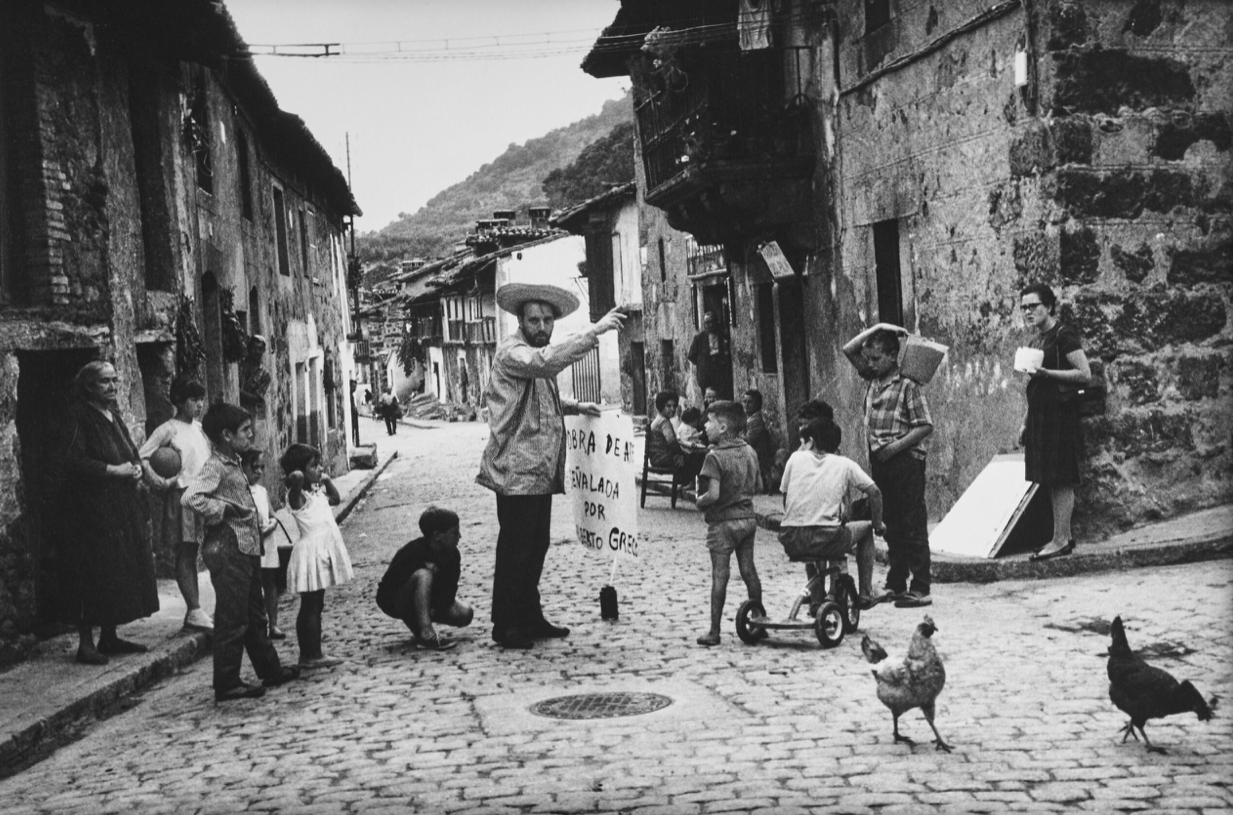
His time in Spain proved especially fruitful. Living between Madrid and the town of Piedralaves in Ávila province—which he renamed “Grequissimo Piedralaves”—he transformed spaces and people into living works of art. He unveiled the Great Living Art Manifesto , presented his objets vivants at the Juana Mordó Gallery, founded his own Private Gallery as a hybrid space for creation and encounter, and collaborated with artists such as Manolo Millares and Antonio Saura.
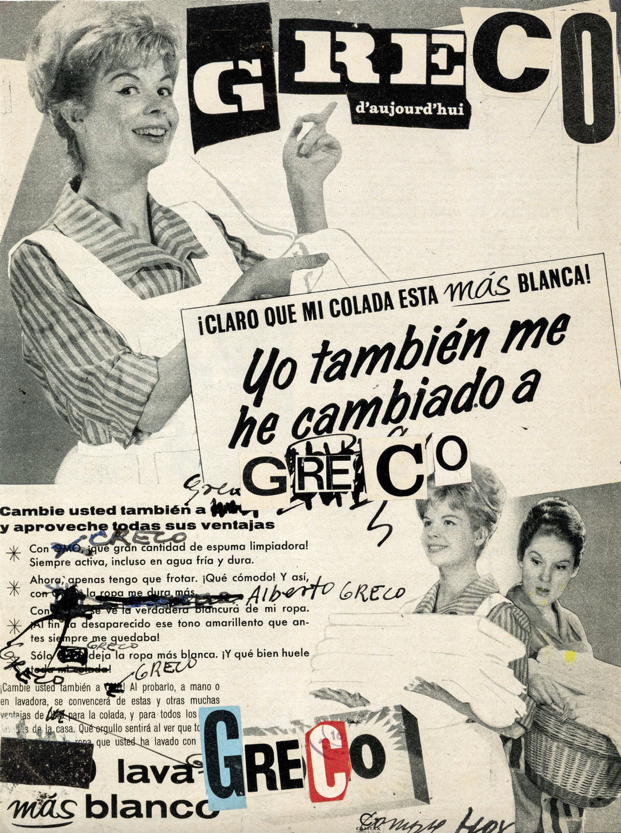
Alberto Greco, Y...d'aujourd'hui, 1964.
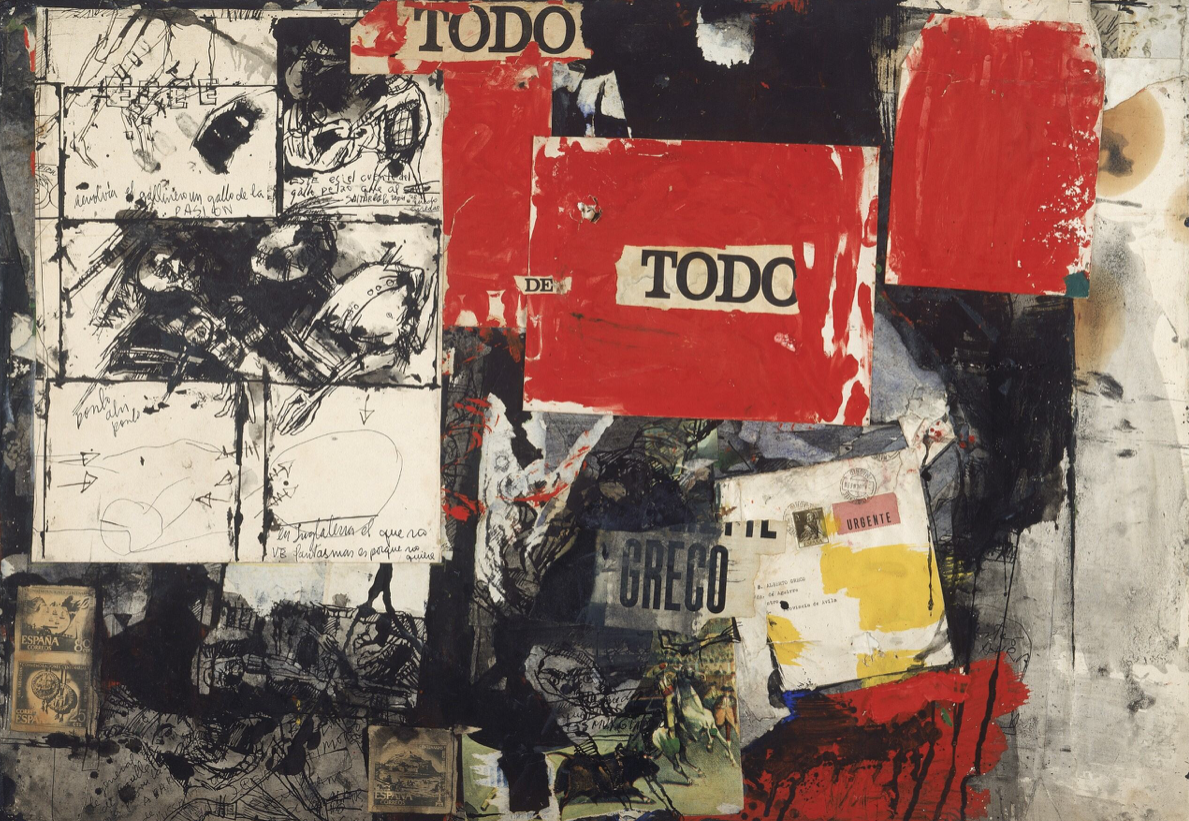
In the last two years of his life, marked by constant travel between Buenos Aires, New York, Madrid, Ibiza, and Barcelona, he developed “self-promotional” collages and began writing the experimental novel Besos brujos ( Witches' Kisses) in Ibiza, conceived as a living work of art in itself. His career culminated with Todo de todo (Everything of Everything) , a self-referential collage that champions art “for everyone.”
The Reina Sofía exhibition not only recovers the intensity of a brief but decisive work, but also restores the figure of Greco as an artist who understood, before many others, that art was not in the object but in the gaze and in the gesture that points it out.
You may be
interested
...