Exhibitions
Nou Barris, the open-air museum that beats on the street
NEW Urban Sense bursts into the north of Barcelona with 18 monumental murals that transform the district into the epicenter of contemporary muralism with a social and community soul.
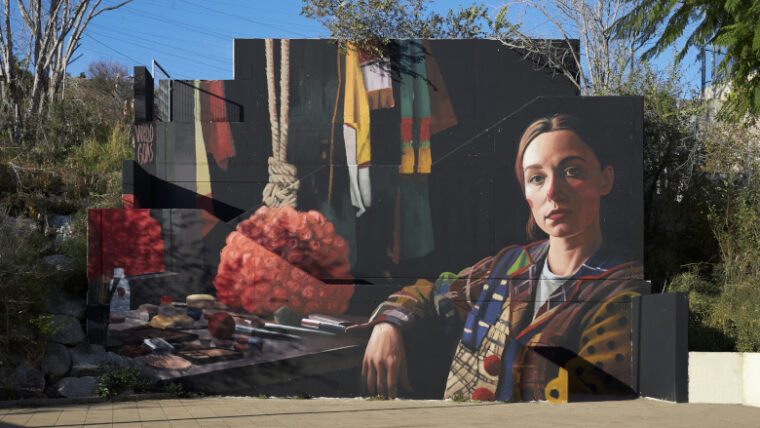
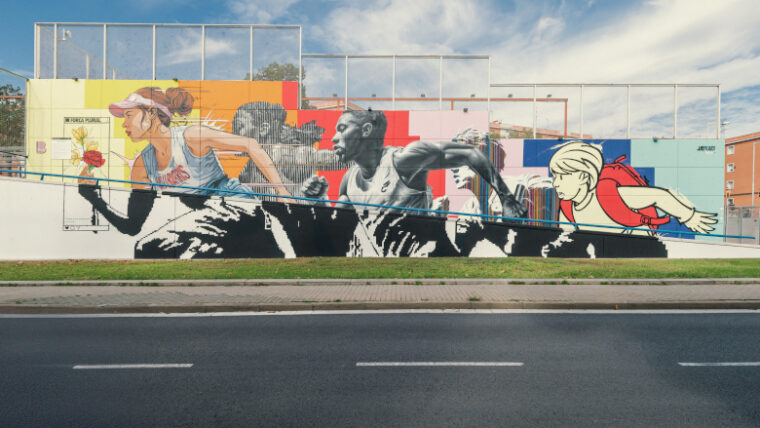
In the north of Barcelona, the district of Nou Barris is experiencing a new cultural centrality. The NOU Sentit Urbà project has turned this territory into a large open-air museum, articulated through eighteen large-format mural interventions that transform facades, squares and everyday spaces into scenarios for contemporary artistic interpretation. More than a sum of works, the initiative builds a shared story that places the district as a reference for current muralism with a social and community perspective.
Following the experience of BesArt, the new project was born with the desire to bring unique languages of contemporary creation closer to areas often absent from the hegemonic cultural imagination. NOU Sentit Urbà is committed to decentralizing art and activating it as a tool for symbolic transformation of the territory. The result is an open-air gallery that dialogues with the identity and memory of the neighborhood.
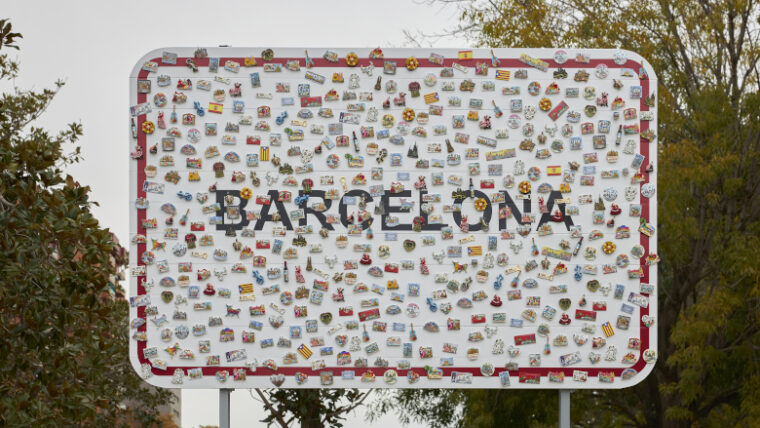
The works, created by local, national and international artists, are sensitively integrated into the architectural and social context in which they are inserted. Each intervention establishes a direct dialogue with the history of Nou Barris: neighborhood struggles, migrations, feminism, urban biodiversity or community life emerge as narrative axes. The public space thus becomes a place of memory, encounter and collective reflection, reaffirming its potential as a platform for contemporary thought.
The project draws a diverse cartography of visual languages. Artists such as Mariana Santos, Sshhozzy, Jay Kaes, Udatxo and Rice deploy visual universes that oscillate between symbolic realism, organic abstraction and figurative narrative, expanding the aesthetic horizon of the district and consolidating it as a pole of urban creation.
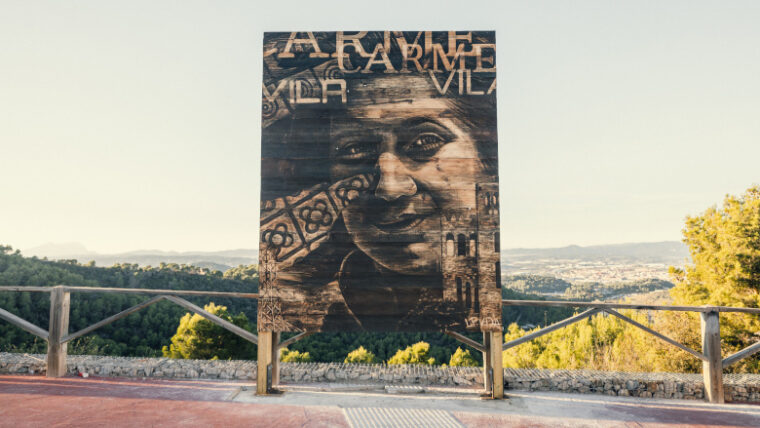
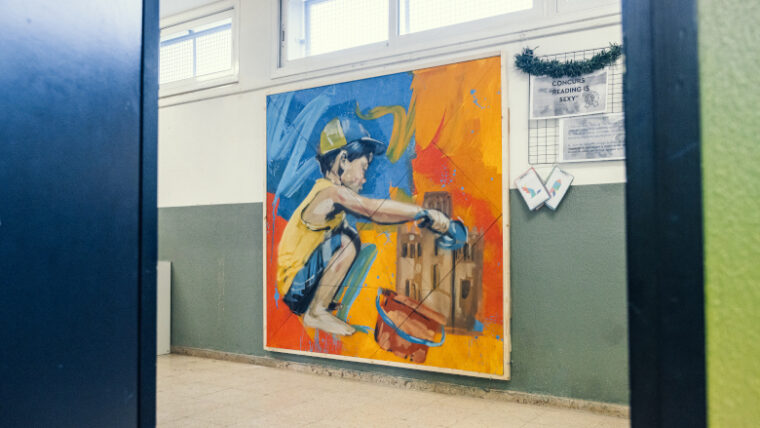
One of the fundamental pillars of NOU Sentit Urbà is its educational dimension. Through the program Paisatge compartit: tangram collabratiu Zona Nord, developed by Rice in several educational centers —the Ciutat Comtal, Elisenda de Montcada, Ferrer i Guàrdia, Mestre Morera and FEP Mare Alfonsa Calvín high schools—, students actively participate in the creative process. This involvement turns young people into cultural agents and strengthens the link between art, learning and territory.
With this set of interventions, NOU Sentit Urbà leaves a legacy integrated into the day-to-day life of the district and configures an open, accessible and constantly transforming cultural route. The project raises questions about the role of contemporary art in public space and consolidates Nou Barris as a space where urban creation acts as a tool for identity, cohesion and cultural projection.
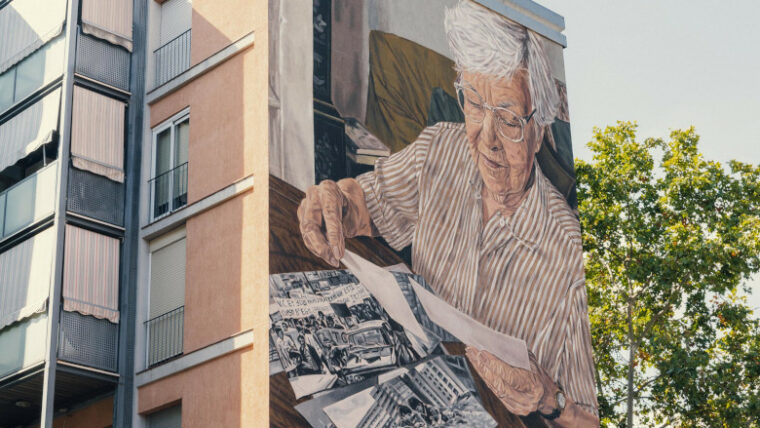
Creative map of NEW Urban Sense
The territorial deployment of NOU Sentit Urbà draws a creative map that extends through the streets, squares and facilities of the district, turning it into a true constellation of contemporary interventions.
In the area of murals, the tour begins at Via Favència, 230, with the proposal by Jay Kaes, an artist resident in the United Kingdom, and continues at number 224 with the work of the Ukrainian Dima Korma. At Passeig de Fabra i Puig, 370, the creator Doa Oa leaves her mark, while at Aiguablava Street, 7, Udatxo unfolds her pictorial universe. Platja d'Aro Street concentrates two interventions: at number 23, the Portuguese Mariana Santos, and at 19, the Russian Sshhozzy, thus expanding the international dimension of the project.
The sculptures incorporate new volumes into public space: at Carrer Castellví, 19, by the French artist Antoine Guignard; at Plaça de Salvador Puig Antich, by the Todo x la Praxis collective; and on Via Favència, two interventions by Barcelonan Octavi Serra and the Basurama collective.
Light also becomes an artistic material. At the Nou Barris Library, located in Plaça Major de Nou Barris, Spidertag transforms architecture into a light experience, while at the Turó Municipal Sports Centre, at Carrer Sant Iscle, 50, Basurama intervenes in the space with a proposal that dialogues with the environment and daily activity.
The project also extends to the district's educational centers: the Institut Escola Ciutat Comtal (Pujalt Street, 6), the Institut Escola Elisenda de Montcada (Vallcivera Street, 1), the Institut Escola Ferrer i Guàrdia (Pedraforca Street, 5), the Institut Escola Mestre Morera (Perafita Street, 48) and the FEP Mare Alfonsa Cavin (Rasos de Peguera Avenue, 57). These spaces not only host interventions, but also consolidate the pedagogical dimension of the project, integrating artistic creation into the day-to-day life of the educational community.


You may be
interested
...