Opinion
Art and Olympic spirit: a creative alliance from Sarajevo to Milano-Cortina
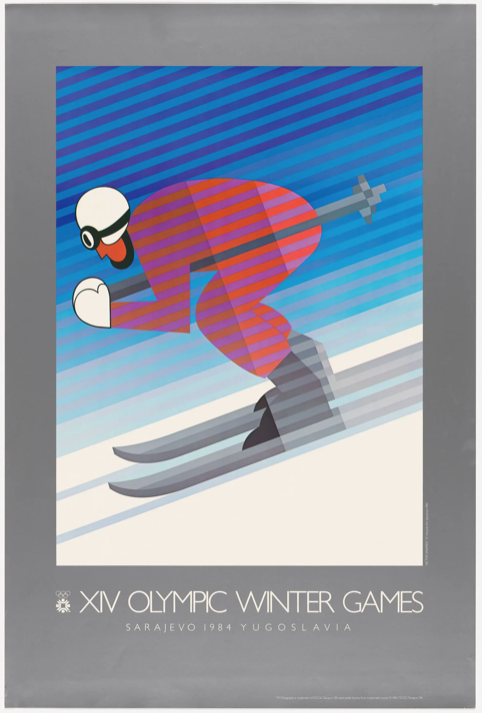
From their origins in ancient Greece, the Olympic Games have been much more than a sporting competition. In Olympia, athletics coexisted with poetry, music, theater, and sculpture, all understood as expressions of human excellence. The moving body became an inexhaustible source of artistic inspiration, immortalized in classical works such as Myron's Discobolus.
This connection was revived in the modern Olympic Games, which between 1912 and 1948 included official art competitions with medals in disciplines such as painting, sculpture, literature, and architecture. Although these competitions have since disappeared, art remains a pillar of contemporary Olympism: from official posters and medal designs to the opening ceremonies, which are true cultural spectacles.
Throughout the 20th century, many prominent artists participated directly in the Games. Between 1912 and 1948, there were even official art competitions with Olympic medals in disciplines such as painting, sculpture, literature, and architecture. Later, artists like Andy Warhol and David Hockney contributed their contemporary perspectives to the 1984 Los Angeles Games, demonstrating that art could engage with sport through modern languages such as pop art.
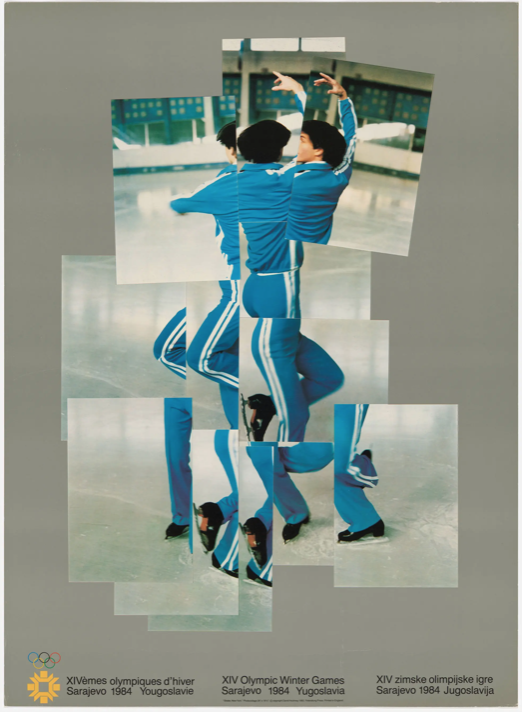
David Hockney. Sarajevo 1984 Winter Olympics. 1983. The Museum of Modern Art, New York.
Other creators, such as Pablo Picasso, explored the body, movement, and athletic energy in their work, decisively influencing the aesthetics associated with the Olympic ideal. In the realm of public space, architects and artists like Zaha Hadid, Santiago Calatrava, and Eduardo Chillida left their mark through installations, stadiums, and sculptures that transformed Olympic cities into permanent cultural venues.
Official posters, medal designs, torches, and opening ceremonies have also been fields of artistic experimentation, transforming each Olympic Games into a visual expression of its historical and social context. Thus, the Olympic Games continue to be a meeting point between sport and creativity, a global celebration where art translates the values of effort, beauty, and unity among peoples.
The 25th edition of the Winter Olympic Games will take place in Milan-Cortina from February 6th to 22nd, 2026, returning Italy to the heart of the Winter Olympic map. The event also invites us to look back and remember other editions where Olympism was more than just sport. One of the most significant was held in Sarajevo in 1984, when the capital of Bosnia and Herzegovina became the first city in a socialist state to host the Winter Games.
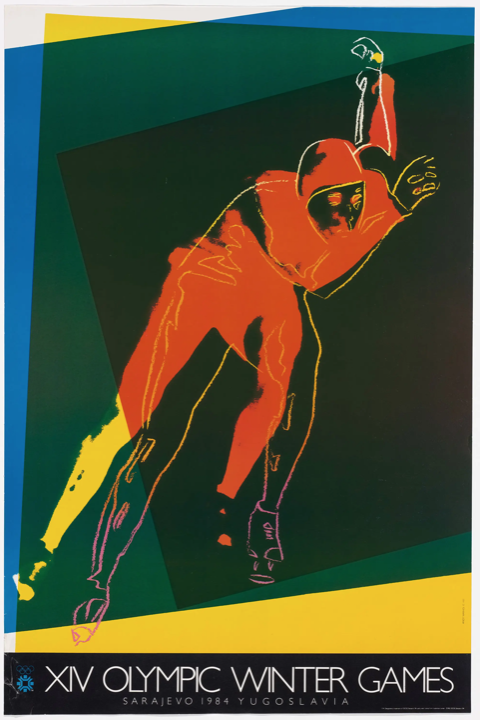
Andy Warhol. Sarajevo 1984 Winter Olympics. 1983. The Museum of Modern Art, New York.
Aware of the symbolic value of the event, the organizers launched an ambitious cultural and visual campaign. To promote the Games, they commissioned a series of posters featuring an extraordinary roster of international artists and designers, including Milton Glaser, David Hockney, Andy Warhol, James Rosenquist, Cy Twombly, and Francesco Clemente. These works did not simply document the downhill, figure skating, or speed skating events, but conveyed a deeper idea: a city's faith in its own potential and in an open, modern, and shared future.
The Sarajevo experience solidified the Olympic poster as a space for artistic experimentation and as a powerful narrative tool, capable of reflecting the political, social, and cultural context of its time. Four decades later, in Milan-Cortina, the dialogue between art and sport once again takes center stage in the Olympic narrative, reminding us that the Games are also a celebration of creativity and collective identity.
You may be
interested
...