Exhibitions
Geometries of the Spirit: Eugene J. Martin and the Art of Going Against the Current
Drawing, color and absolute freedom in an exhibition that covers forty years of artistic practice.
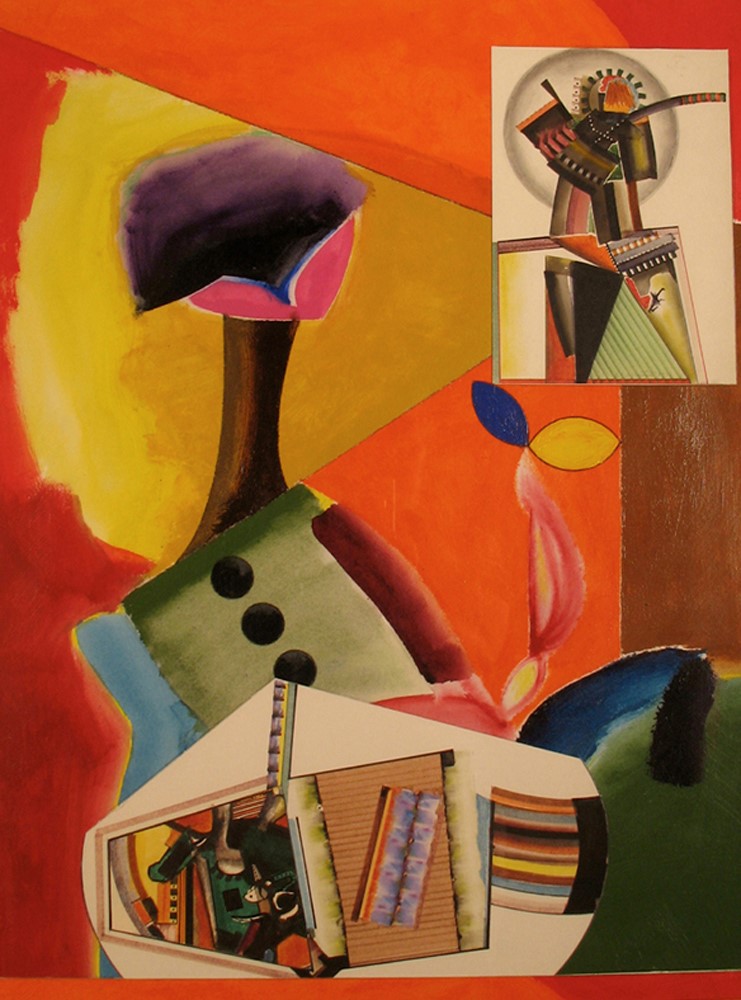
The highly spiritual and intellectual geometric abstraction of Eugene J. Martin lands at the Galeria Marc Domènech in Barcelona. For this exhibition, the gallery has brought together a selection of representative works from the seventies, eighties and nineties: the oval drawings (1971–1973), the graphite pencil drawings (1977–1978), the ink drawings with a bamboo pen (1982) and the “heterochronic” collages (1993–1999) and will be on view from February 10 to March 13.
The diversity of techniques—ink, pencil, gouache, watercolor and collage—reveals a free and intuitive practice, where gesture breathes without constraints and color unfolds with a profound sensitivity, confirming the artist's talent as a creator of rhythms, nuances and visual silences.
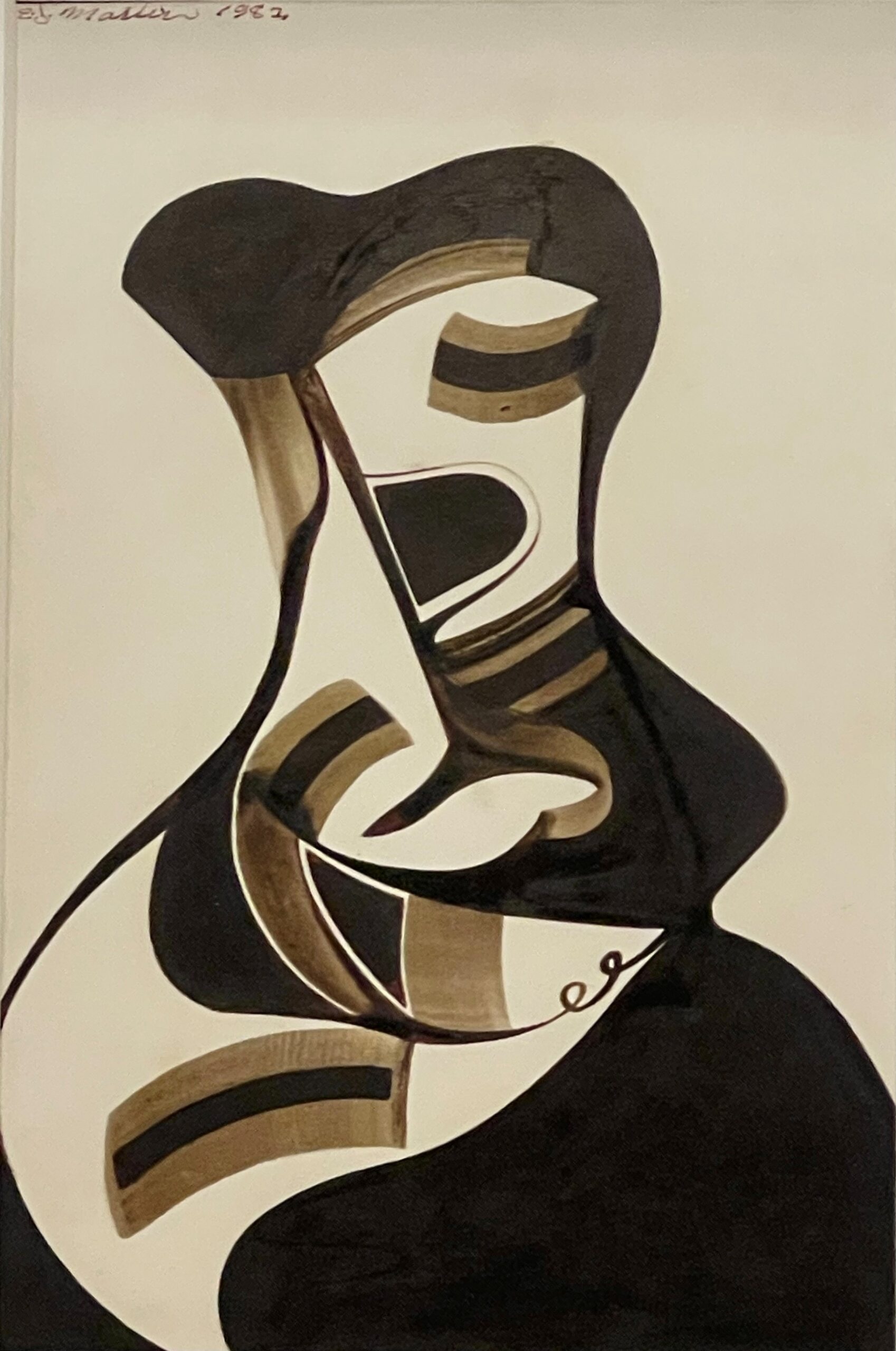
Eugene J. Martin, Untitled, 1982, © The Estate of Eugene James Martin.
Eugene J. Martin is considered a key figure in 20th-century African-American art. His work is part of important collections such as those of the Metropolitan Museum of Art, the Smithsonian American Art Museum and the Phillips Collection. His practice, however, is part of the history of 20th-century African-American art, from the Harlem Renaissance to the civil rights struggles, which he experienced firsthand—even attending Martin Luther King's speech in 1963. His work exudes a unique combination of freedom, irony and a persistent joie de vivre, capable of flourishing regardless of material conditions and any conventional idea of success.
The juxtaposition of diverse media and combinations of signifiers that suggest still lifes rather than represent them flow as multiple forms of expression within the harmonic unity of the finished works.¹ Abstract forms, arising from the artist's imagination, become almost the only common thread in this body of work, which spans the period between 1972 and 2003.
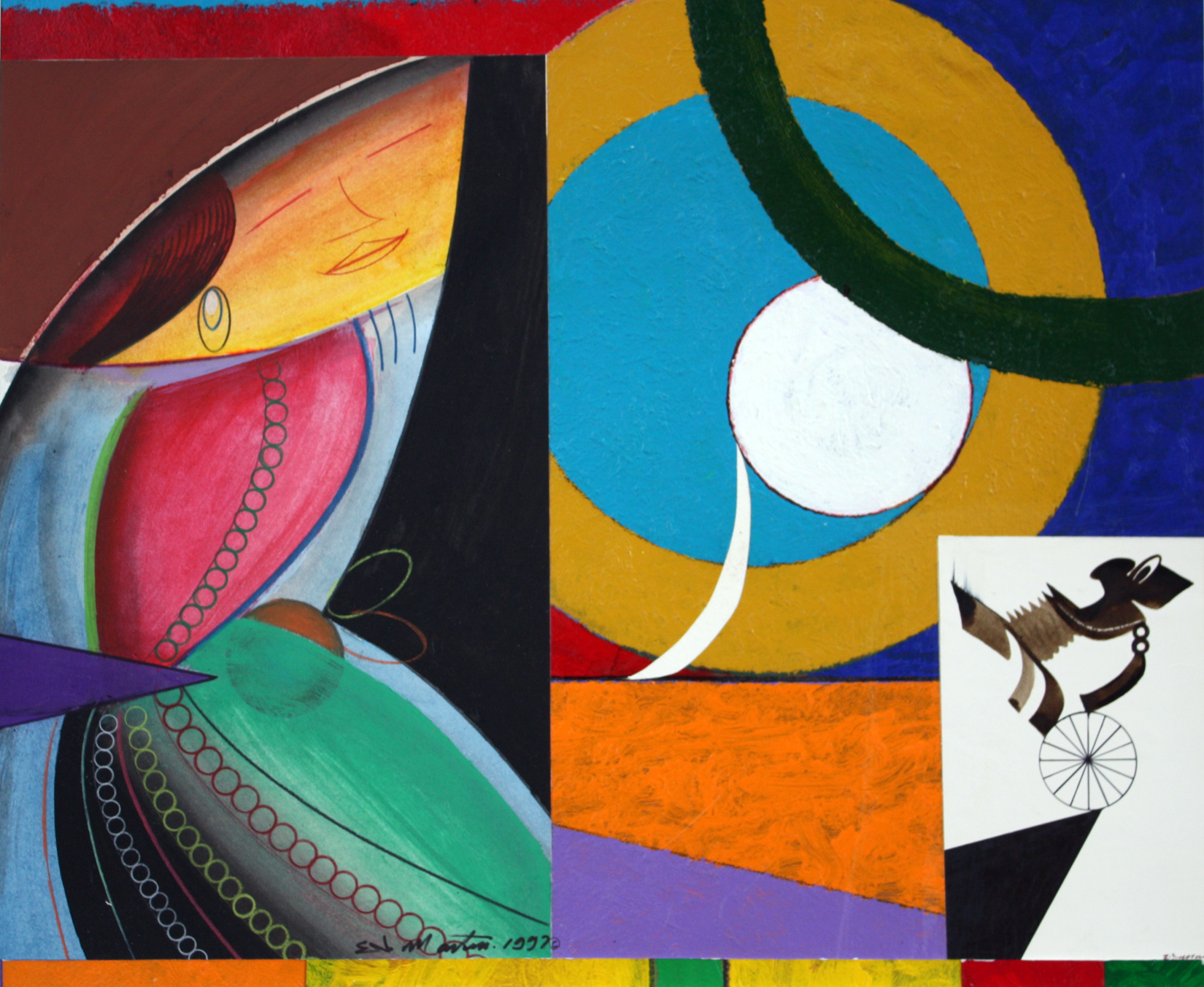
Eugene J. Martin, The Sleepy Babysitter, 1997, © The Estate of Eugene James Martin.
Abstract art was Eugene James Martin's great ally: a language that imposed "neither restrictions nor rules" on him, and that allowed him to move with absolute freedom. This selection traces a look at forty-two years of uninterrupted artistic practice, during which the artist remained faithful to a single guiding principle—freedom—until his death in 2005.
Beyond the bright colors and the playful nature of abstract forms, Eugene James Martin constructs, through these singular combinations, a deeply personal vision of the world. His career developed in solitude, outside of established schools and currents. In a context dominated by Pop Art and Minimalism in the United States, Martin remained faithful to his own vision, without ever renouncing his language or attributing an explicit political will to his work.
You may be
interested
...