Exhibitions
Half a century of the Museu del Càntir celebrated with thirteen sculptures
The Bassat Collection brings together eight key artists of contemporary sculpture in an exhibition that coincides with the museum's 50th anniversary and the 75th anniversary of the Pitcher Festival.
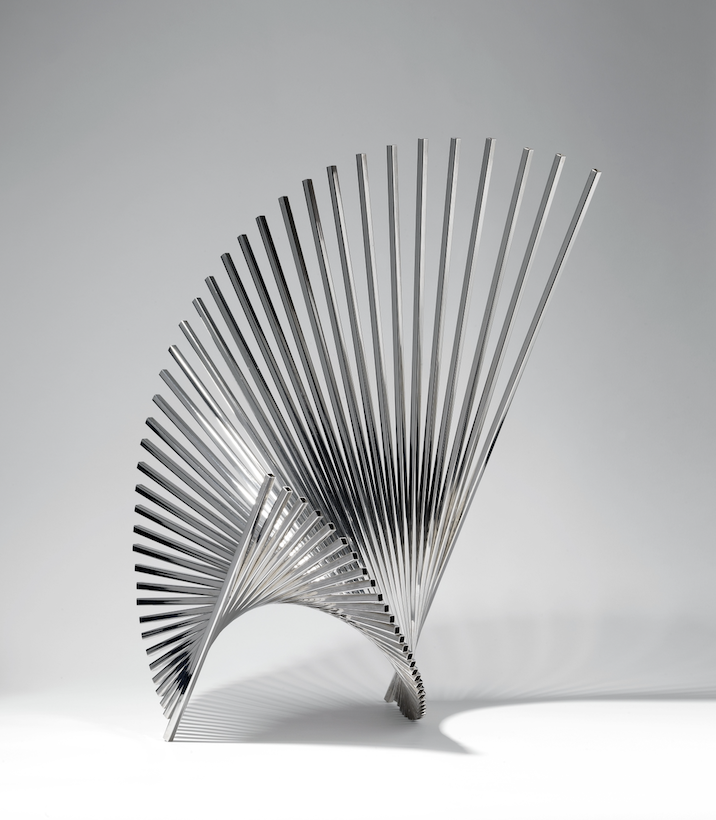
Thirteen sculptures give shape to the new temporary exhibition that will be on view until March 15 at the Museu del Càntir d'Argentona, a proposal that looks at the Maresme region through a selection of works from the Bassat Collection. The show takes over from previous exhibitions linked to the same collector, such as Guinovart Matèric , also presented in this space, or the small but significant anthology recently dedicated to Albert Ràfols-Casamada on the occasion of the centenary of his birth. That exhibition brought together unique pieces, such as the 1947 portrait of his wife, the also painter Maria Girona, or Blanc (1960), a key work in the history of Informalism in our country.
The new exhibition coincides with a double anniversary: the fiftieth anniversary of the Museu del Càntir and the seventy-fifth anniversary of the Festa del Càntir d'Argentona. In this commemorative context, the project brings together works by eight artists who have been decisive in the renewal of contemporary sculptural language: Aurèlia Muñoz, Moisès Villèlia, Gabriel, Andreu Alfaro, Sergi Aguilar, Enric Pladevall, Francisco Pazos and Iñaki Ormaechea.
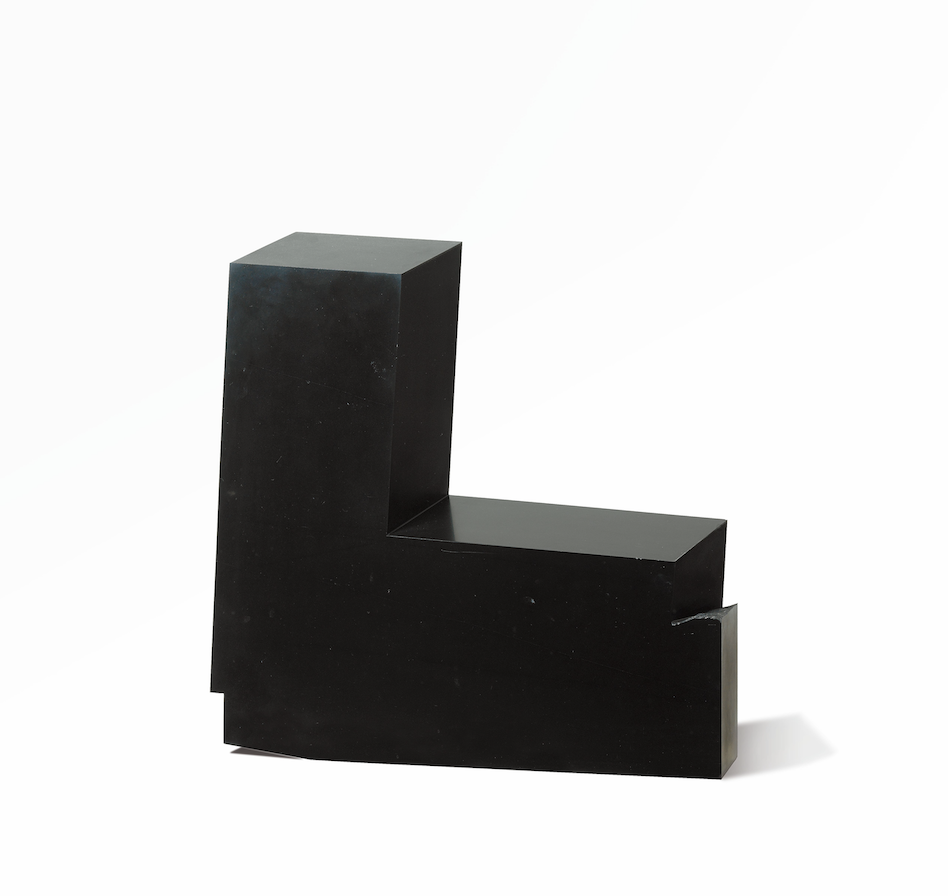
Sergi Aguilar, Angle.
Of particular relevance is the presence of Aurèlia Muñoz, a key figure in 2026, the year in which MACBA and the Reina Sofia Museum will dedicate a major joint exhibition to her. Her work exemplifies, like few other cases, the dissolution of the boundaries between art and craftsmanship. In White Ovals , macramé ceases to be a traditional technique to become a three-dimensional structure: the thread is transformed into volume and builds open forms that occupy space with an organic lightness and a clear vocation for infinity.
The exhibition presents thirteen sculptures that share an experimental approach to matter, space and form, questioning the traditional limits of sculpture. In this sense, Moisès Villèlia incorporates bamboo cane as a sculptural material, moving away from modeling and heavy matter to create light structures, based on tension and balance, that seem to defy gravity.
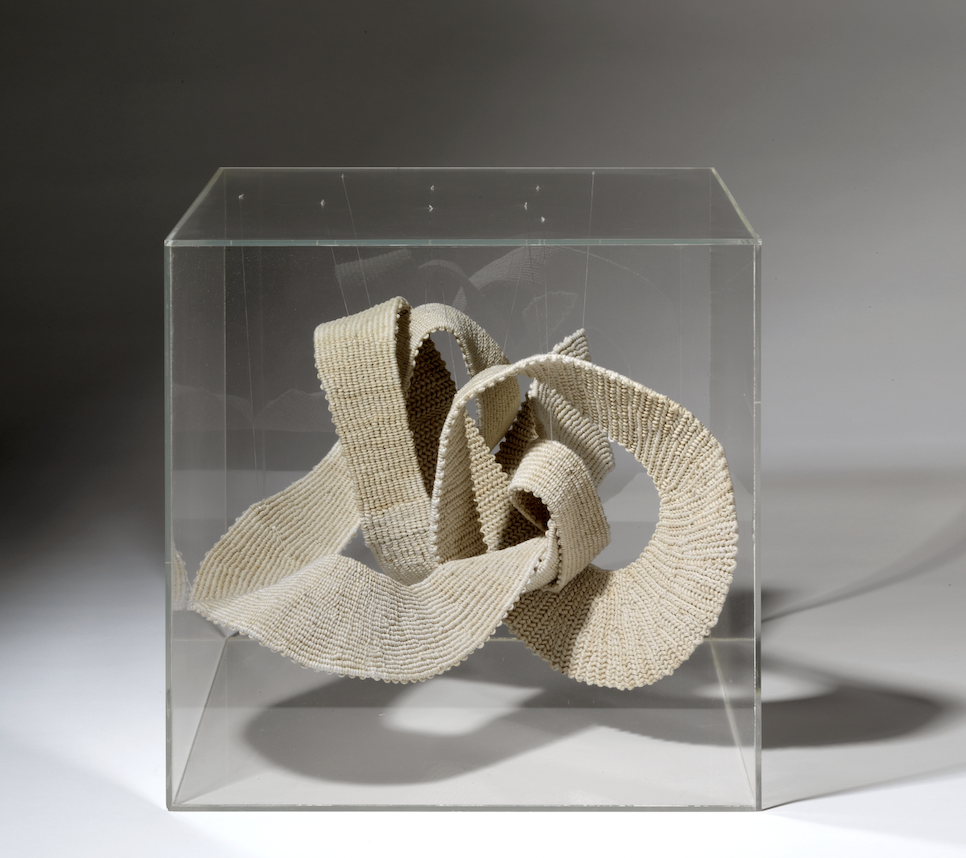
Aurèlia Muñoz, White ovals.
Gabriel, for his part, works with materials unsuited to classical sculpture to generate surfaces that suggest an epidermal quality. His organic forms evoke living bodies and appeal to an almost tactile perception, placing matter as a central expressive element.
Andreu Alfaro's geometric abstraction is built on the extreme purification of form. Through repetition and the rhythmic arrangement of elements, his sculptures articulate space with precision, making emptiness a component as relevant as fullness.
In a line of formal restraint, Sergi Aguilar deploys a minimalist aesthetic that emphasizes the quality of the material. In his series in black marble from Belgium, the density and darkness of the stone contrast with a refined and elegant formal resolution.
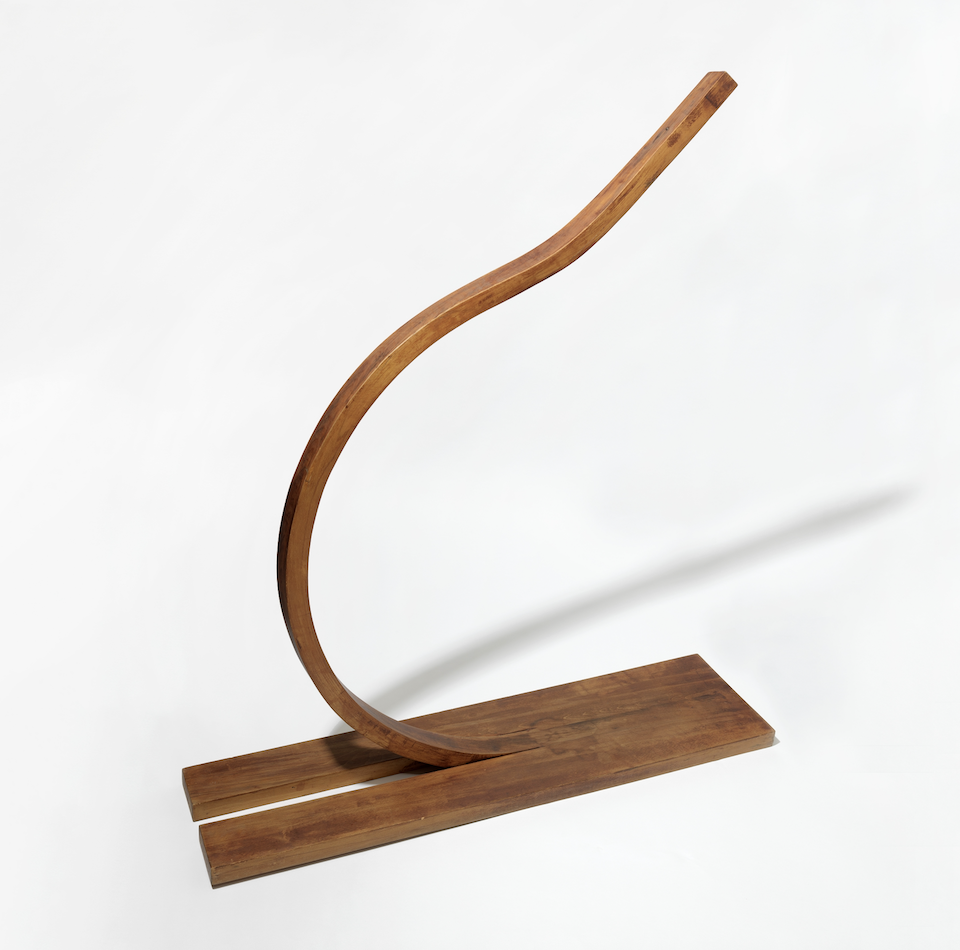
Enric Pladevall, Plank IV.
Tauló IV , by Enric Pladevall, is presented as an austere, tense and elastic work, which unfolds in space like a gesture or a stroke. The piece highlights the relationship between strength, balance and fragility, recurring elements in his career.
Francisco Pazos introduces corten steel, an unusual material in his work, to transfer the cracks and fissures typical of wood. This material displacement gives the piece a timeless character, where the wound becomes form and memory.
Iñaki Ormaechea closes the tour, with sculptures that opt for formal purism. His works, schematic and impeccably polished, dispense with ornament and, despite their industrial appearance, generate an interior luminosity that activates the space and invites silent contemplation.
You may be
interested
...