Exhibitions
Cooking Sections gives voice to vanished waves in an installation that transforms absence into presence
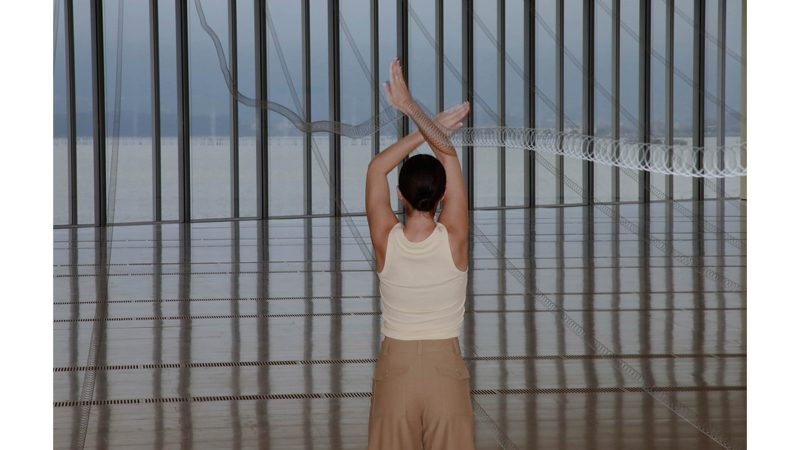
Cooking Sections' first exhibition in Spain, titled The Lost Waves , is presented at the Botín Centre as a performative and musical installation that explores the progressive disappearance of historic waves on a global scale, a direct consequence of infrastructure and human intervention on the land. From the Mundaka sandbank in the Cantabrian Sea to the El Marsa phosphate port in Western Sahara, and including the tourist developments of Cape St. Francis in South Africa, the exhibition maps transformations that not only alter marine geography but also erode coastal communities and force the migration—or extinction—of numerous species.
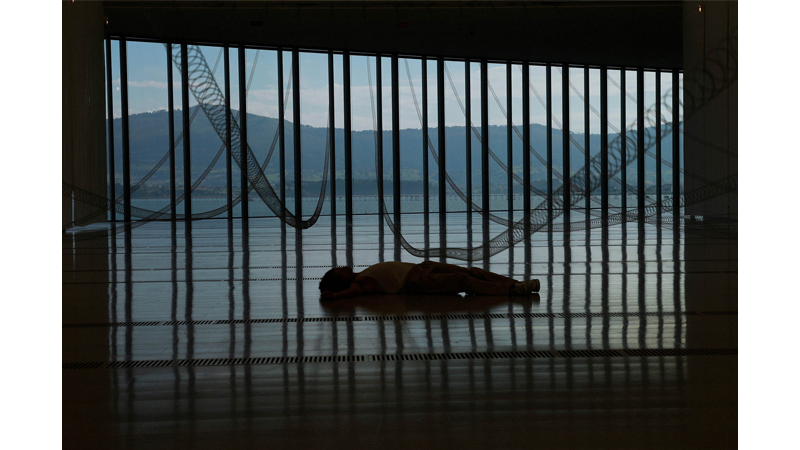
Cooking Sections, Waves Lost at Sea (Las olas perdidas), 2025, Gallery view, Centro Botín, Photo: Lourdes Cabrera.
Conceived as a requiem for waves that no longer break or raise foam, the installation proposes an attentive listening to their absence: a sensory narrative that questions how we perceive their disappearance and, at the same time, what forms of care and protection are still possible.
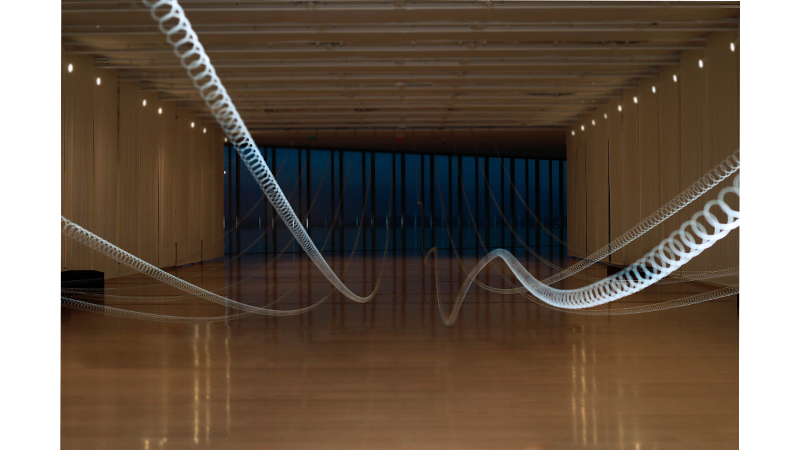
For this installation, which will be on view until March 1st, the stories, rhythms, and patterns of eleven vanished waves are transformed into a musical composition and a choreography of eleven suspended piers, activated by performers in a continuous loop. The repeated, almost ritualistic gesture translates the absent movement of the sea into a physical and sonic presence.
The exhibition space is thus configured as an ephemeral monument dedicated to lost waves: a sensitive architecture, of a spectral nature, that questions the traditional —and deeply anthropocentric— notion of the monument, replacing permanence and heroism with fragility, listening and the memory of that which is no longer there.
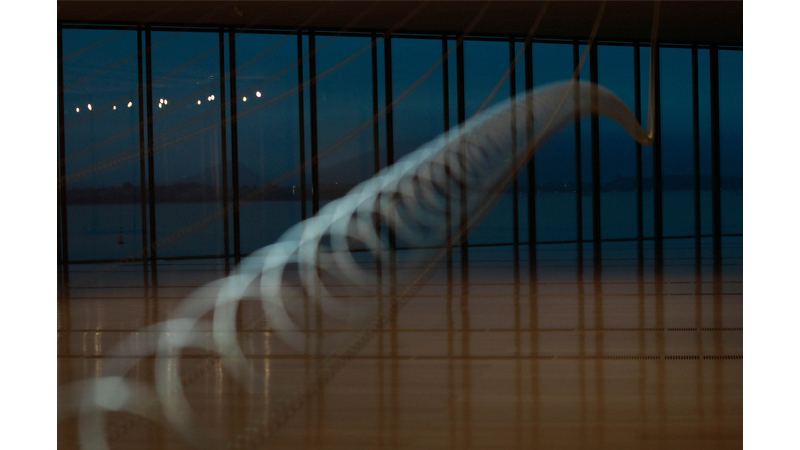
Cooking Sections, Waves Lost at Sea (Las olas perdidas), 2025, Gallery view, Centro Botín, Photo: Lourdes Cabrera.
The Lost Waves continues the workshop Alphabets of the Sea, led by Cooking Sections in Santander and the Nansa Valley (Cantabria) between September 9 and 17, 2024. In collaboration with an interdisciplinary group of international professionals, the program was structured around readings, improvisations and actions situated in the natural environment of Cantabria, exploring the traces —visible and invisible— that human activity leaves on marine and coastal ecosystems.
The exhibition is curated by Bárbara Rodríguez Muñoz, director of exhibitions and the collection at the Botín Centre, and is part of a curatorial line that links artistic practice, critical ecology and contemporary thought.

You may be
interested
...