Exhibitions
In the thread of the night, the fabric of the world. Intersections between body, matter, and myth in the FRAME
In the thread of the night, the plot of the world of MARCO (Museum of Contemporary Art of Monterrey) brings together the works of Amor Muñoz, Daniel Guzmán and Lucía Vidales in an exhibition that can be visited from Friday, November 28, 2025 to Sunday, March 1, 2026. From diverse languages and territories, the three artists propose a sensitive investigation into the relationships between body, matter and language, axes that run through their practices in a singular but resonant way.
Using metaphors such as thread, intersection, and skin, the works establish a dialogue where the human condition is constantly being redefined: between the manual and the digital, the intimate and the collective, the ritual and the political. Far from seeking a unified interpretation or a common aesthetic, the exhibition emphasizes the frictions and affinities that emerge between the different bodies of work.
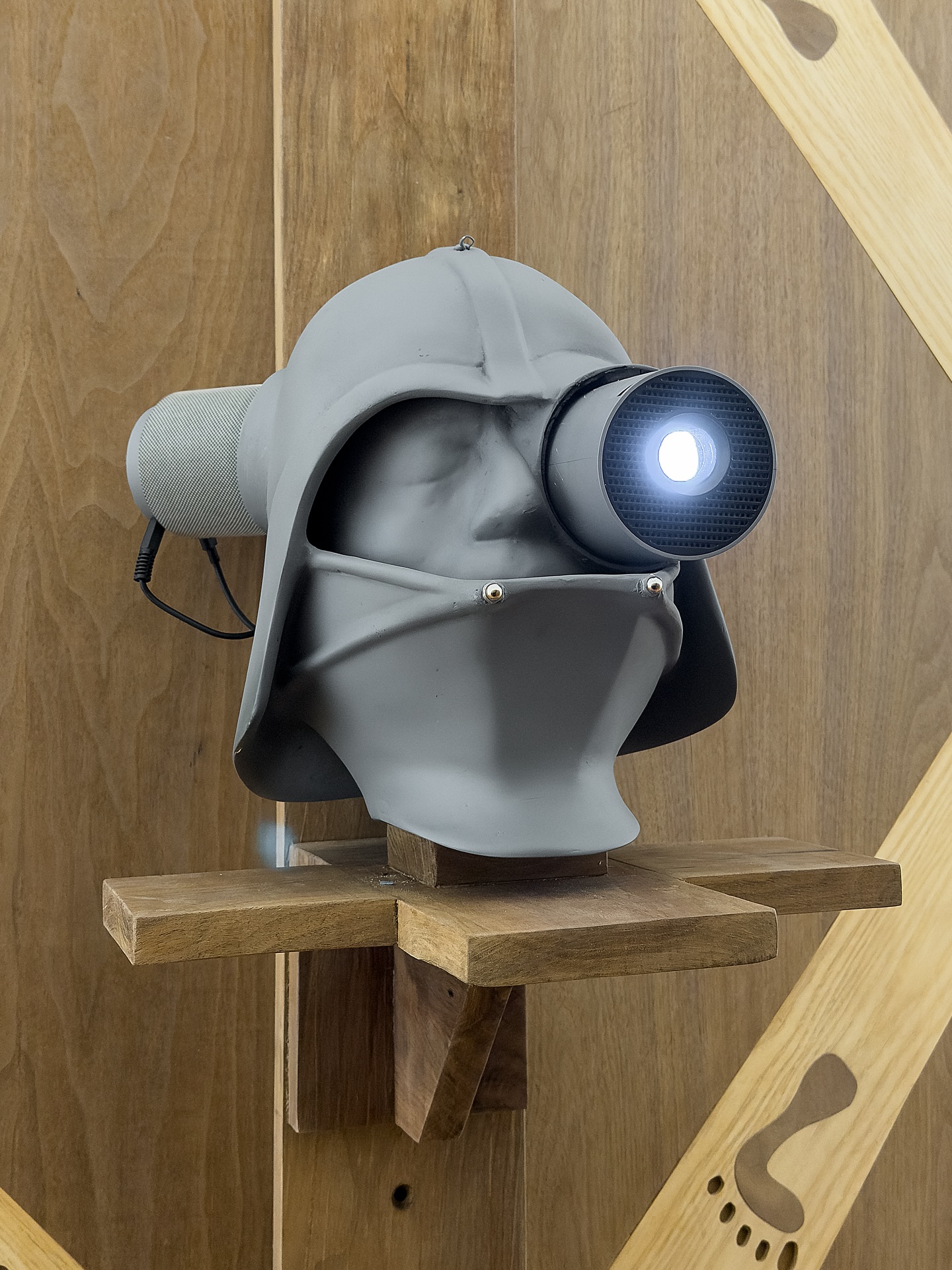
In this interwoven exhibition, curated by Mariana Mañón, the show reveals shared echoes that invite us to rethink contemporary notions of the sacred, not as a fixed inheritance, but as a mutable construct that is reactivated in the present. In the thread of the night, the fabric of the world is thus configured as a space of intersection, where artistic practices engage with urgent questions about identity, technology, and community in our time.
The exhibition, which can be seen until March 1st at the Monterrey museum, articulates painting, installation, drawing, sculpture and sound experimentation in a journey that questions the relationships between body, materiality, memory and contemporary mythologies, proposing an experience that activates both the sensory and the symbolic.
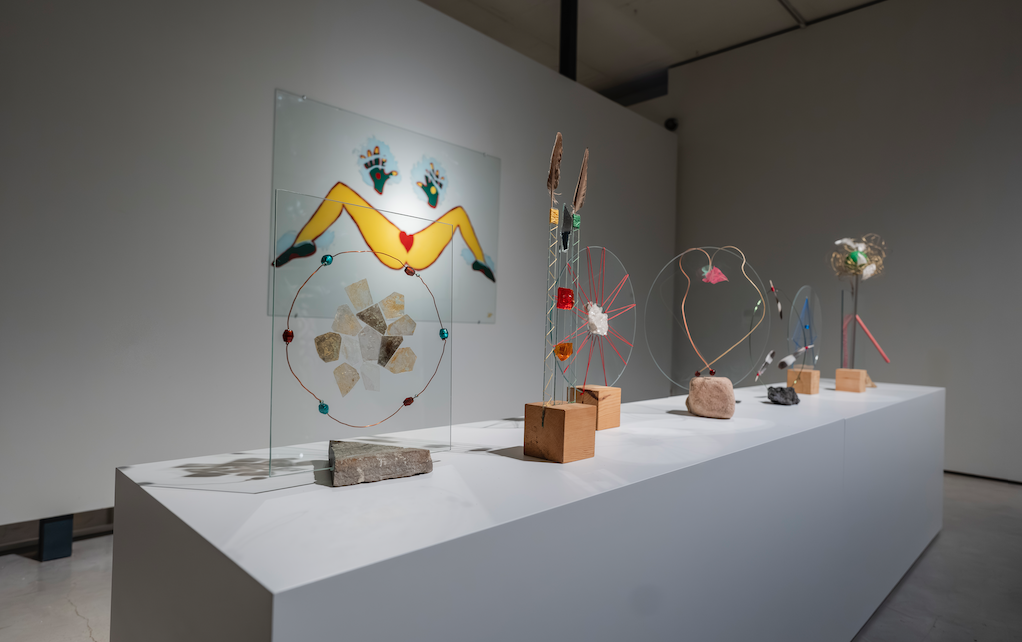
The exhibition is structured in three sections that offer different approaches to the relationship between matter, image, and meaning. The tour begins with Lucía Vidales's * Arriba el inframundo* (Up with the Underworld), an exploration of pictorial materiality through banners and screens where transparencies, ambiguous figures, and an imagery that moves between art history—with echoes of Orozco and El Greco—and references to popular culture are superimposed. Among the standout works are *Alimañas de noche* (Night Vermin), *Alimañas de conjuro* (Spellbound Vermin), and *Alimañas de carroña* (Carrion Vermin), vibrant compositions that pay homage to bats, moths, and vultures, reinterpreted as symbolic figures of the threshold and transformation.
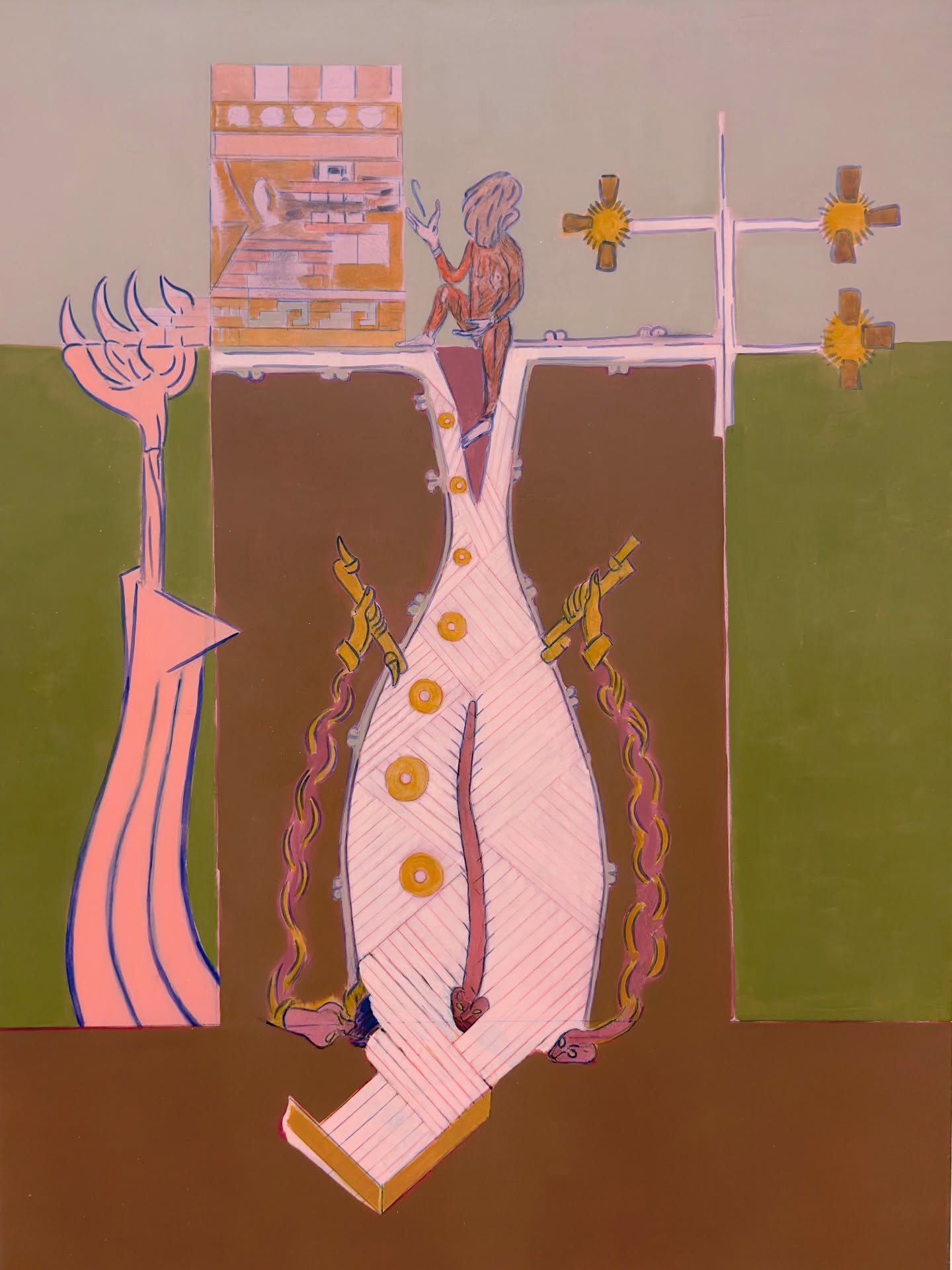
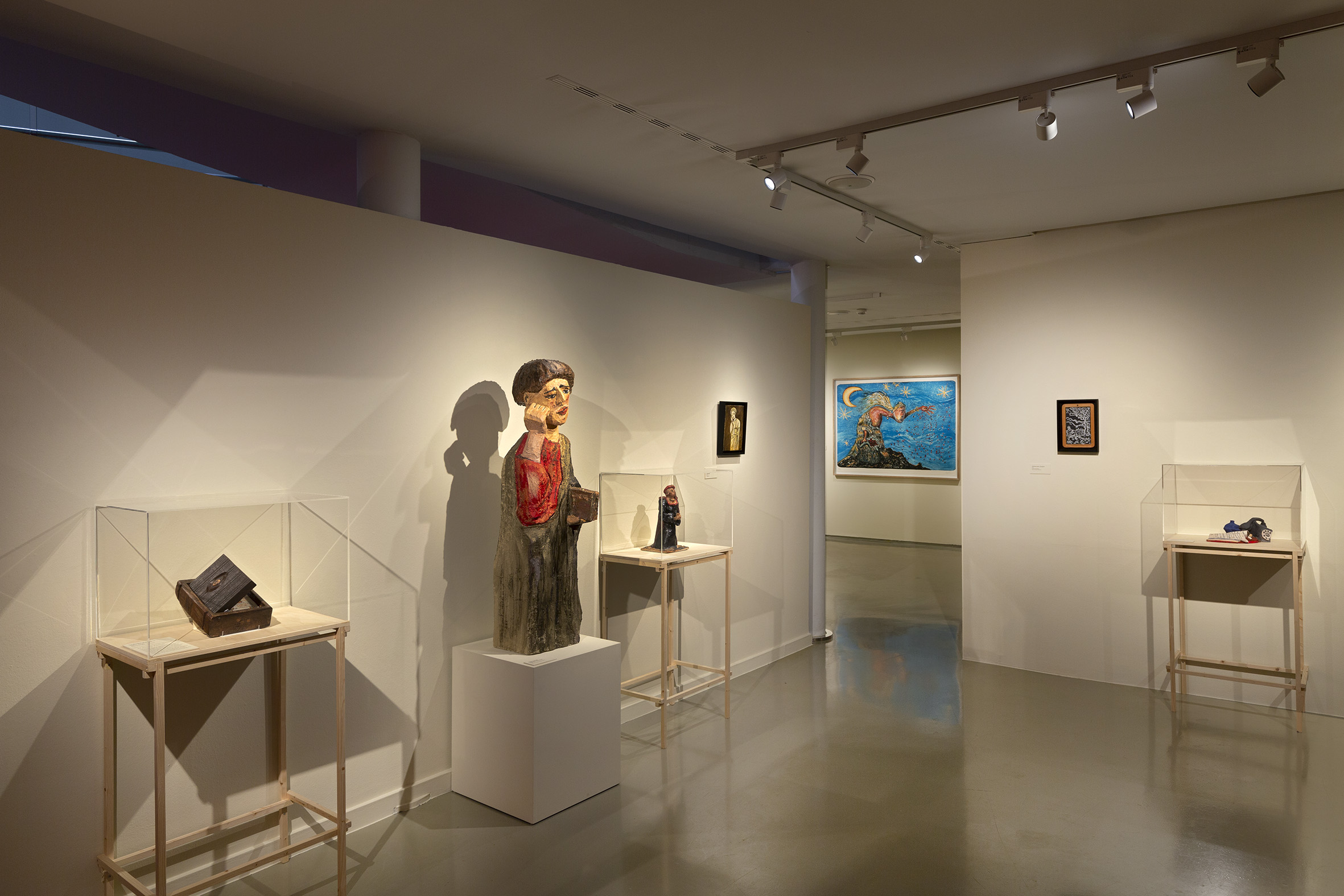
The second section presents The Man Who Should Be Dead. Ohmáxac / Crossroads , a series of drawings by Daniel Guzmán conceived as chapters of a graphic novel. These pieces bring together pre-Hispanic iconography, scenes from the Conquest, contemporary figures, and literary references, articulating a reflection on what the myths and deities of the present might be. In the center of the room, a wooden latticework screen adorned with fretwork and symbols serves as a spatial and conceptual axis, evoking the Nahuatl term ohmáxac, understood as a place of crossing or crossroads.
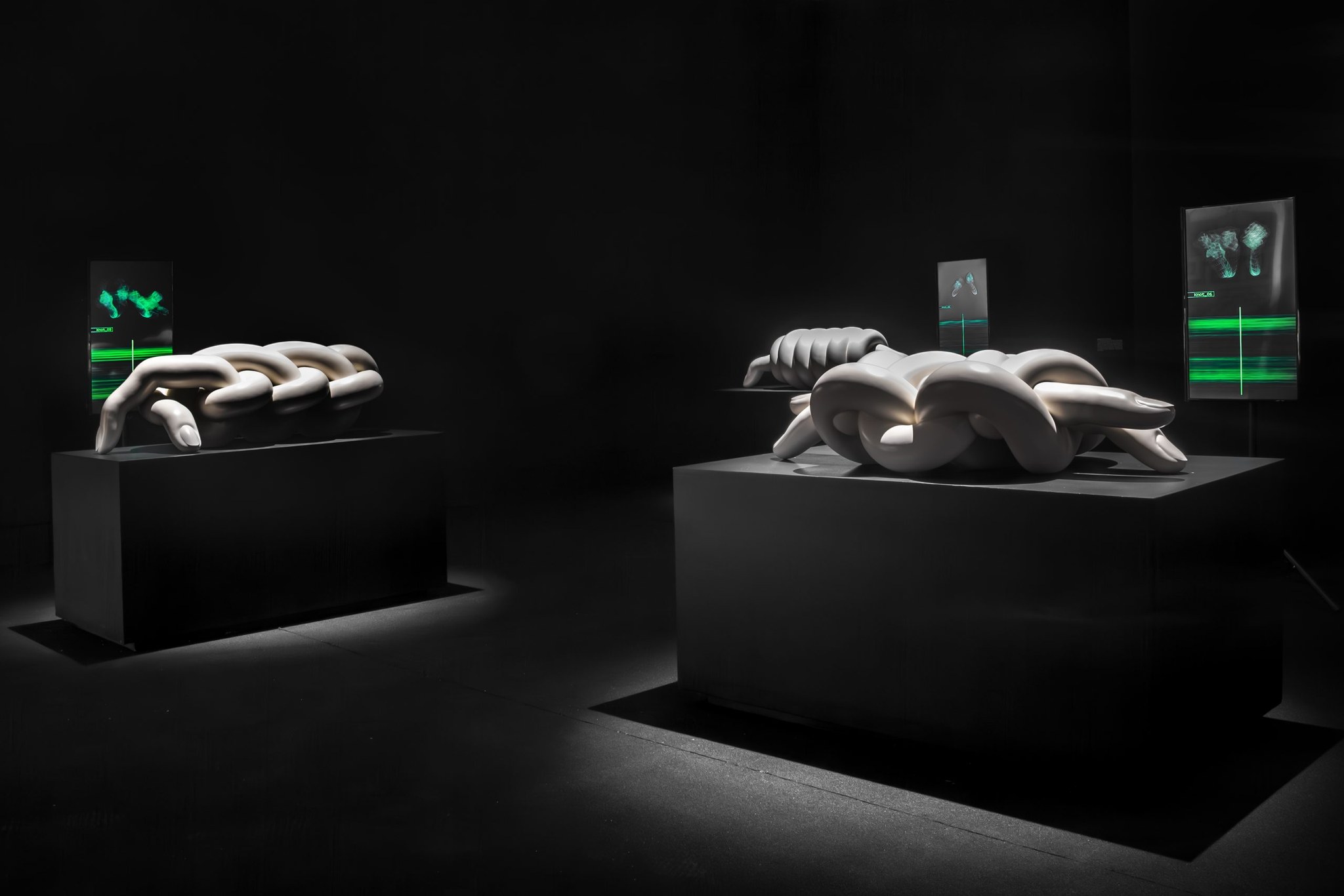
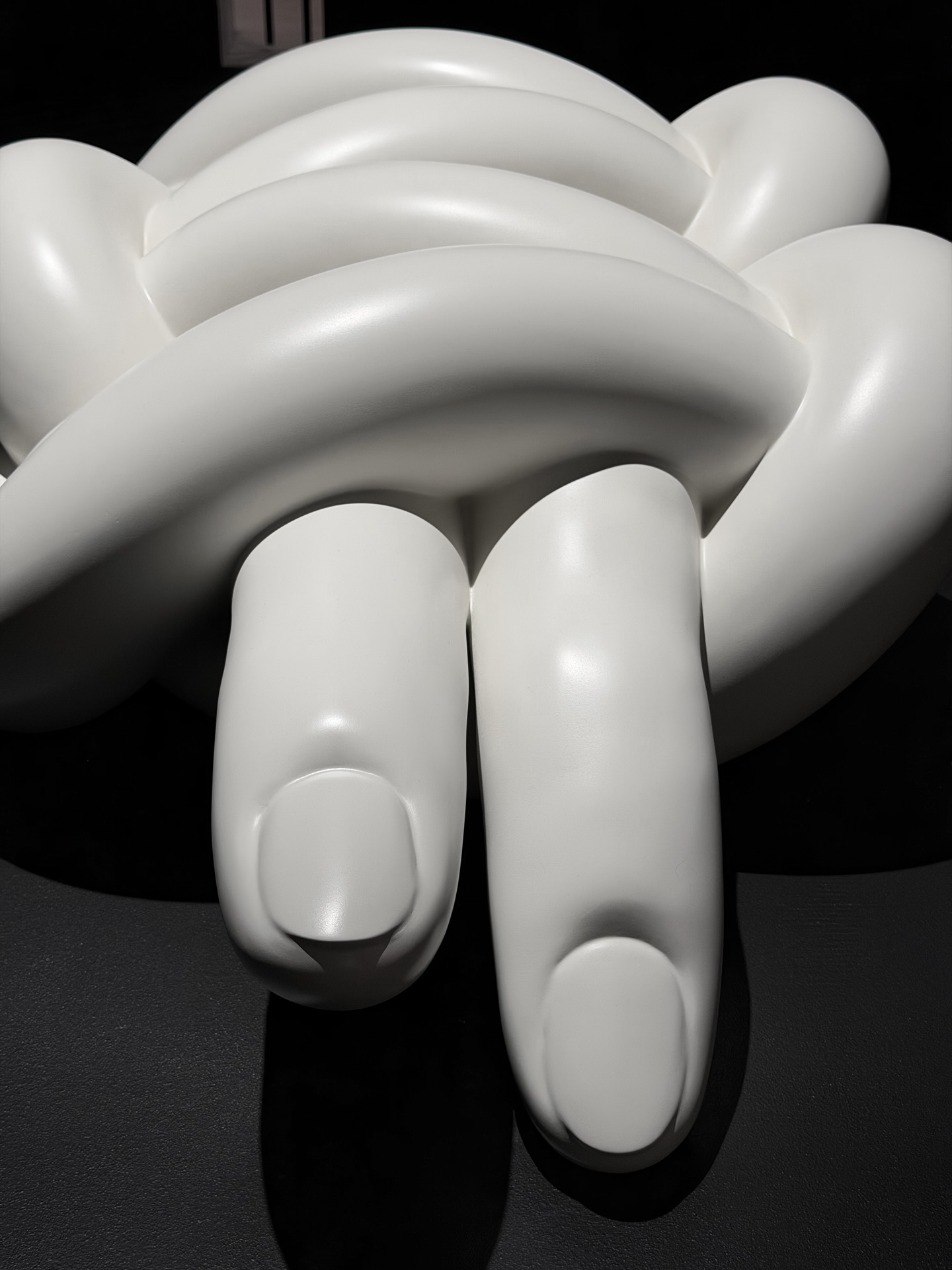
The exhibition concludes with Dedo macramé (Macramé Finger) by Amor Muñoz, a series of sculptures that take the form of textile knots made from macramé patterns fused with human limbs. For this work, the artist recorded the weaving gestures using special gloves that translate manual movement into digital code, which is then converted into a sound composition through an algorithm, establishing a bridge between the artisanal, the technological, and the sensory.

You may be
interested
...