Exhibitions
Between time and landscape: the layer-by-layer universe of Canepa at IVAM
Colors, mythologies and popular traditions converge in an installation that explores the past, present and future.
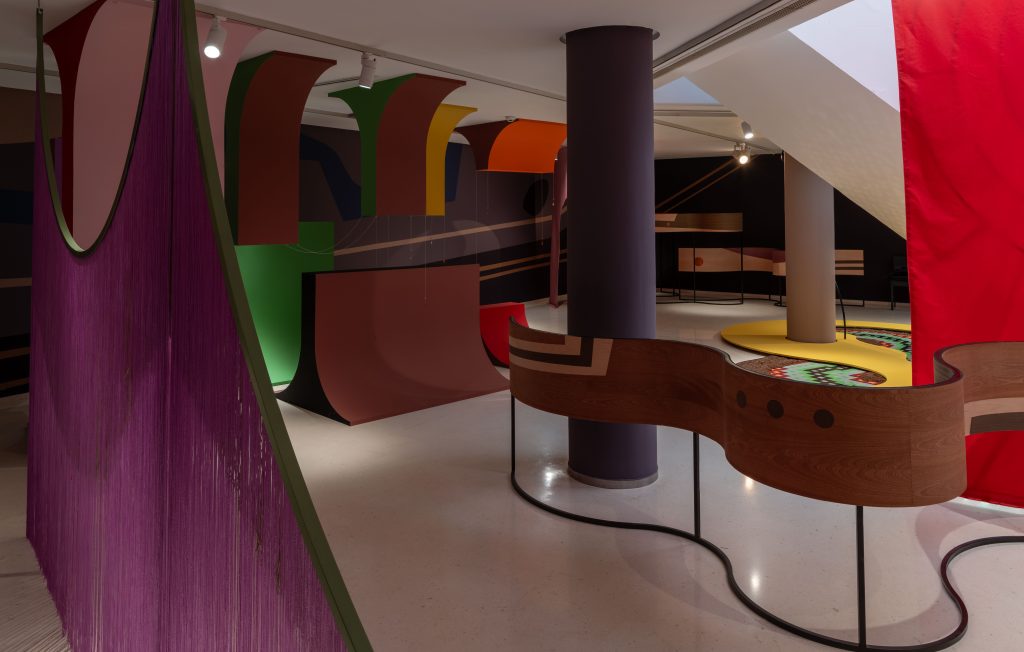
The project Between the Deep and the Distant , created expressly for IVAM by Andrea Canepa, is inspired by the book The Spell of the Sensuous by David Abram. Drawing on phenomenological philosophy and various indigenous worldviews, Abram proposes that time is not linear, but inscribed in the landscape: the past and the future coexist in the present and have a spatial location. The past is buried, accumulated in layers of soil, coral rings or ancestral areas of the brain, and sustains the present. The future, on the other hand, looms on the horizon, a threshold that recedes as we reach it.
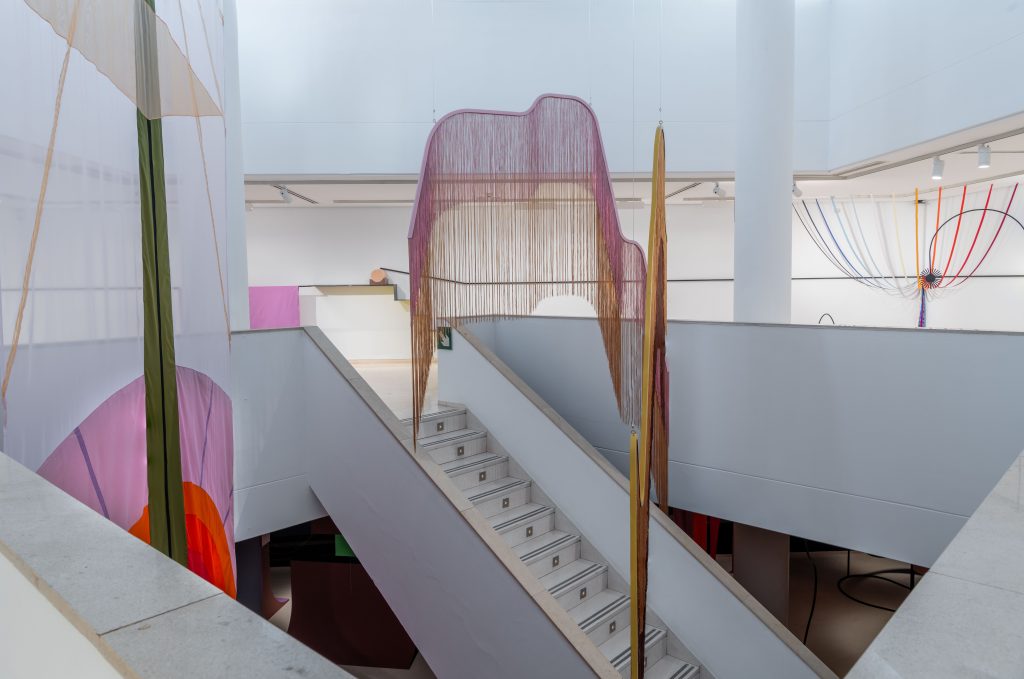
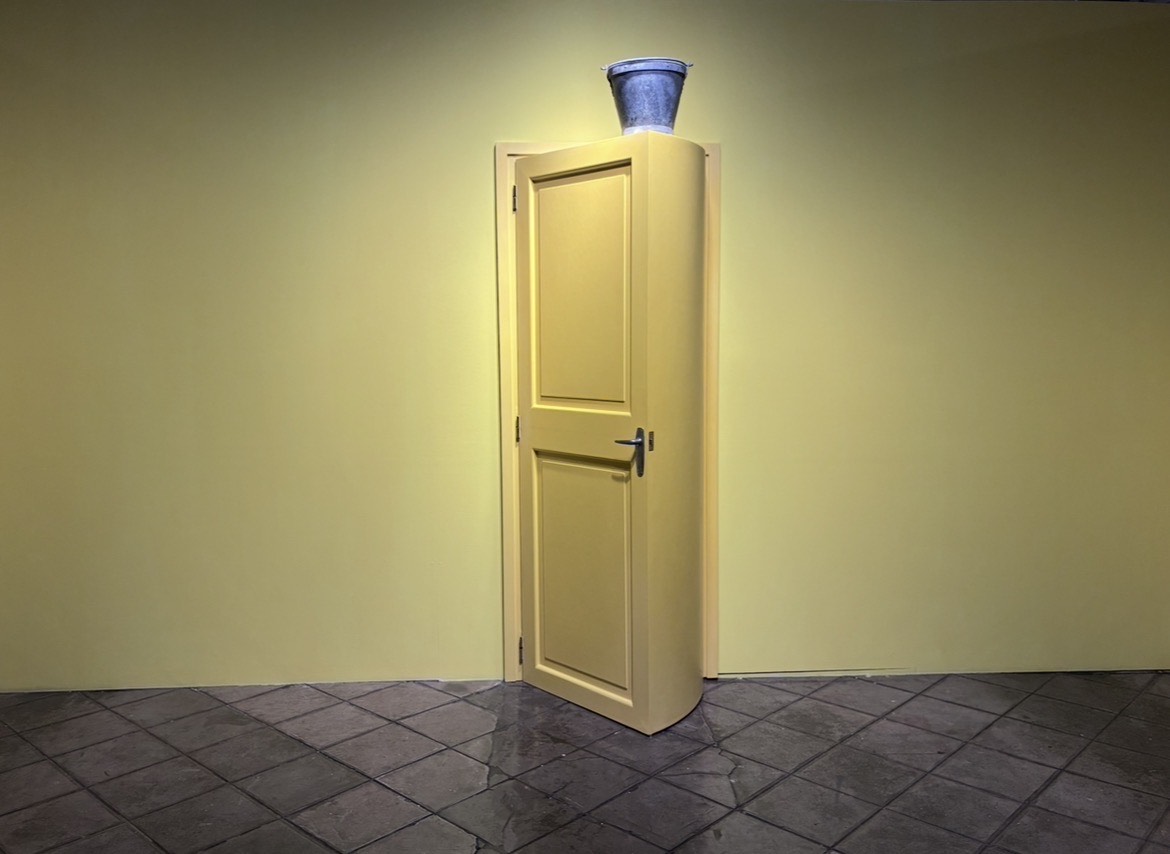
Andrea Canepa exhibition © Juan García - IVAM.
"The exhibition is about how time is inscribed in the landscape [...] Everything is organized in layers: the sediments in the soil are reflected on the walls, there are sculptures that refer to the tree rings that surround the entire gallery space, and the visitor can move between them," explained Canepa during the presentation of the exhibition.
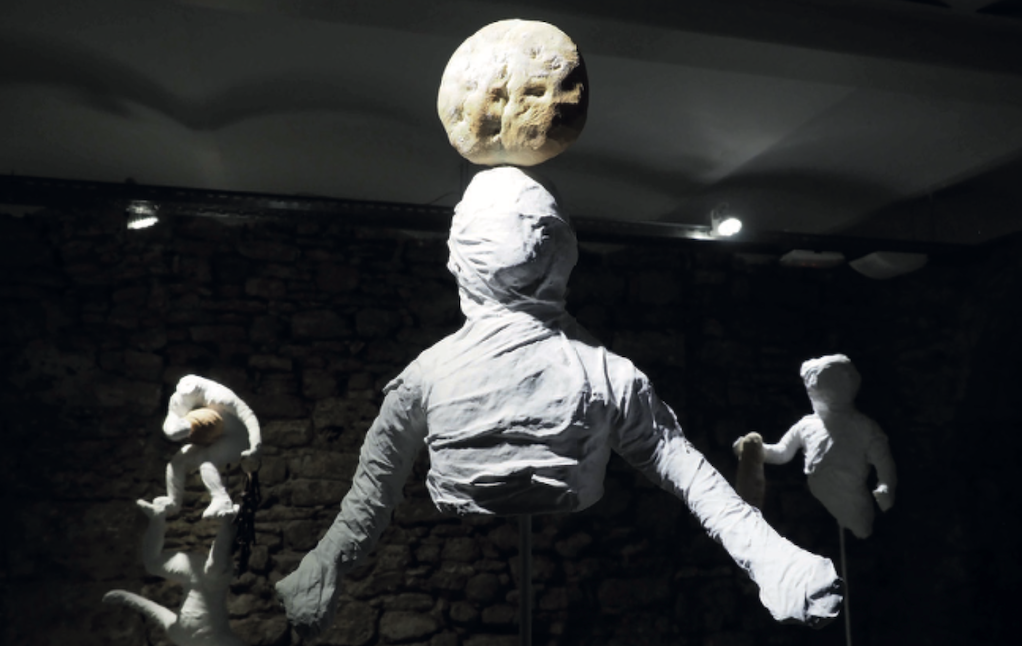
Based on this approach, which will be on view until April 12, the installation on the lower floor invites the viewer to explore the invisible forms of the past inscribed in the space. The work generates a feeling of interiority—cave, earth, body, underworld or womb—and arranges the pieces in an enveloping manner, allowing a journey between layers that refer to tree rings or the folds of caves. In the center, the presence of a mythical serpent is suggested, an ancestral creature that inhabits the underground imagination of various cultures.
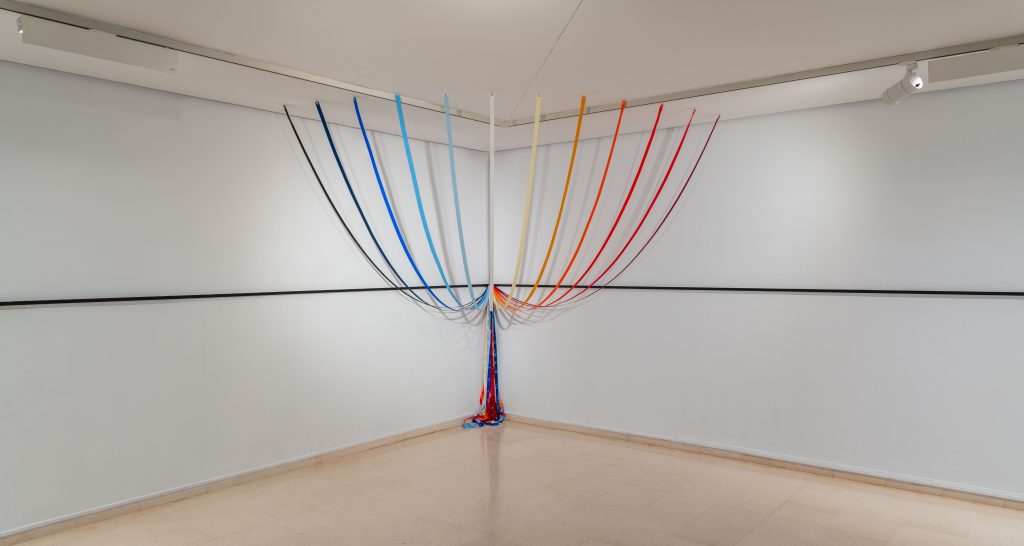
On the upper floor, a metallic line runs around the perimeter of the room, evoking the horizon, and is interrupted by sculptures that alter its layout. This intervention recalls the mint system of the pre-Columbian Andean world, a network of sacred lines that connected the city center with huacas —sacred places— and that marked key moments in the Inca calendar. The sculptures that break the line thus function as these time markers, recalling the intrinsic relationship between space and temporality.
The two installations are connected through the staircase, where the ascent becomes a symbolic threshold: a step from one state to another. This vertical axis acts as an interruption in continuity, a “now” that crosses the different temporal planes. Entre lo profundo y lo distante thus poses a reflection on how time is rooted in the landscape and how all geography is, in essence, temporal.
Canepa gives shape to these “spaces of symbolic confluence where classical mythology and indigenous Andean cosmologies dialogue”, detailed Blanca De la Torre, an approach built, precisely, on the basis of layers. The first, but no less relevant, starts from an aesthetic experience in which bright colors and geometric figures set the rhythm of a suggestive room that seems populated by toy pieces.
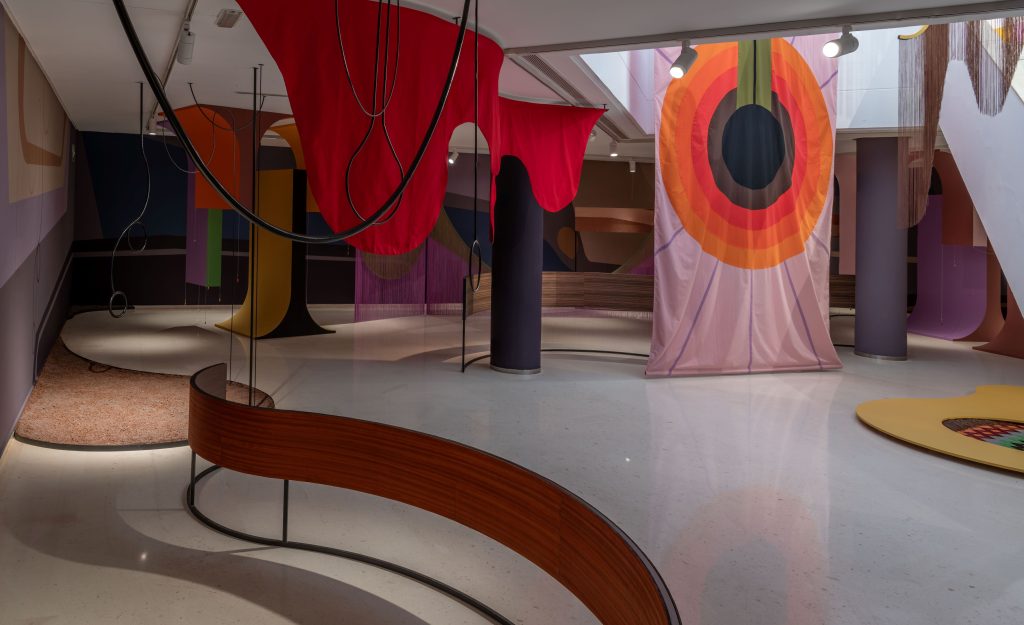
The use of color is not accidental, as there is a powerful idea behind it: “There is politics in enjoyment.” This was one of the lessons the artist learned during a residency in Puerto Rico, a message that still guides his practice today. “Normally, what is academic and serious has to be in black and white, elegant; I think using color is a way of questioning this idea […] Reclaiming traditions and the fact that it is popular is absolutely valid and constitutes, at the same time, a form of resistance.”

You may be
interested
...