Exhibitions
Rediscovering Francisca Rius and the beauty of stylization at the Girona Art Museum
Modernism and art deco in action: Francisca Rius transforms forms into beauty at the Girona Art Museum until April 6.
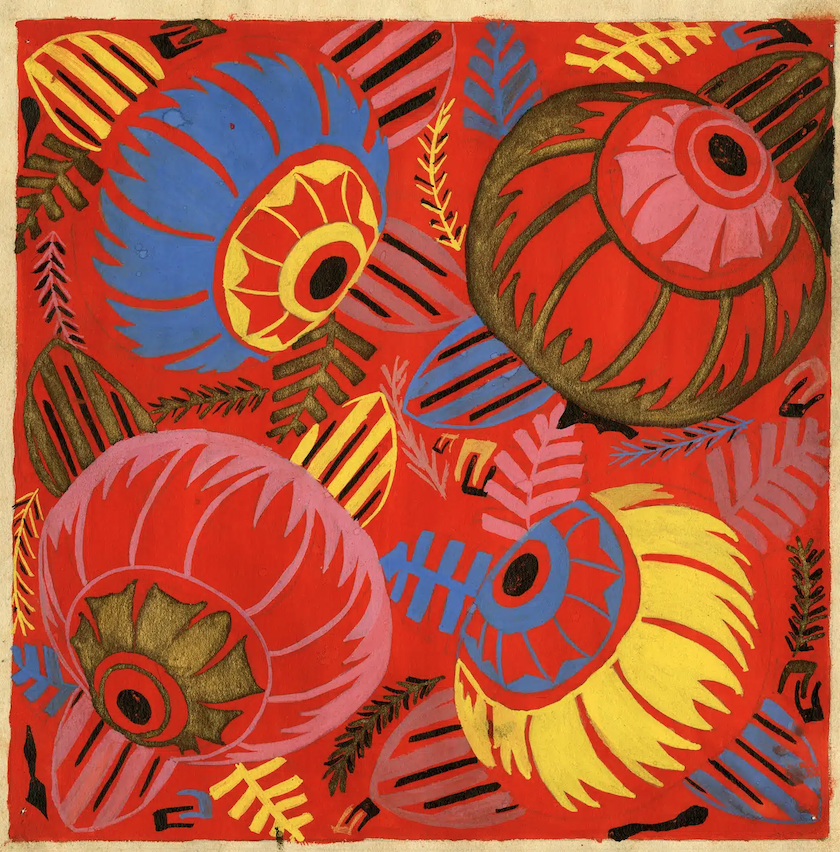
The Museu d'Art de Girona opens with Francisca Rius i Sanuy (1891-1967). Design and life, the first monographic retrospective dedicated to this Catalan artist. The exhibition highlights the career of a creator who, due to the social and political circumstances of the 20th century, had been unjustly relegated to oblivion. Curated by her grandson, Domènec Ribot, the exhibition presents the public with a selection of previously unpublished works, mostly from family collections, and can be visited until April 6, 2026.
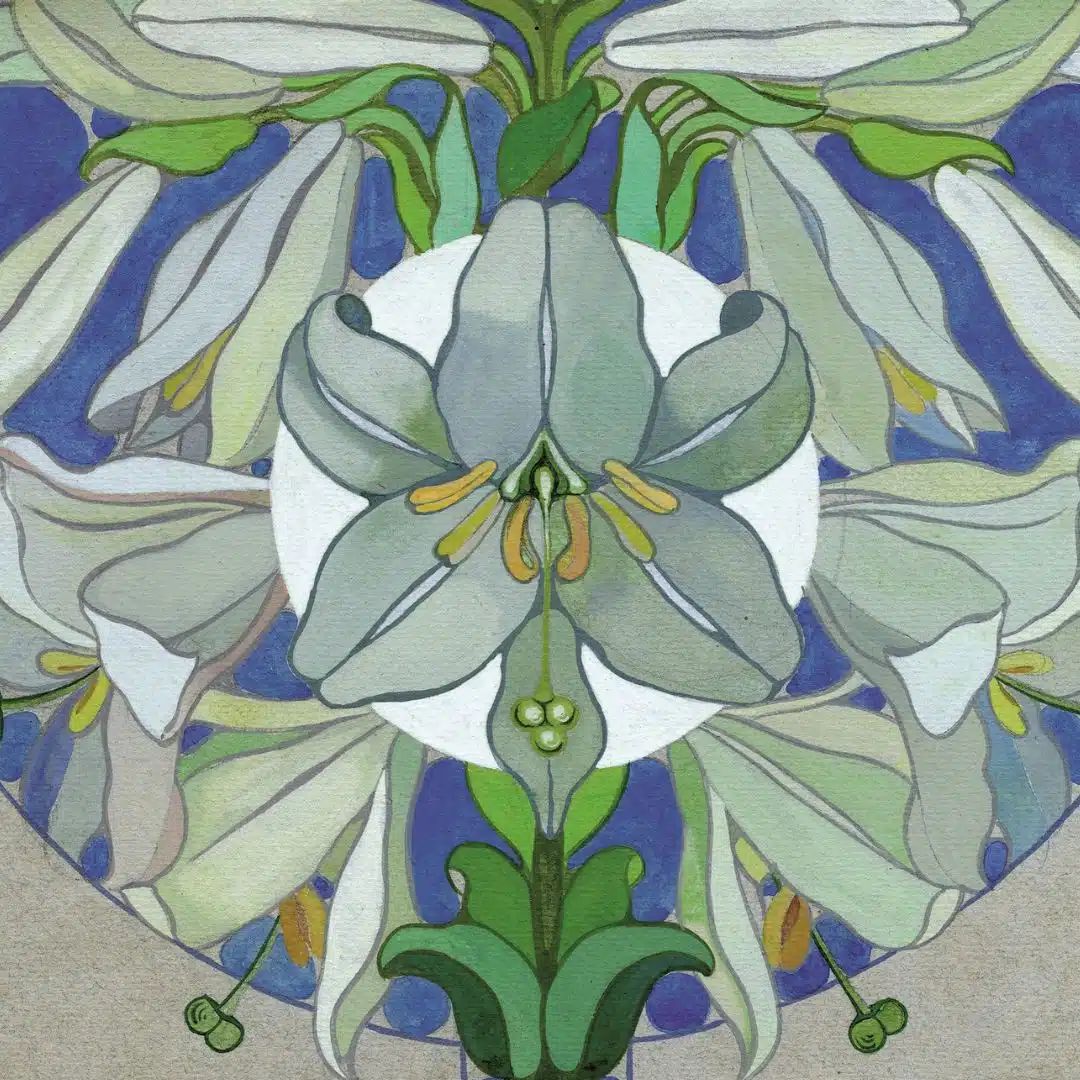
Francisca Rius i Sanuy. 'Assutzena', 1914. Private collection.
Born in Barcelona on December 11, 1891, Francisca Rius trained at the Escola de la Llotja, where she stood out for her artistic sensitivity and obtained several awards, including the silver medal from the Provincial Academy of Fine Arts in 1914. From a young age she participated in exhibitions in Barcelona and Madrid, winning prizes that anticipated a promising career.
His work combines modernism and art deco in a delicate and harmonious language of his own. His stylized drawings, inspired by nature, embroidery patterns and illustrations show subtle shapes, rich colors and an almost musical decorative force. Although the preserved work is scarce, it represents a radiant testimony to the art of stylization, designed to dialogue with the needs of the creative industries of the time, transforming the simplification of forms into pure artistic expression.
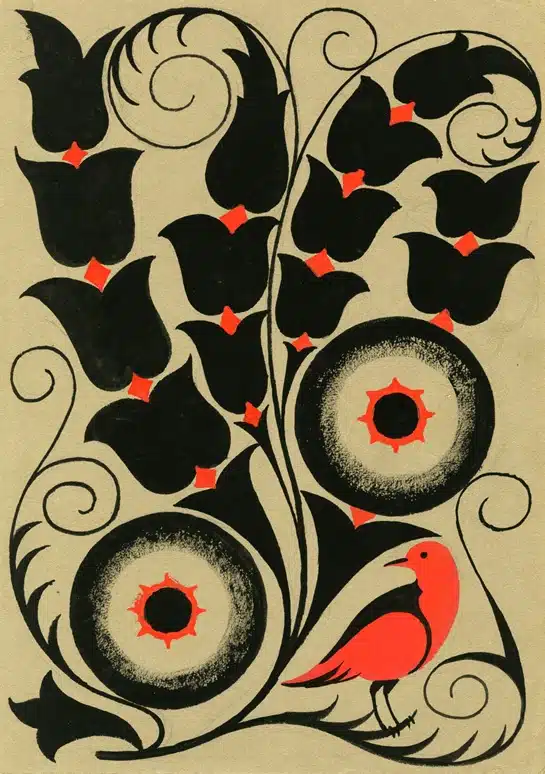
Francisca Rius i Sanuy. 'Floral stylization with red bird', c.1914. Private collection.
The current retrospective is born from the precedent of the exhibition Feresa de Silenci (2022), dedicated to the artists who had published in the magazine Feminal and curated by Elina Norandi, which brought to light practically unknown trajectories. Following the museum's line of recovering and valuing women artists of all eras, the commitment was made to dedicate an exhibition and a catalogue to Francisca Rius, restoring the memory and artistic dimension of a singular creator.
His work preserved in public collections is scarce. Some pieces are kept in the Barcelona Design Museum, such as his embroidery patterns, and the National Archive of Catalonia preserves various documents, including the original manuscript of his Intimate Diary. This diary, written between 1938 and 1939 from the rear and intended for his son at the front, offers an intimate and emotional testimony of daily life in wartime, and was published in 2009, which allows us to rediscover the artist's personal and sensitive gaze.
Through this exhibition, the Girona Art Museum recovers not only the work of a forgotten artist, but also an essential part of Catalan cultural heritage, promoting the creativity, delicacy and ingenuity of a woman who knew how to transform formal simplification into artistic beauty.

You may be
interested
...