Exhibitions
The return of form
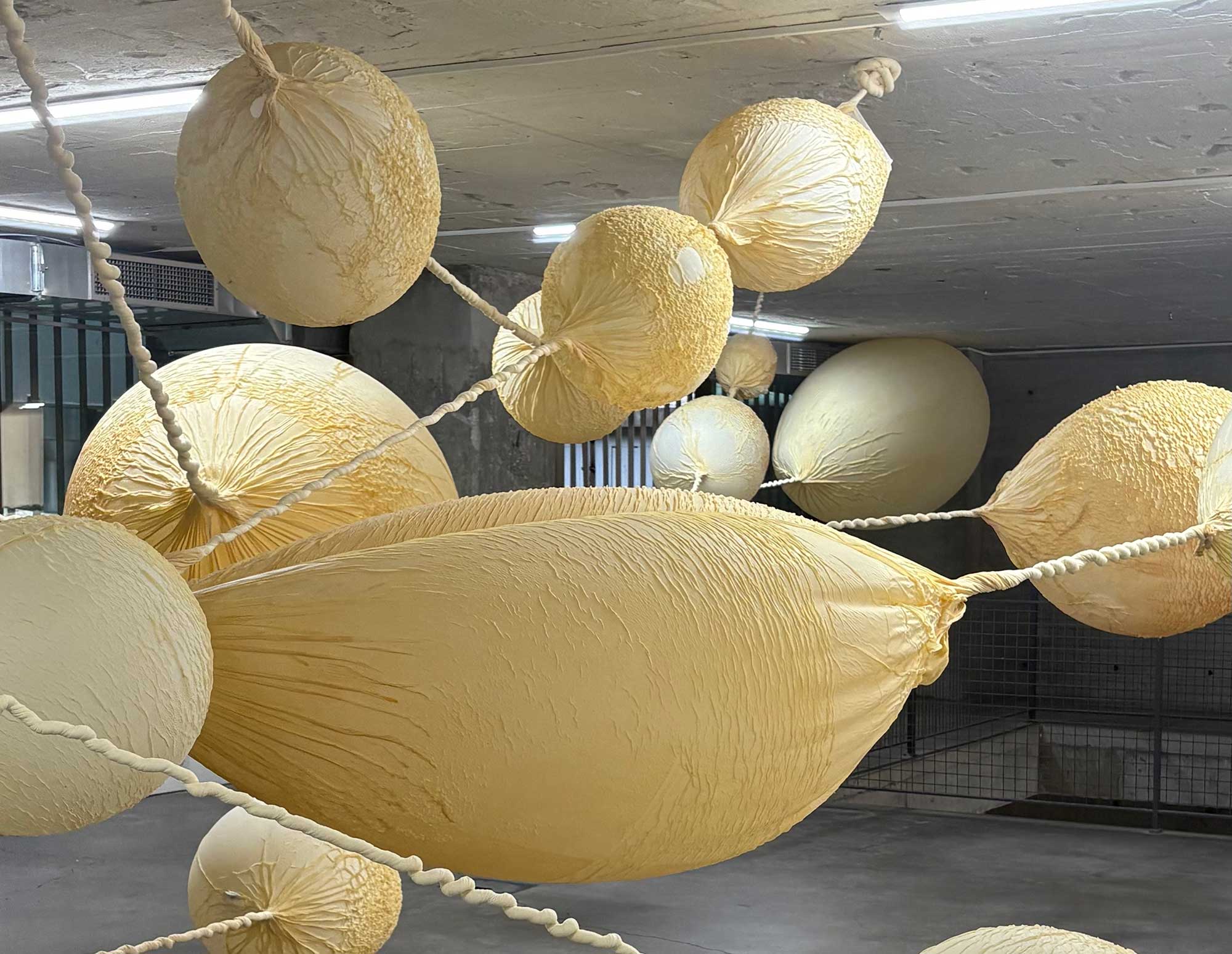
The Bombon Projects Gallery in Barcelona opened the 2025/26 season with an exhibition by Eva Fàbregas (1988), this same year and coinciding with Arco, we were able to see her work and performance at the Reina Sofia Center. I consider this to be a propitious circumstance to describe and verify the interest that exists on the part of a generation of sculptural artists to which Eva Fàbregas herself belongs, such as Teresa Solar or Nahalie Rey among many others who propose a return, a recovery of the power of form.
The dematerialization proposed by conceptual art made form something dispensable or minor, it was not substantial to the work of art. Although this has determined sculpture since Aristotle established the “hylemorphic” relationship between matter and form, from classical statuary to Richard Serra's 88 formalizing infinitives, and as we see to this day.
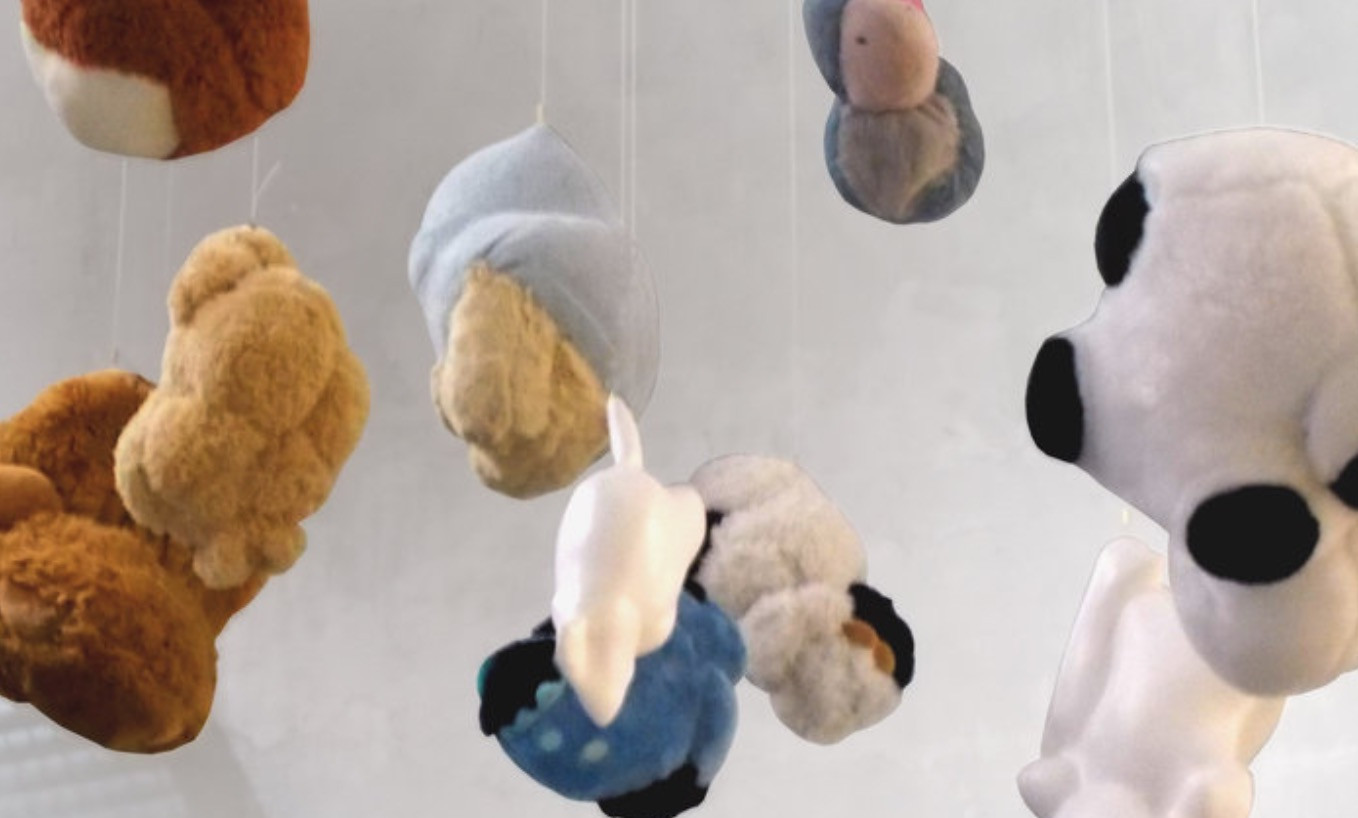
Work by Nathalie Rey.
These sculptors have replaced the conventional use of wood, stone, marble, iron or bronze with ductile materials such as silicone, inflatables, foam, latex, which are very malleable and suitable for creating works in which organic forms related to both the external body and internal organs predominate. The consequence is the predominance of rounded, oblong forms, alluding to the female body or also zoomorphic abstractions or others related to nature.
A haptic interaction is established with the viewer, tactility is encouraged through perception and the senses, Natalie Rey even interacts with soft stuffed animals created by her and Eva Fàbregas, including voice and sound to highlight the total perception.
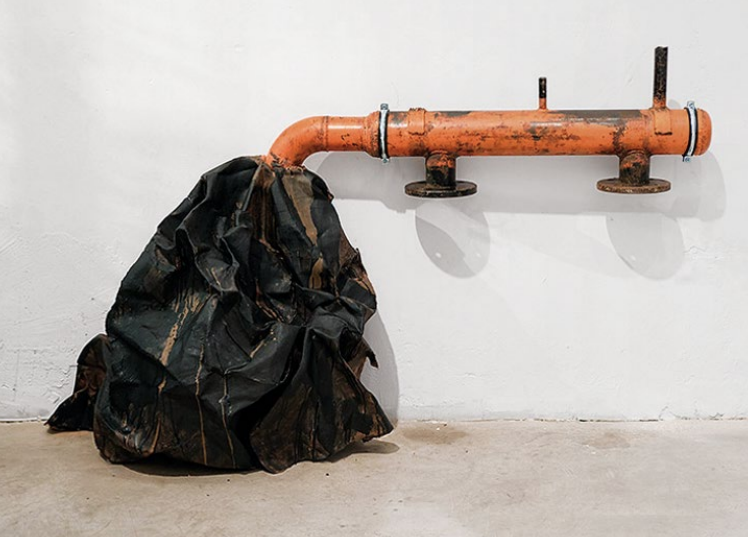
Teresa Solar works with hollowness, bone structure and soft forms. What they all have in common is that her sculptures tend to spread out, expand or contract into large installations that occupy space, adapting to the place.
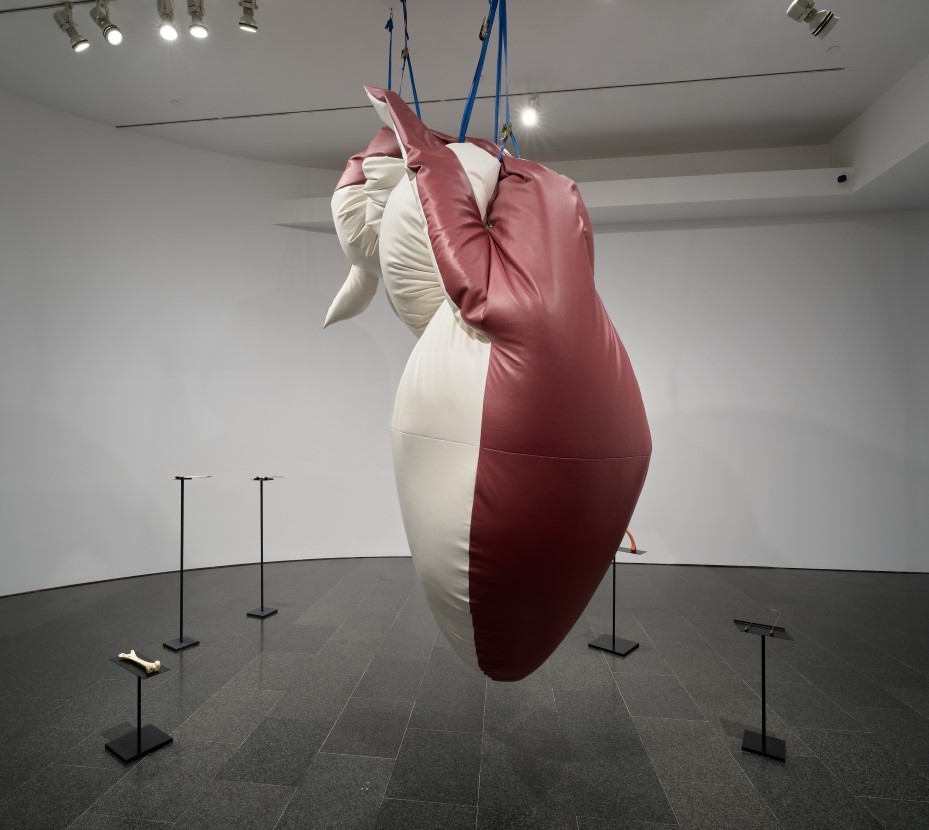
Work by Teresa Solar.
We see how matter and form need each other, correspond and the choice of materials determines the ability to create, which is why other artists of the same generation, who we will interpret at another time such as Laura Fluxà, Estela Rahola or Prosper Riba, have chosen the fragility of glass as the substance of their work.
In both cases, it is a true return to the Form that was forgotten in favor of sociological, linguistic, and archival discourses of great theoretical complexity, and this return has been a true discovery for them.
A characteristic of the time we live in is that, due to the extreme subjectivity fostered by postmodernity, links with history are denied and the only argument is that of authorship. This apogee of the subject above all things has had a great impact on the interpretation of recent art history.
The vast majority have been trained in fine arts schools, but as with the study of other academic disciplines, students demand that their subjective opinions be respected above the objective data of knowledge. Kant is not what the history of philosophy says but what it seems to me he is. It is not an exaggeration and because of this extreme subjectivity they show no recognition to their predecessors and believe that they were born without parents.
In addition, these new generations of artists as women of the period associate large contemporary sculpture made of heavy materials with heteropatriarchy and do not want to acknowledge debts to a masculinized culture.
As we know, this is not the case and among the countless examples of sculptors who preceded the form, I will highlight some of those I have written about and who belong to our closest environment: the sculptor Gabriel, Tom Carr, Ralph Bernabei, Guillem Balmes, Bill Thompson, Joan Navarro, or Wilhelm Mundt. In all of them, their works achieve the powerful force of the origin of the form.
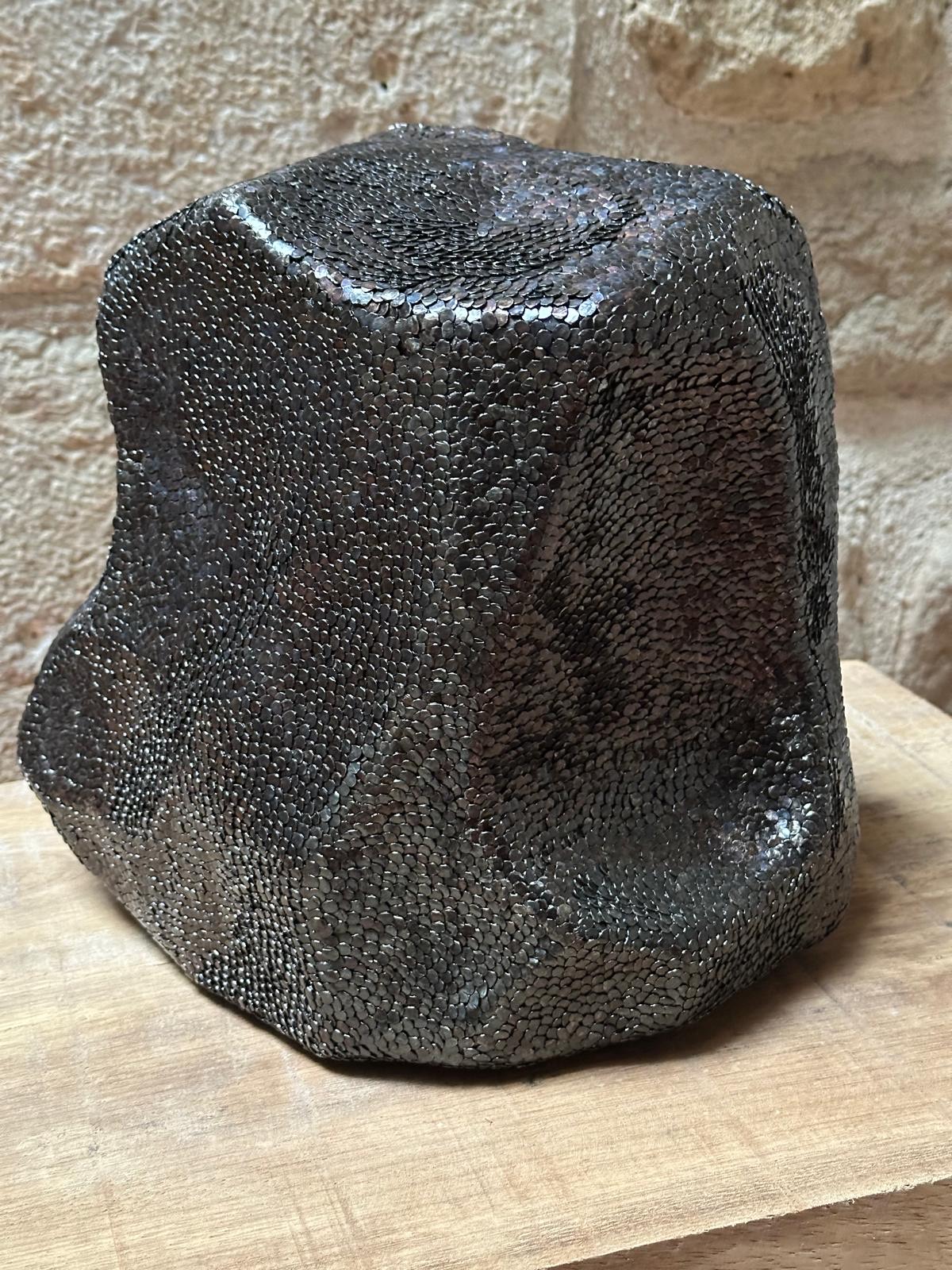
. Work by Gabriel.
Among them, I highlight the sculptor Gabriel because he has converted the notion of Form and Preform as the theoretical basis and foundation of his work, using materials such as stainless steel, nails, aluminum, lead, lacquered wood or methacrylate and, in addition, he has theorized through his extensive written work proposing a new Axiom for understanding art.
I believe that an agreement is needed, an Intergenerational concordance, also of gender, and for this reason I want to remember some common meeting places, I will do so through the critic Juan Eduardo Cirlot who wrote in 1955 “Morphology and contemporary art”, a book that opened many doors for me to understand Form and that, considering its premises, this agreement between generations would be perfectly possible. My admired Cirlot addresses the relationship between Matter, Form, through numerous aspects, but above all, I will highlight the analysis of the structures found in nature, including the human body, form as frozen movement and the morphology of the microscopic and its macroscopic correspondence. But, above all, he proposes the search for meanings in forms and what interests me above all, I refer to matter as concentrated energy and its relationship with the human psyche and spirituality. Here is the meeting.
You may be
interested
...