interviews
Marko Daniel: "The coherence with which Miró conceived the world is truly surprising."
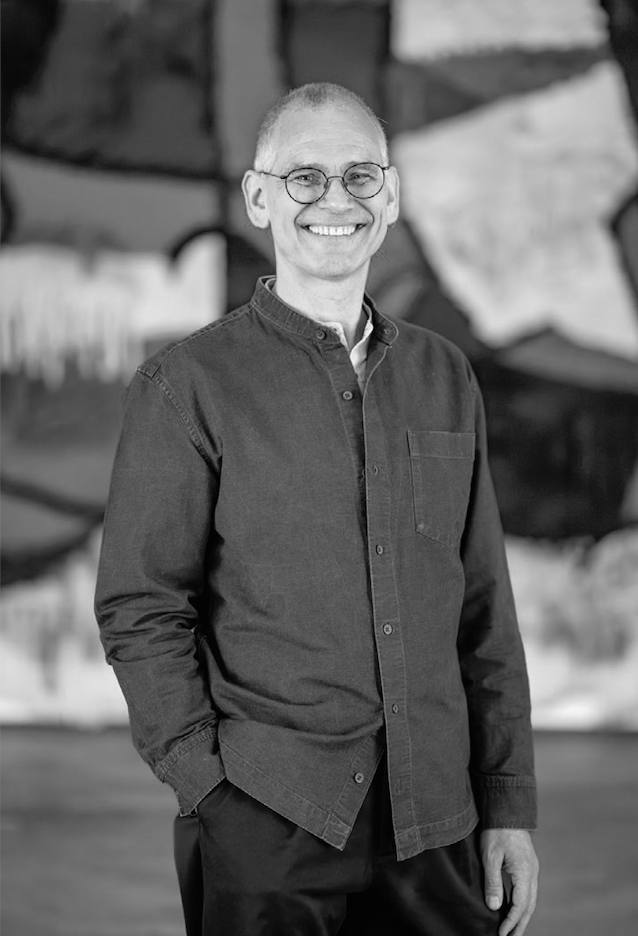
Marko Daniel (Aachen, Germany, 1964) graduated in Art History and Philosophy from University College London and obtained his PhD in Art History and Theory from the University of Essex in 1999. An expert in contemporary Chinese and Catalan art, he has combined research with teaching at various academic institutions in Southampton, Taiwan, London, and Barcelona. In 2006, he joined Tate Modern in London as Curator of Public Programmes, a position he held until 2017, leading this area at both Tate Modern and Tate Britain.
Since January 2018, he has directed the Joan Miró Foundation. This year marks the Foundation's 50th anniversary. How would you define the legacy you have built?
I think we have a magnificent legacy of which we can be very proud. Miró gave a gift to the city, and now we work to keep it alive and active, thinking of the future and the generations to come, working for the people of tomorrow.
Precisely, "For the People of Tomorrow" is the motto of this 50th anniversary. What is your vision for the Foundation in the next five decades?
We want the Fundació Joan Miró to remain an international benchmark for Joan Miró's work, not only for the exhibitions we organize, but also for the research on which they are based. We want to consolidate this position as a benchmark in the field of research and maintain our commitment to contemporary art, which was so important to Joan Miró. Espai 13, in this sense, is a legacy of which we can be very proud. The Joan Miró Prize is another commitment to the new production of artists with a slightly more advanced career. This year we feature Kapwani Kiwanga, one of the greatest living artists in the world today.
The work we do to promote new production and the creativity of emerging artists is essential for two reasons: first, because we want to show our visitors that creativity is a constant and living process; and second, because this creativity of young artists allows us to discover new interpretations of Joan Miró's work every day.
They are working on a new arrangement of the collection, how will it be structured?
We're very excited about this new presentation of the collection, as we'll focus on Joan Miró's creative processes, which explain why he remains so relevant to new generations of artists. These are the dialogues Miró established with other disciplines: science, astronomy, his interest in the environment and nature... This new presentation will also allow us to open the Cypress Garden to the public for the first time. This will create a climate refuge—an increasingly necessary space—where we can connect more directly with nature, one of Miró's key elements. It will also offer the opportunity to create new spaces for collaboration and artistic mediation, which we hope to develop within it.
In this sense, how did the process of returning Sert's building to its original form come about? What does it mean?
All of this is linked to the sensitivity and experience that all of us who work here share when we arrive at the foundation. The foundation is open and transparent; it opens the life of the exterior to the interior and allows the interior space to be legible and visible from the outside. This integration is fundamental to the building, and it is not accidental, but the result of the shared vision between Sert and Miró. Openness and transparency, beyond artistic and architectural concepts, are also symbolic values: they reflected the social and political situation in the final moments of Franco's regime, anticipating a democratic opening and expressing the desire for art to serve society in building a better world. The coherence with which Miró conceived the world is truly surprising; although it is not a unique vision, it is exceptional and singular. There are many artist museums in the world, but very few—in fact, I don't know of any—conceived with such a personal and close collaboration as that between Miró and Sert. It all began when Miró rejected a palace on Montcada Street, near the Picasso Museum, because he considered its art to be from the 20th century, not the 12th. He didn't want such an ancient setting or one marked by ostentatious, powerful architecture; he wanted a building of its time. Sert, in fact, spoke of a building that would be an anti-monument, closer to the humanist concept and respectful of human dignity that they both shared.
This year, with the exhibition in Tokyo and the Miró and the United States exhibition, the Foundation stands out for its international presence. How would you define the collaborations you maintain on the Iberian Peninsula with the foundations of Palma, Montroig, and Serralves?
The Serralves case is very interesting, as they have a very important collection of Joan Miró works from a private Portuguese bank, which acquired a large number of pieces. After its bankruptcy, the bank transferred them to the Portuguese State, which deposited them in the Serralves Foundation. We maintain a very close relationship with this institution, primarily through mutual loans for temporary exhibitions and the definition and development of joint projects. With the Miró Mallorca Foundation and Mas Miró, we consider ourselves the Miró Triangle. We hold regular meetings to promote collaborations, joint projects, coordinated social media campaigns, and we work on a shared vision of the relationship between architecture, nature, and the environment. Specifically in this last area, we are developing a specific collaboration to commemorate our 50th anniversary.
What challenges must institutions like yours face in a world undergoing rapid changes in lifestyles and increasingly complex and tense geopolitics?
Until recently, I would have said that the digitalization of the world was the clearest challenge. Now, I would say that, with recent events on the international scene—the geopolitical situation, wars around the world, and new challenges, not only for culture but, literally, for democracy and science on a global scale—the most important challenge for the Foundation is art, both in the interpretation of historical art and in the commitment to new creation and emerging artists. Art plays a fundamental role in defending those values that Miró also championed: openness, transparency, and democracy. Art, as well as support for art and culture, is more important than ever in helping us manage our relationship with the world, our position in it, and what we want to do to contribute to leaving a habitable world for the future.
You may be
interested
...