
Exhibitions
The pictorial universe of Muñoz Degrain, revealed at the Prado
The Prado Museum presents a tour dedicated to the work of Antonio Muñoz Degrain in exhibition hall 60 of the Madrid art gallery's Villanueva building until January 11. Degrain was a prominent 19th-century Spanish painter, famous for his landscapes and historical and literary compositions.
The exhibition brings together a dozen works by the Valencian painter, including five recently restored works. Through them, one can appreciate the thematic diversity, technical mastery, and aesthetic sensibility that characterize his artistic career. Complementing the exhibition, a display case presents his acceptance speech at the Royal Academy of Fine Arts of San Fernando, delivered in 1899 and focused on "sincerity in art," along with a drawing recently donated to the collection and a photograph of his portrait sculpted by Miguel Blay.
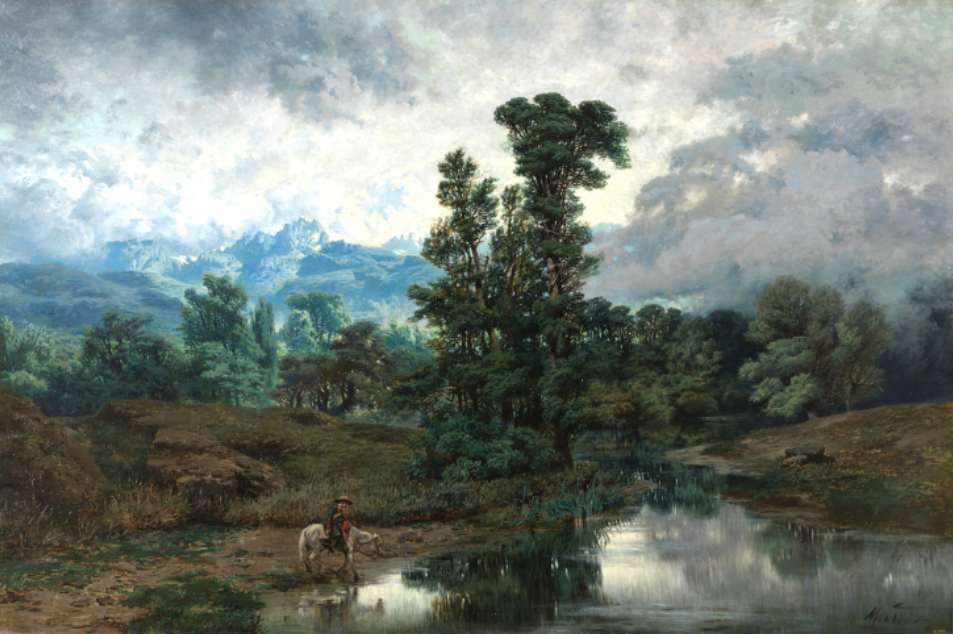
Landscape of El Pardo as the Fog Dissipates, Antonio Muñoz Degrain, Antonio 1866, Museo Nacional del Prado. Acquired in 1867.
He began his career within an eclectic style, combining elements of Romanticism and Academicism. Over time, his artistic style evolved toward Valencian Luminism, later adopting a freer brushstroke, close to Impressionism and even Expressionism, where color acquires a vibrant, daring, and deeply emotional intensity. He mentored artists such as Pablo Picasso in his early years and also had a significant influence on Joaquín Sorolla.
Degrain's exhibition is part of the Prado's 19th-century outreach program and includes iconic pieces such as the recently restored Paisaje del Pardo al dispersarse la niebla (Landscape of El Pardo al dissiparse la niebla, 1866). It follows on from exhibitions created in the past by Federico de Madrazo, Francisco Pradilla, Aureliano de Beruete, and Joaquín Sorolla.
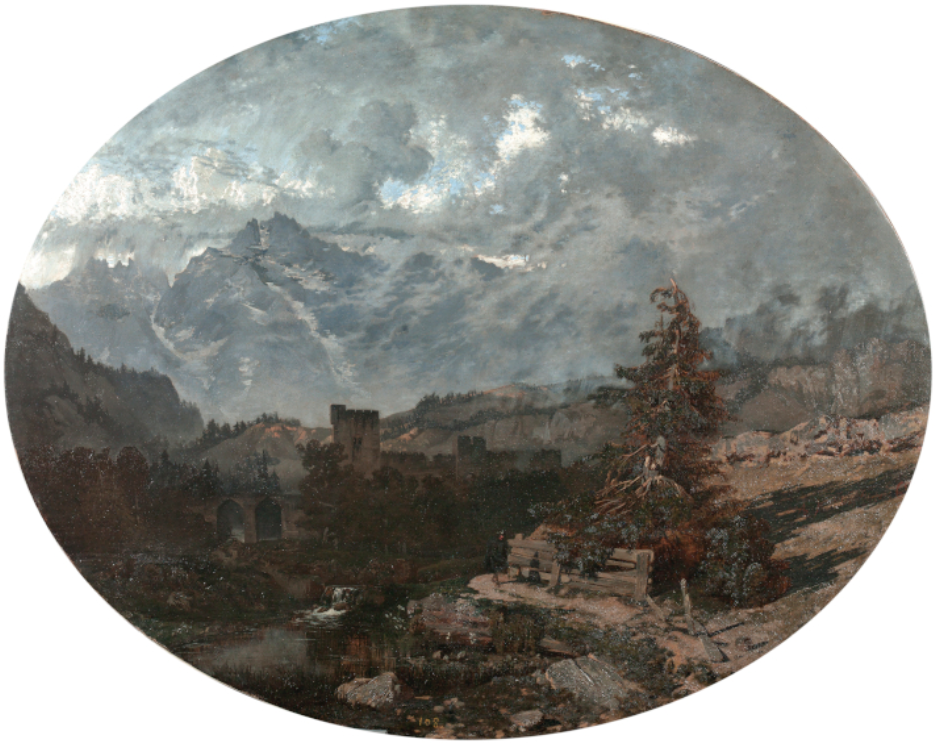
View taken in the Navarrese Pyrenees, Antonio Muñoz Degrain, Museo Nacional del Prado. Acquired in 1863.
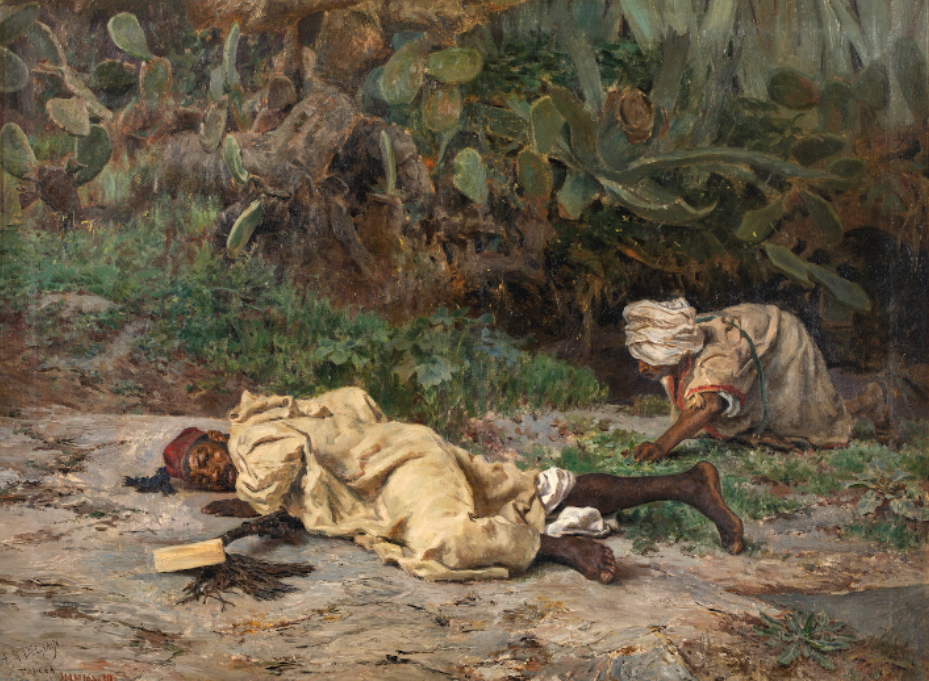
Muñoz Degrain's attraction to the exotic and Orientalist elements is evident in The Moroccan Listeners (1879), a work that reflects his interest in North African environments and his ability to incorporate elements foreign to the Spanish setting. This inclination coexists with his religious work, represented in paintings such as Jesus in Tiberias (1909), where spirituality is combined with vibrant and personal execution.
At the same time, his gaze also focuses on the intimate and everyday, as demonstrated by Corner of a Toledo Patio (1904), a scene that reveals his sensitivity for capturing the light and atmosphere of domestic spaces. Together, these works reflect the painter's thematic and stylistic breadth, always in search of new forms of expression. Additionally, the painting Interior of Muñoz Degrain's Studio in Valencia , created by his friend Francisco Domingo Marqués, constitutes a valuable visual document of the artist's creative environment, as well as highlighting the central role that painting played in the cultural life of nineteenth-century Valencia.



You may be
interested
...