
Exhibitions
The CDIS hosts the work of Ruth Orkin, pioneer of urban photojournalism.
Sensitivity and visual narrative of urban life were two characteristic elements of the life and work of Ruth Orkin (1921-1985), a prominent American photographer and photojournalist. She is now the main focus of the temporary exhibition "New York - New York" at the Santander Image Documentation Center, which will be on view until October 18 as part of the PHotoESPAÑA 2025 festival.
In 1931, Orkin received his first camera, a 39-cent Univex, and it was at that time that the Massachusetts native began experimenting with capturing photographs of his friends and school teachers. It was at the age of 17 that Orkin decided to cycle across the United States, starting in Los Angeles and ending in New York.
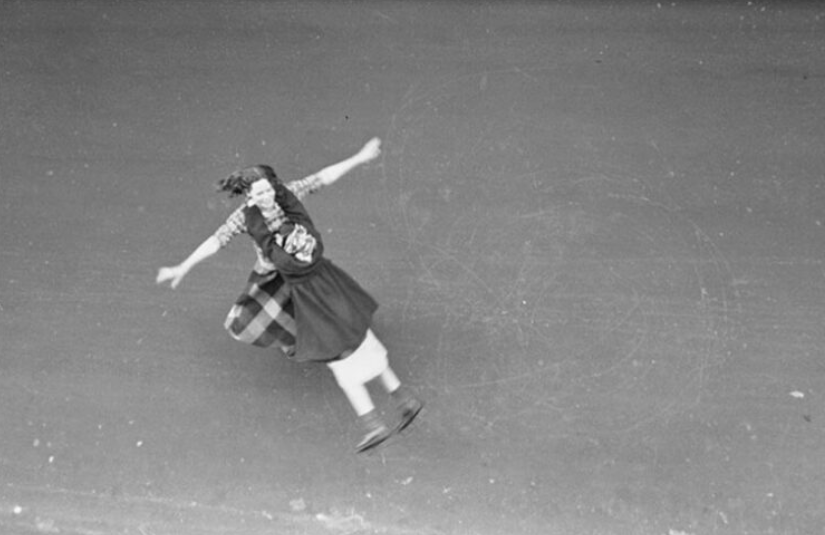
Ruth Orkin. From Above, Girls Twirling on Streets, New York City, 1948
The Big Apple is the name taken from the title of the exhibition in Santander with 40 original photographs from Orkin's personal archive in New York that span three decades of visual work, highlighting Bicycle Tryp from 1939, up to the iconic photograph of American Girl in Italy from 1951. A temporary exhibition curated by Anne Morin, in collaboration with the Santander City Council, the CDIS itself and the Menéndez Pelayo International University.
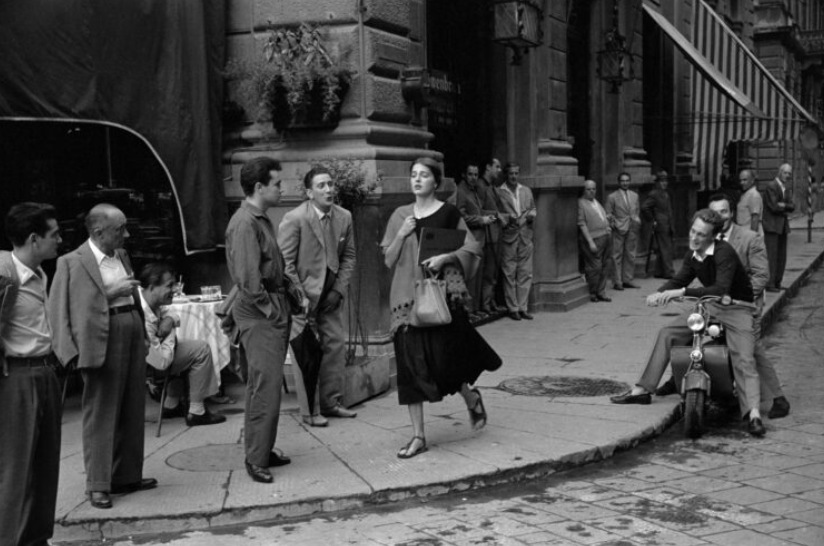
In 1943, Orkin moved to New York City to pursue a career as a freelance photojournalist. She began working as a nightclub photographer. Orkin photographed Leonard Bernstein in 1947 for The Times , most famously the American Girl in Italy image, a photograph in which 23-year-old Ninalee Craig was the center of the composition. The image depicted Craig as a young woman walking confidently past a group of onlooking Italian men in Florence, and the snapshot became symbolic of the female experience in public space.
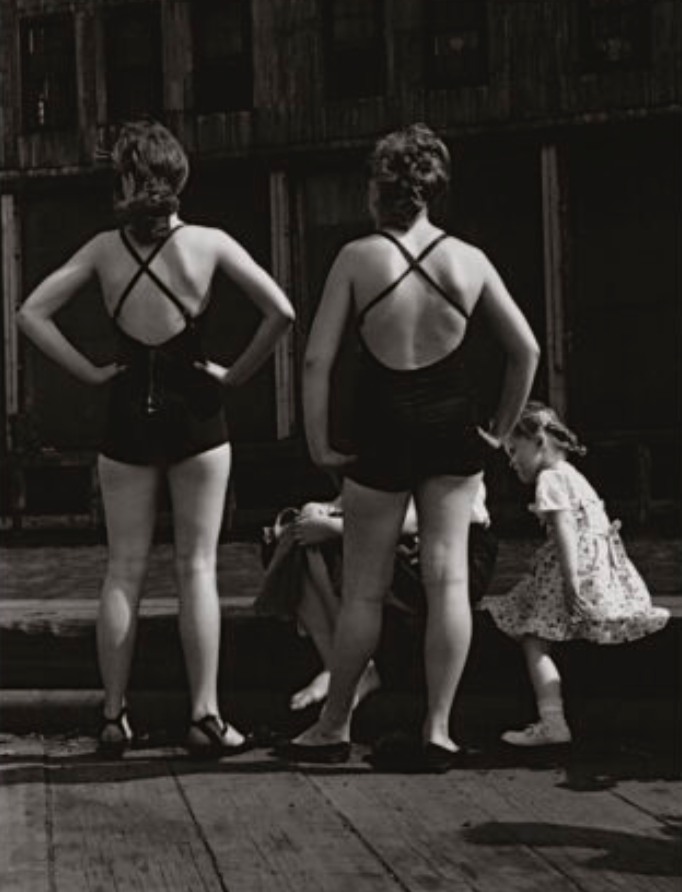
Ruth Orkin. Two Women in Bathing Suits, Gansevoort Pier, New York City, 1948
The CDIS exhibition incorporates references to her career in independent cinema, particularly her 1953 film, Little Fugitive, which was instrumental in the development of later films such as the French New Wave. Ruth Orkin broke barriers in a male-dominated field, combining sensitivity, humor, and a critical eye that left a profound mark on the history of 20th-century photography.


You may be
interested
...