Exhibitions
Oldenburg returns to Japan with mutability of images at PACE Gallery
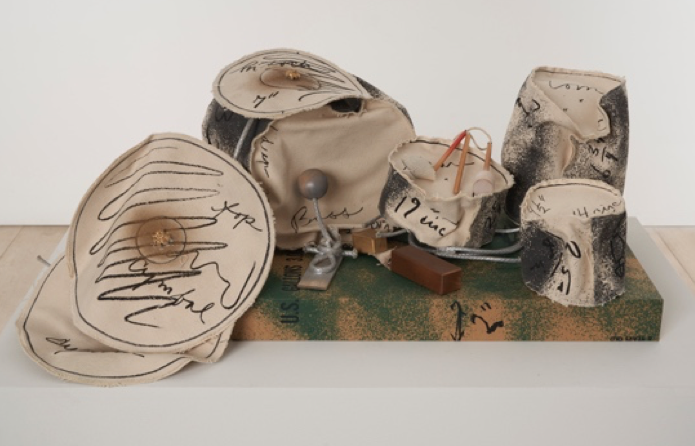
The space of Tokyo's Pace Gallery is filled with Claes Oldenburg's This & That , bringing together sculptures and prints in series dating from the 1960s to the mid-2000s. A dynamic tour that highlights the Stockholm-born artist's multiplicity and uncovers resonances and points of contact with Japanese culture.
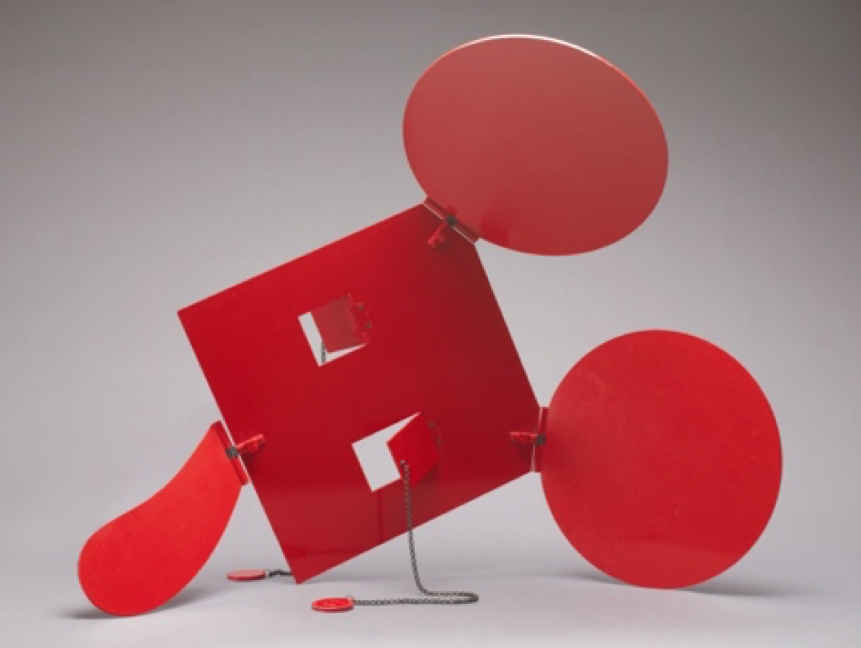
Claes Oldenburg, Geometric Mouse--Scale B, 1970-72 © Claes Oldenburg, courtesy Pace Gallery
Curated by Marc Glimcher, Pace’s executive director, the exhibition is part of the gallery’s 65th anniversary celebration, with locations around the world. The Japanese title of the gallery’s presentation isいろいろ(“Iroiro”), which roughly translates as “various,” “variety,” or “miscellany.” Suggesting a heterogeneous mix, “Iroiro” can also be written as色々 , which is a repetition of the kanji character色(“Iro”). “Iro” literally means “color,” but typically refers to the color or tone of something. It can also suggest the overall appearance of an object, and even more metaphorically, it can refer to the sensuality of something (as in the occasional English use of the word “colorful”).
The exhibition demonstrates Oldenburg's fascination with the act of artistic reproduction and the mutability of images. The artist died on July 18, 2022, in Manhattan. This is the first major presentation of Oldenburg's work in the Japanese capital since 1996. The artist's only other solo exhibition in the city took place in 1973 at the Minami Gallery. Notably, he debuted his large-scale sculpture Giant Ice Bag (1970), animated by mechanical and hydraulic components, in the United States Pavilion at Expo 70 in Osaka.
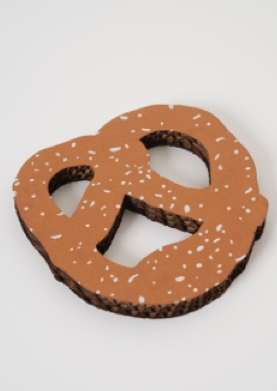
Claes Oldenburg, NYC Pretzel, 1994 © Claes Oldenburg, courtesy Pace Gallery
Oldenburg and Pace founder and president Arne Glimcher maintained a close friendship for 60 years, working closely together from the artist’s early career until his passing in 2022. Since the 1960s, Pace has featured Oldenburg’s work in some 30 exhibitions and produced seven catalogs devoted to his practice. The gallery also supported Oldenburg and van Bruggen’s creation of the large-scale sculptures Typewriter Eraser , Scale X (1998–99), which is in the collection of the National Gallery of Art in Washington, DC; Balzac Pétanque (2002), which is in the collection of the High Museum of Art in Atlanta; and Floating Peel (2002), at the Cantor Center for Visual Arts at Stanford University, among many other projects.


You may be
interested
...