
Exhibitions
Ladbeej, the red that holds the memory of Mitla
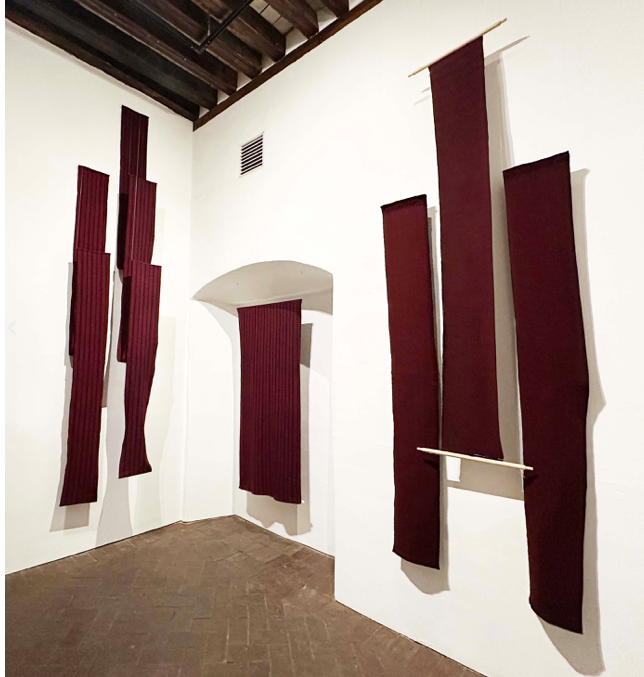
The Textile Museum of Oaxaca presents Ladbeej: Textiles Dyed with Cochineal , an exhibition that delves into one of the most significant textiles of the Didxzaj Zapotec people of Mitla and, through it, celebrates a heritage built on the transmission of knowledge, daily practice, and the continuity of a tradition rooted in pre-Hispanic times. The exhibition will be on view from August 9, 2026, to January 10, 2027.
The study of textiles from the indigenous peoples of Mexico reveals a universe of knowledge where wisdom, practice, science, and technology converge. This knowledge has been passed down through generations and is not merely preserved as a testament to the past, but remains linked to the communities that produce, use, care for, and incorporate these textiles into their daily lives. In this context, the ladbeej occupies a unique place within the textile culture of Mitla.
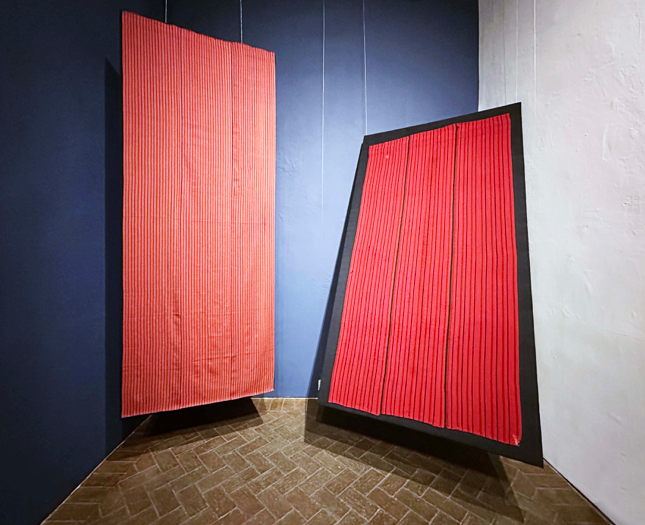
The ladbeej, made from fiber dyed with cochineal, has undergone transformations in its uses over time, though it maintains its presence in the community. Currently, it continues to be used primarily as a wrap-like garment or as a skirt by women in Mitla and other nearby towns. Its enduring use allows us to observe how a textile tradition can adapt to change without losing its connection to the knowledge that sustains it.
The exhibition proposes an approach to ladbeej from the perspective of the master craftspeople who still possess the necessary techniques for its creation. This is not knowledge acquired solely through written instructions. On the contrary, much of this legacy is transmitted through practice, observation, repetition, and the progressive mastery of the tools and materials involved in each stage of the process. Learning thus takes place within the body, finding one of its primary channels of transmission in the hands.
Weaving, dyeing, and preparing each element involves recognizing the timing, materials, movements, and procedures that are inextricably linked to the accumulated experience of those who practice them. In this sense, the hands acquire an almost documentary dimension: they preserve gestures, identify processes, and reproduce a technical memory passed down from generation to generation. The ladbeej is not merely the final result of artisanal work, but the material expression of collective knowledge.
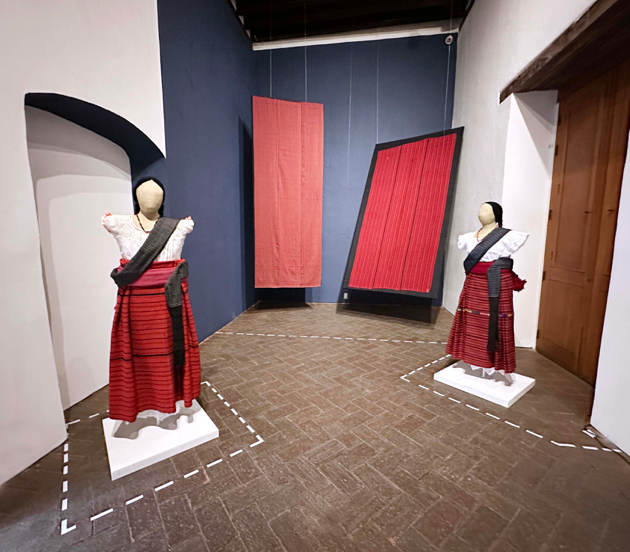
The exhibition allows visitors to explore the various elements involved in creating these pieces, from the origin of the fiber to the people who participate in their production and those who ultimately wear them. Throughout this journey, the master weavers and dyers take center stage, responsible for a chain of operations in which each phase demands dedication, precision, and a deep understanding of the materials.
Cochineal plays an essential role in this process, making color one of the fundamental characteristics of the textile. But beyond its visual dimension, dyeing allows us to approach a system of knowledge in which nature, technique, and culture remain closely intertwined. Obtaining and applying the color are part of a practice that has survived thanks to its direct transmission and the continuity of those who still practice it.
In this sense, Ladbeej. Textiles Dyed with Cochineal offers a perspective that moves beyond viewing textiles as mere handcrafted objects or museum pieces. Each textile embodies a history of materials, techniques, communities, and people. It also contains a memory that isn't always recorded in documents, but which remains in the gestures of those who know how to create it. The exhibition focuses precisely on this living dimension of heritage.
The Textile Museum of Oaxaca presents the ladbeej as both a complex piece and a repository of knowledge. Its importance lies not only in the antiquity of the techniques that make it possible, but also in the fact that these techniques continue to be part of the present. The knowledge associated with weaving and dyeing still resides in the hands and minds of those who practice it, demonstrating that the preservation of a tradition can also occur through its use, its learning, and its daily transmission.


You may be
interested
...