Exhibitions
Hermann Nitsch returns to the sacred
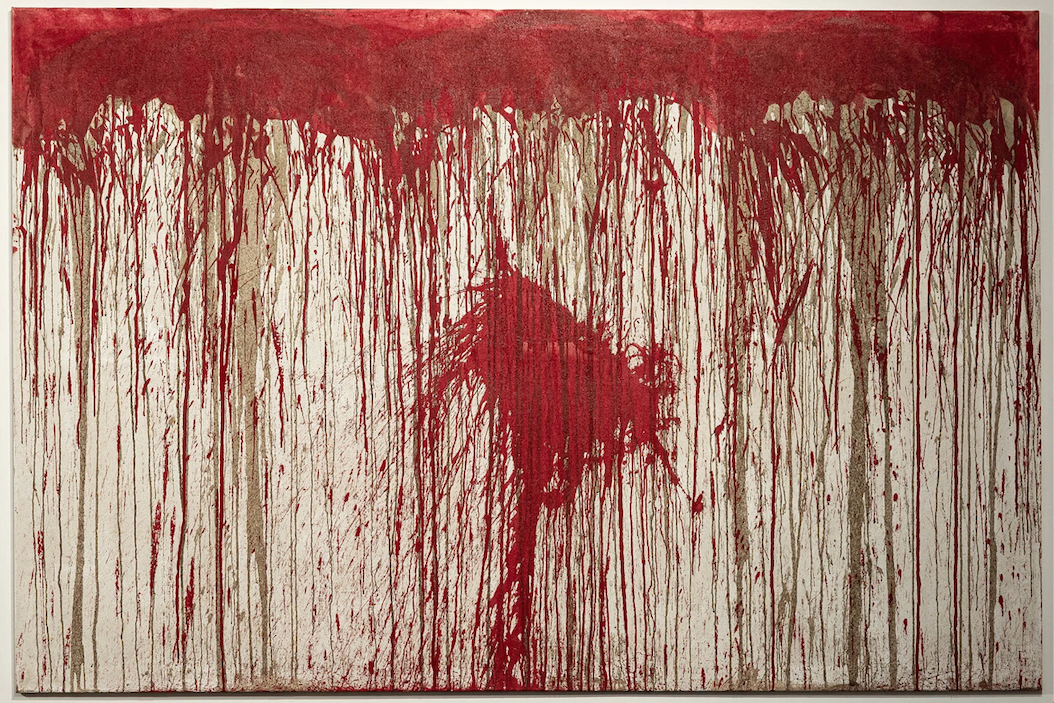
In the history of European art of the second half of the 20th century, few artists aroused as much fascination and controversy as Hermann Nitsch (1938-2022). A co-founder of Viennese Actionism, his work transformed performance, painting, and ritual action into an artistic language intended to confront the viewer with the deepest dimensions of existence. In contrast to interpretations that reduced his work to mere provocation, Nitsch always defended a profoundly spiritual vision of his practice: "I wanted to become a painter of churches," he stated, summarizing a career marked by the search for an aesthetic experience akin to ritual.
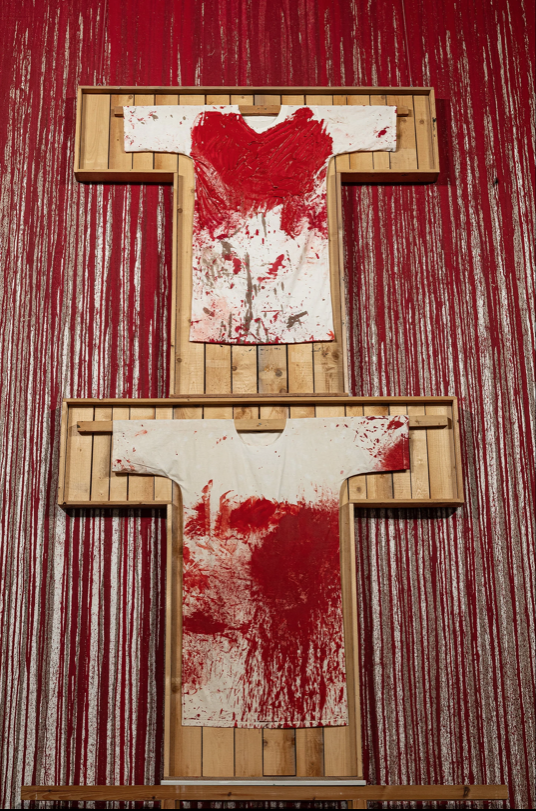
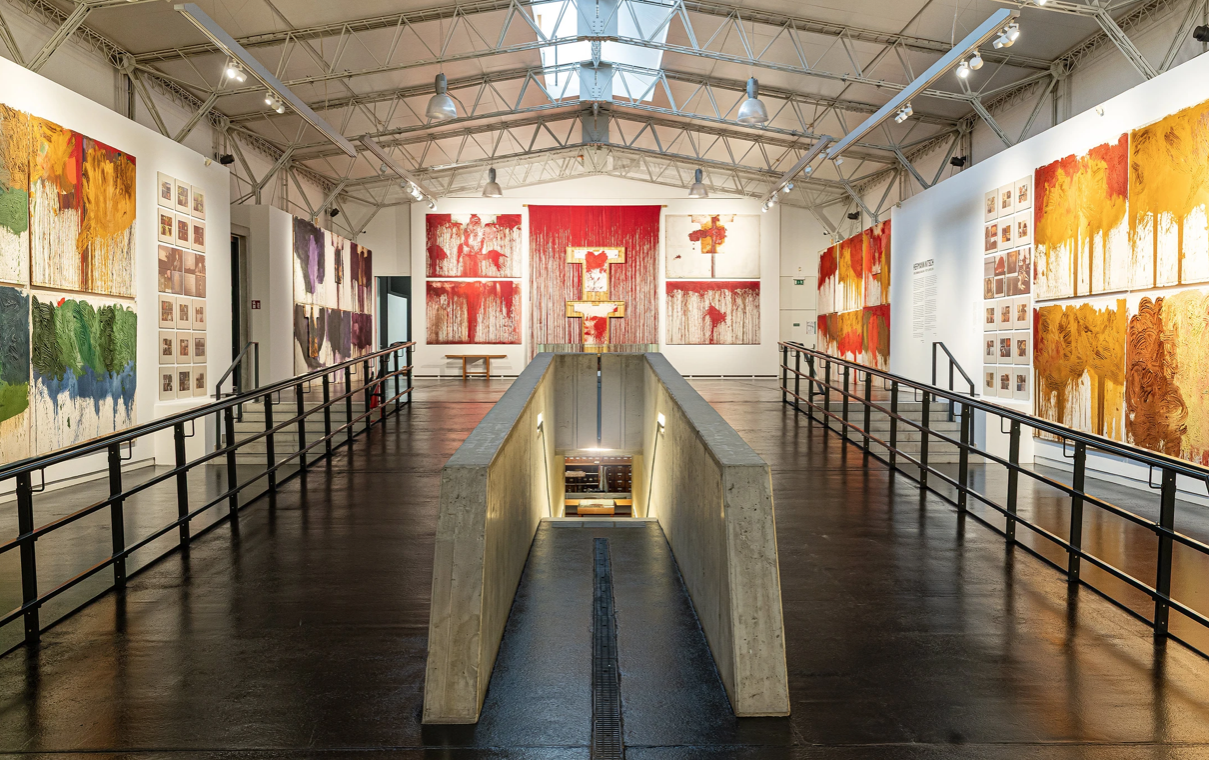
This dimension forms the core of from sunrise on , the major exhibition presented by the Nitsch Museum in Mistelbach (Austria) until November 29, 2026. The exhibition proposes a new approach to the sacred iconography developed by the artist since the beginning of the 1970s, revealing how liturgical elements such as the cross, ceremonial colors or the monstrance cease to function as religious references to become vehicles of a total existential experience.
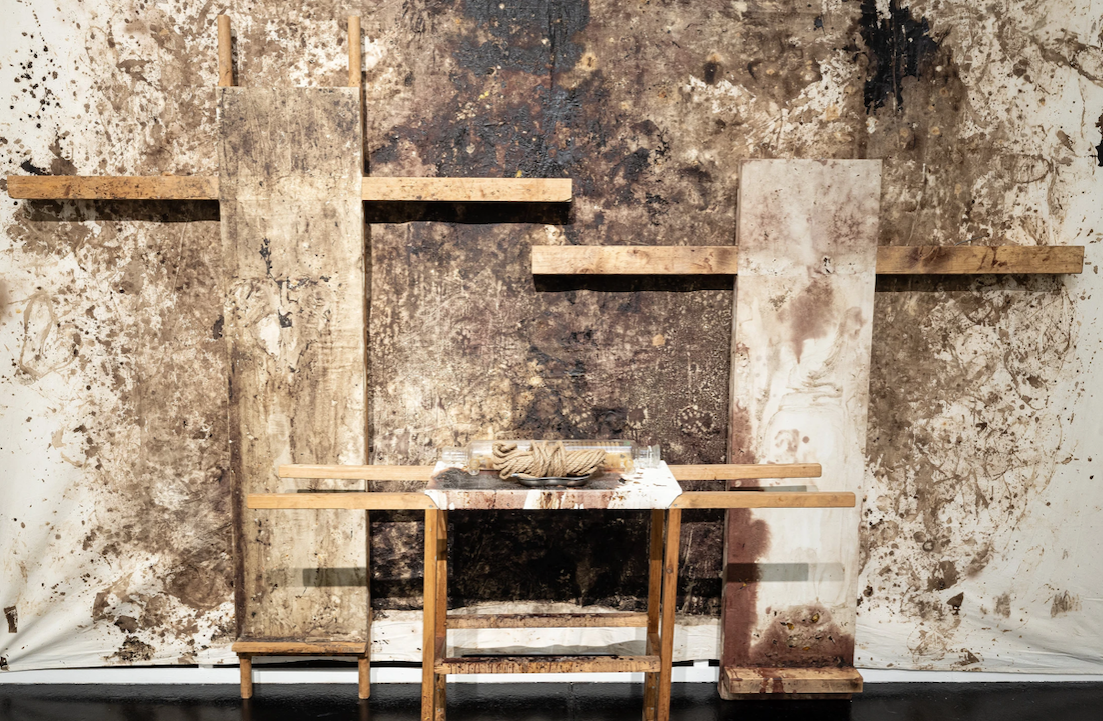
Curated by Julia Moebus-Puck, director of collections at the Museum of Actionism Vienna in Austria, "From Sunrise On" invites us to reconsider the legacy of Hermann Nitsch from a less polemical perspective, one closer to the fundamental questions that permeated his entire oeuvre: the relationship between humankind, nature, time, and transcendence. The result is an exhibition that proposes a rediscovery of one of the most radical artists of the 20th century as a creator deeply committed to restoring art's capacity to generate transformative experiences.
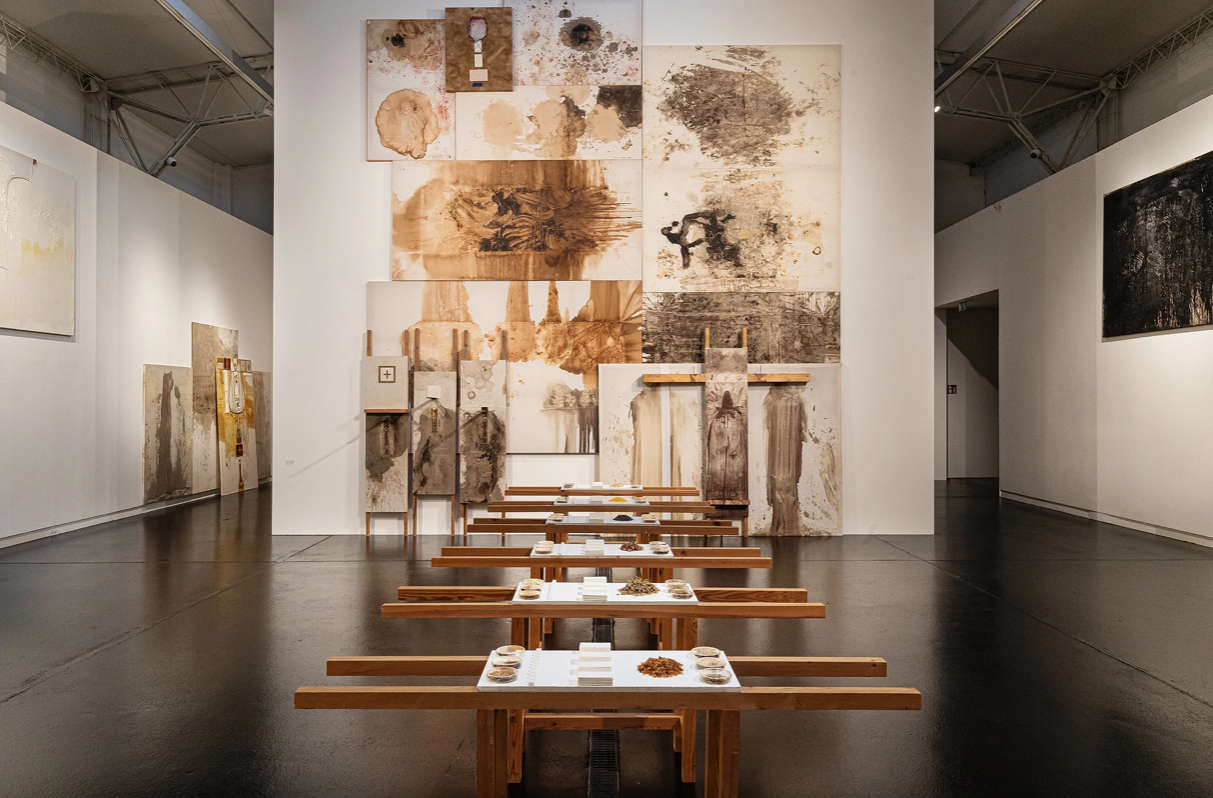
Far from presenting a chronological journey, the exhibition constructs an immersive space where painting, video, sound, and landscape converse to plunge the visitor into the sensory universe conceived by Nitsch. The route is organized around the sequence of liturgical colors—red, orange, yellow, white, black, green, and violet—which structure the visual and sonic dramaturgy of the exhibition and evoke the cycles of life, celebration, mourning, and transformation.
One of the most unique aspects of the exhibition is the inclusion of works rarely shown to the public, among them several handheld recordings of the landscape made by the artist himself. The nature of the Weinviertel, the region where the museum is located and where Nitsch carried out much of his work, thus takes center stage as a space of spiritual resonance. Two spaces conceived as chapels—one dedicated to silence and the other to the landscape—enhance this contemplative experience, while Heinz Cibulka's visual poems engage in a dialogue with the whole.
The exhibition takes its title from a recurring expression in Orgies Mysteries Theater , the most ambitious project developed by Nitsch over decades. In these long-duration performances, each day began 'from sunrise on, ' underscoring the connection between artistic ritual and natural rhythms. For the Austrian artist, art should activate all the senses and allow the individual to intensely experience life, suffering, celebration, death, and renewal.
Although Nitsch's actions sparked intense debate due to his use of animal blood and sacrificial imagery, the artist insisted that his aim was never to cause a scandal, but rather to reclaim the cathartic power of ritual. His performances, influenced by Greek tragedy, Christian liturgy, the psychoanalysis of Freud and Jung, as well as the philosophies of Nietzsche and Antonin Artaud, sought to transform the aesthetic experience into a form of emotional and spiritual knowledge.

You may be
interested
...