News
George Lucas breaks down the boundaries of art with a museum for contemporary visual culture.
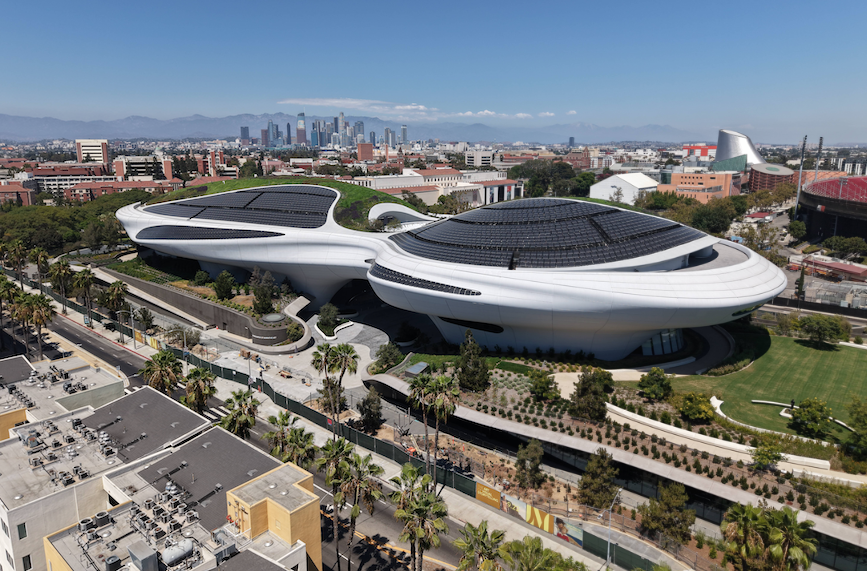
On September 22, 2026, Los Angeles will add one of the most ambitious museum projects of recent decades to its cultural landscape. After years of changes, delays, and an investment of nearly $1 billion, the Lucas Museum of Narrative Art will finally open its doors in Exposition Park, with a vision that aims to challenge the traditional boundaries between art considered "high art" and those visual expressions that for decades were excluded from major museums.
Driven and financed entirely by George Lucas and his wife, businesswoman Mellody Hobson, the museum stems from a conviction that the creator of Star Wars has defended for more than half a century: the images that are part of popular culture also build our collective memory and deserve to occupy a central place within the history of art.
The project doesn't seek to compete with major American museums, but rather to broaden the concept of what can be considered art. Comics, illustration, documentary photography, film, painting, and visual storytelling will coexist in the same space with the aim of eliminating hierarchies and bringing artistic creation closer to wider audiences.
Before finally settling in Los Angeles, the project was rejected by two other major American cities, Chicago and San Francisco. The final choice of Exposition Park places the museum alongside institutions such as the California Science Center and the Natural History Museum of Los Angeles County, solidifying this area as one of the city's major cultural hubs.
An architecture that challenges the traditional museum
The building itself serves as a statement of intent. Designed by Chinese architect Ma Yansong and the firm MAD Architects, with technical collaboration from Stantec, the complex occupies more than 30,000 square meters and emerges from the urban landscape as a large, suspended, organic structure.
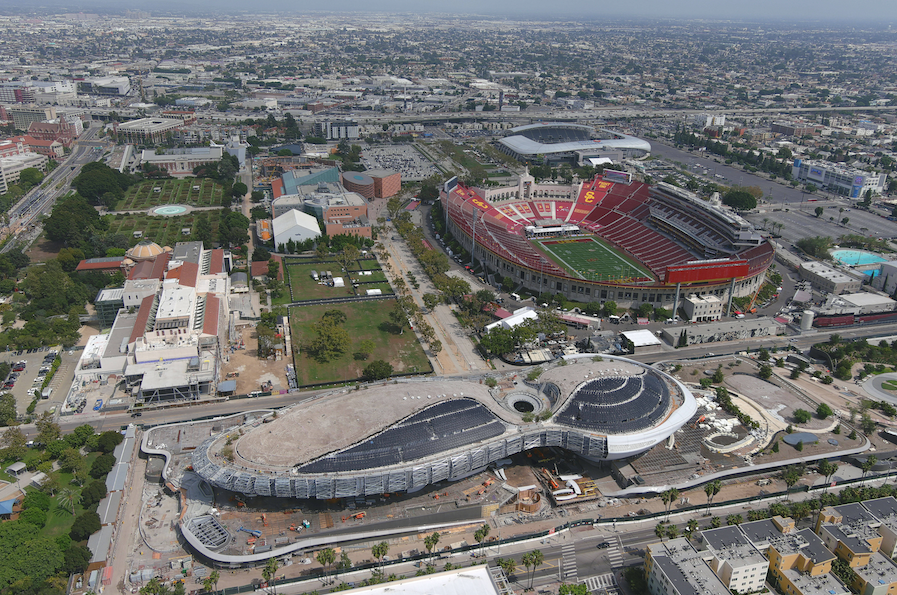
Its exterior is made up of approximately 1,500 fiberglass panels that create a sculptural surface of curved forms. Inside, the usual rigidity of many traditional museums disappears: open spaces, spiral staircases, soft lines, and a layout designed to foster a more intimate and participatory experience predominate.
The building will be surrounded by more than four hectares of gardens and green areas and will incorporate two cinemas, educational spaces, gastronomic areas and a free public library open to all visitors, even without the need to purchase a ticket for the exhibitions.
A collection built over five decades
The heart of the museum is George Lucas's extraordinary personal collection, amassed over more than fifty years. His relationship with this universe began when he was still a student and acquired original comic book pages for a mere $30, at a time when this material had little recognition within the art market.
Over time, that initial collection grew into a holding of more than 40,000 pieces. For the opening, approximately 1,200 works have been selected, distributed across more than thirty galleries and organized into some twenty thematic exhibitions.
The selection reflects Lucas's own vision: a defense of narrative art in all its forms. Works by artists renowned throughout art history will be displayed alongside those by creators linked to illustration, comics, and popular culture.
Among the featured pieces are works by Frida Kahlo, such as her Self-Portrait dedicated to Dr. Eloesser , along with works by Thomas Hart Benton, Kerry James Marshall and Charles White.
Comics and illustration enter the great halls of art
One of the museum's key distinguishing features will be its focus on illustration. The center will house the world's largest collection of Norman Rockwell's work, including Shuffleton's Barbershop , one of his most famous images of everyday American life.
His works will share space with creations by Maxfield Parrish, NC Wyeth and George Hughes, reclaiming illustration as a fundamental discipline within the visual culture of the 20th century.
Comics will also have an unprecedented presence at an institution of this stature. Original works by artists such as Jack Kirby, Mœbius, Frank Miller, Marie Severin, Jim Lee, and Alison Bechdel will be presented as essential pieces for understanding the evolution of contemporary graphic storytelling.
The collection will also include works by big names in fantasy illustration such as Frank Frazetta, Julie Bell and Boris Vallejo, artists who transformed the image of science fiction, fantasy and popular culture.
From documentary film to collective memory
The visual narrative is completed with original drawings of children's classics such as Peter Rabbit or Winnie-the-Pooh , alongside historical photographs by authors such as Dorothea Lange, Robert Capa and Gordon Parks.
The museum will also incorporate public works and projects linked to social art, with pieces by Judy Baca and Diego Rivera, broadening the focus to include images capable of explaining conflicts, identities, and social transformations.
Although George Lucas's name is inextricably linked to Star Wars , the saga will only occupy a small part of the exhibition. Just one of the twenty main exhibits will be dedicated to the cinematic universe created by the director.
Under the title Star Wars in Motion , the exhibition will explore the creative, artistic and artisanal processes that shaped the first six films of the saga, focusing not only on the final result, but also on the illustrators, designers and visual creators who made that vision possible.
A museum where cinema is also a work of art
The Lucas Museum will not only be an exhibition space. Its screening rooms will play a fundamental role in the project. Two cinemas will offer films and audiovisual excerpts throughout the day, with a concept similar to that of an open-air gallery.
The program will include everything from documentaries on the history of cinema to experimental works by artists such as Man Ray, László Moholy-Nagy, Stan Brakhage, Kenneth Anger, Mary Ellen Bute, and Jordan Belson.
The Robert Flaherty Theater, dedicated to the pioneering documentary filmmaker and the cinematic tradition of capturing reality, will also present projects such as Seeing is Believing: The Story of Narrative Art , a series created especially for the museum, as well as documentaries dedicated to artists such as Norman Rockwell, Jim Lee, Charles Schulz, Maurice Sendak, Diego Rivera, JC Leyendecker or Weegee.

You may be
interested
...