Exhibitions
Tàpies, the master of the fullness of emptiness
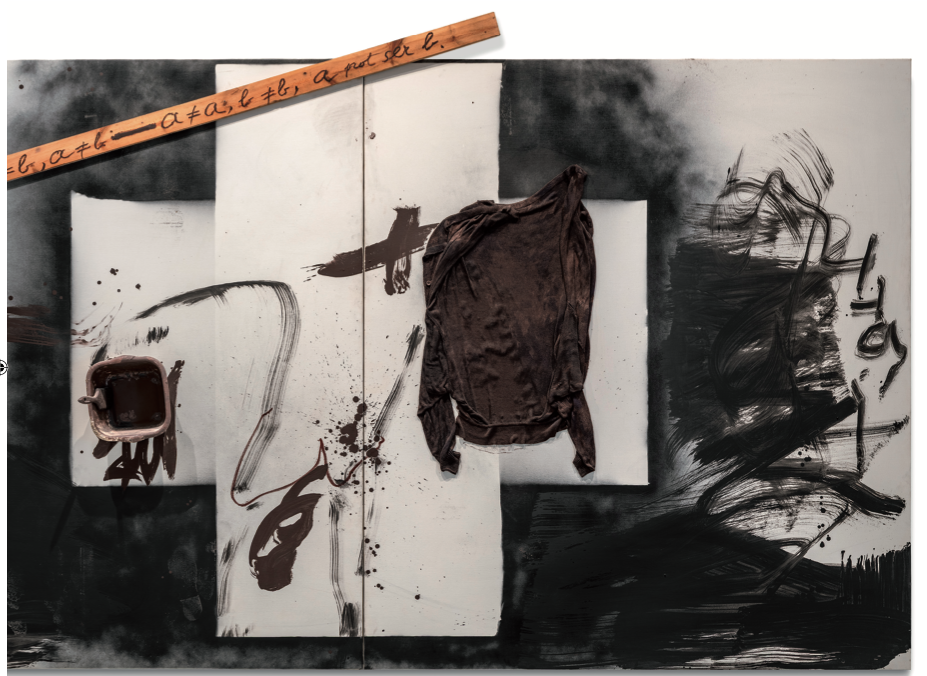
In one of his insightful texts, Antoni Tàpies recounts how he once picked up a painting that wasn't dry by the edges, and the imprint of his hand remained there, like a sign of a path to follow. Art becomes a matter of touch; the imprint of the artist's hand—he wrote in *Art Against Aesthetics *—is the "miracle of touch that sensitizes matter" in a chance moment. The painting becomes a kind of talisman that penetrates emotional instants; Rimbaud's alchemy resolves itself in the texture that represents nothing other than being a thing. The inspiration born of weariness says less about what must be done than what must be left undone. Tàpies encountered the wall unexpectedly and almost unintentionally; he began to scratch at it, to wage a physical struggle with the painting. Paradoxically, from this battle emerged a work that gave a certain impression of serenity. The dizziness and exhaustion caused by this scratching at the wall makes us porous and surrenders us to the twilight condition of what is saying goodbye. Tàpies was, as José Miguel Ullán aptly pointed out, a relentless seeker of the unexpected; he possessed the will and the innocence necessary to dissolve the surface and solidify the volatile. His works contain both gestural and angry violence and a kind of indescribable tenderness; his imagination united spontaneity and knowledge. In a certain sense, this artist embodies the Heraclitean philosophy of becoming.
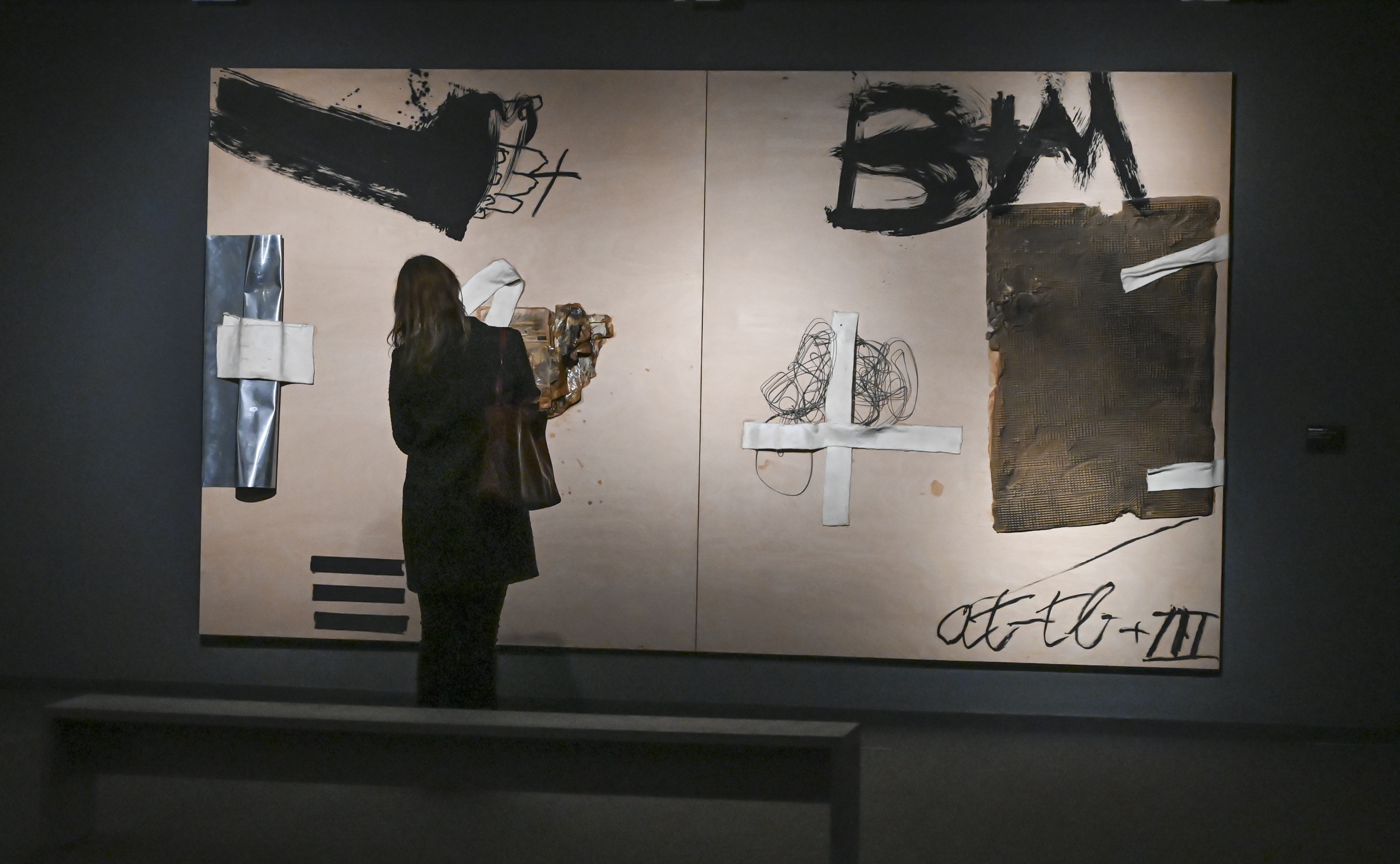
Tàpies drew on late Surrealism to evolve toward a material abstraction, becoming the great master of Informalism. He was an apparently serene man, with an unmistakable spiritual affinity for Eastern wisdom, yet at the same time he was stirred by the theoretical and practical experience of late modernity, fueled since adolescence by numerous novels and thinkers such as Schopenhauer and Nietzsche. To a great extent, his creative atmosphere established connections with the prehistoric “eternal present,” with American Abstract Expressionism, with Goya’s disasters and nightmares or Paul Klee’s aerial fantasy, with Mallarmé’s dice-throwing or Jacob Böhme’s mystical diagrams, with Michaux’s mescaline-inspired drawings or African masks.
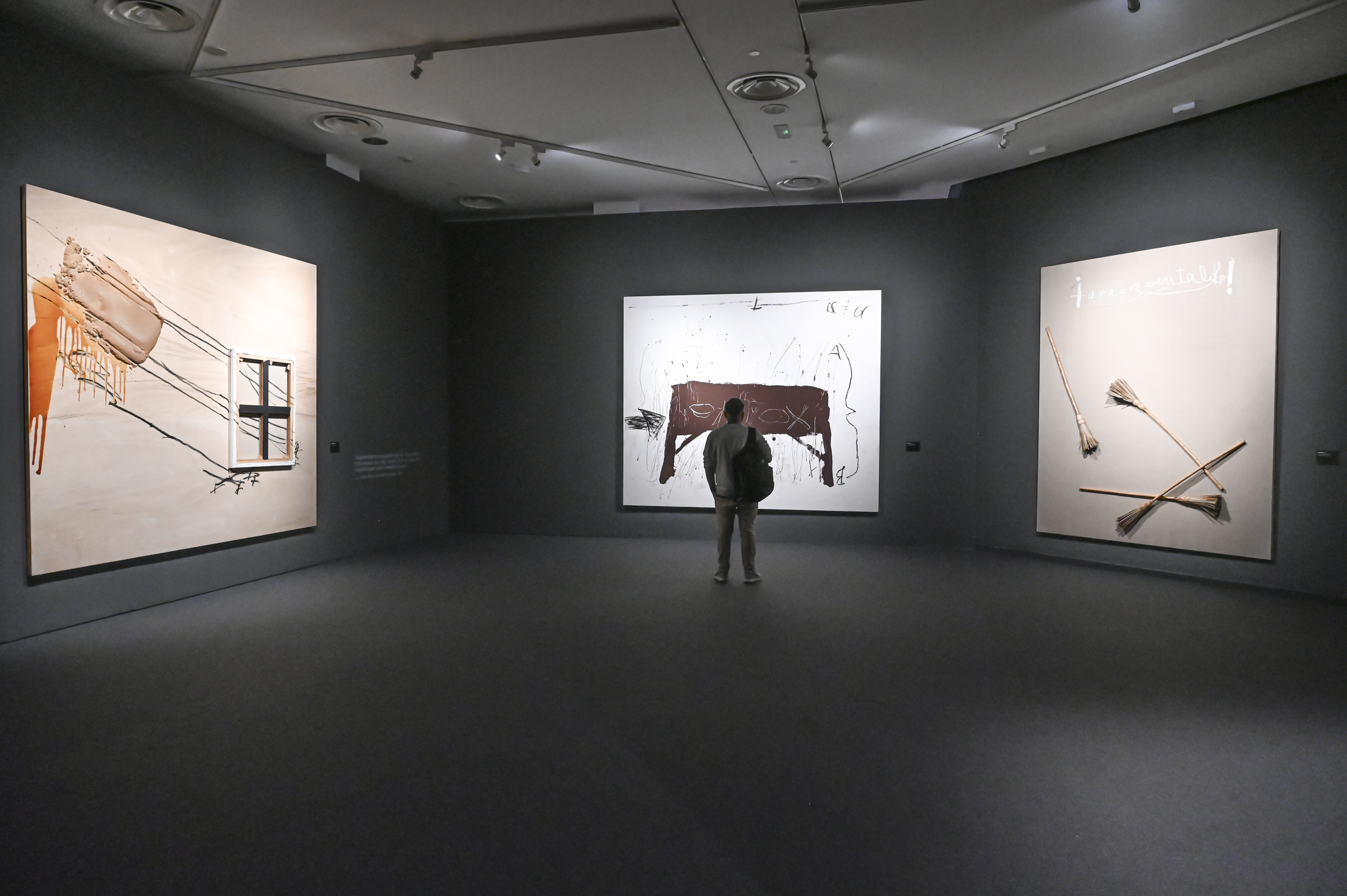
According to Tàpies, for art to have value, it must be integrated into contemporary life. This isn't about belittling the creations of the past, but about striving to assimilate them into our own consciousness. This undisputed master learned as much from the history of painting as from Jungian archetypes, Dürer's Apocalypse, and the aesthetics of collage. His walls were the funereal boundary of a nihilistic time; there were traces of pain and even rage, crosses or eschatological traces, but also honey: catastrophe and hope. Valente engaged in a poetic dialogue with Tàpies and understood that his work was, literally, "material memory." He never ceased to reveal an irrepressible energy, distancing himself from all banality, showing the depth of the skin. He was, without any exaggeration, a master of painting who defined a territory of prodigious fecundity, offering us fortunately mysterious works of art that celebrate "the miracle of existence."
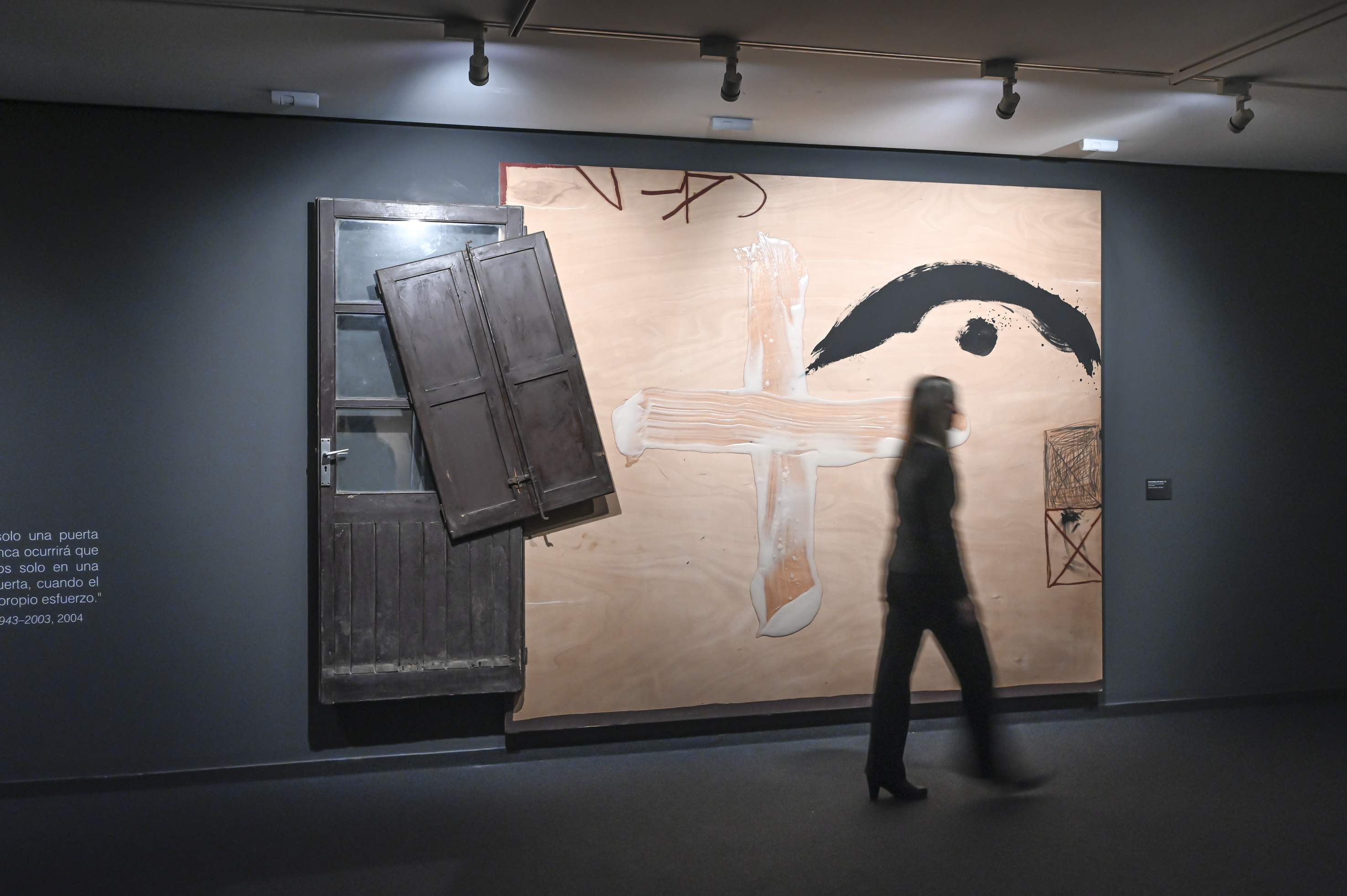
There is undoubtedly a “surrealist” and Miró-esque impulse in this Catalan artist's passion for textures. As Juan Eduardo Cirlot noted, he was, within the Informalism movement, “one of the purest, most effective, and most intense artists.” He was not merely interested in the stain or the amorphous, but rather gave paramount importance to texture, seeking “to give the sensation—as he indicates in his crucial book, Personal Memoir —of old age with only surfaces that resemble wrinkled skin; or of collapse with the chipping and peeling of the material.” While a pareidolia of texture can sometimes occur, this imagined “figurativeness” is not essential; what matters more is the “reconciliation of tensions” in these complex surfaces.


You may be
interested
...