
Exhibitions
Intimacy and materiality with Exposed Fracture at Arthaus
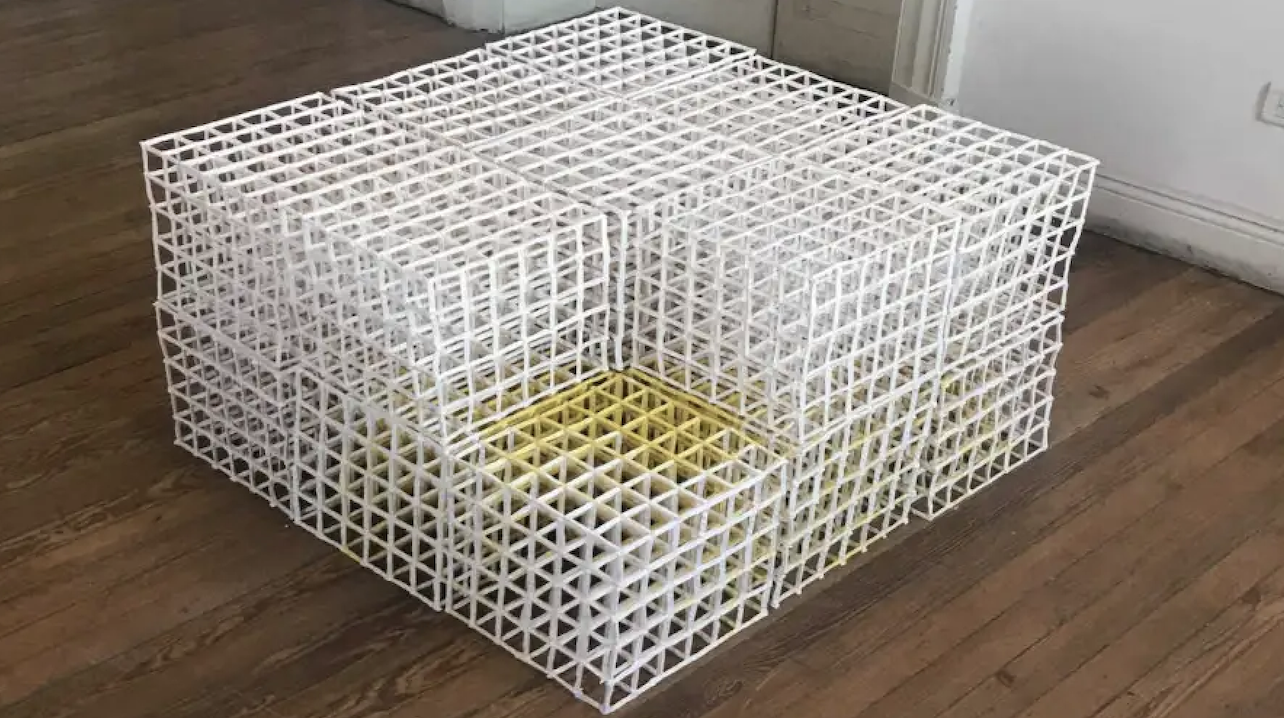
The group exhibition "Exposed Fracture" proposes a sensitive and conceptual exploration of how subjectivity is transformed when it becomes art. Presented in Room 1 of Arthaus in Buenos Aires and curated by Silvia Gurfein, the exhibition brings together works by Gala Altamare, Eugenia Braconi, Mara Caffarone, Yuyo Gardiol, Carla Grunauer, and Delfina Liderjover, artists whose practices engage with a shared tension through diverse languages: the passage between the intimate and the public, between the interior and its inevitable exposure.
Far from a confessional or narcissistic logic, the selected works explore an intimacy that seeks neither vanity nor self-indulgence. Gurfein points out that what is exhibited here is not a gesture of self-affirmation, but rather a more complex and ambiguous operation, where the personal appears pierced by a fissure. In this sense, the curator resorts to the concept of “extimacy,” formulated by Jacques Lacan and developed by Jacques-Alain Miller, to consider this paradoxical zone: “the closest, the most interior, which nevertheless remains external.”
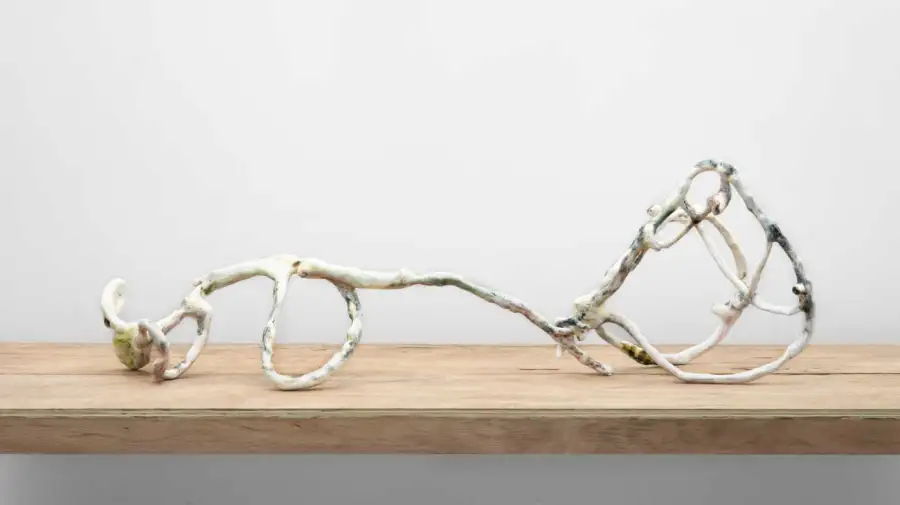
Carla Grunauer, Candy.
Extimacy, understood as a constitutive fracture of intimacy, allows us to read these works as surfaces where that fissure becomes visible. Exposing the intimate here does not imply showing a homogeneous or cohesive substance, but rather, on the contrary, revealing its unstable, fragmentary, and constantly evolving nature. The intimate appears as something traversed by losses, displacements, and transformations that occur in the transition between inside and outside.
In this process of correspondence—or friction—between the internal and the external, something is lost and something is materialized. The exhibition is situated precisely on this threshold: it shows what has managed to cross the line between subjective experience and its perceptible form, and at the same time exposes the marks that this crossing leaves. The works bear the traces of this passage, of this always incomplete translation from the intangible to the concrete.
Exposed Fracture thus stages a series of central questions of contemporary art: what happens when an idea, an experience, or an affection becomes matter? How are the intimate and the domestic articulated with the exhibition space? What transformations occur when the subjective is offered to the gaze of the other? Between inside and outside, between the private and the public, the exhibition proposes a territory of transit where subjectivity is not affirmed as a closed identity, but as a field traversed by tensions, displacements, and productive fractures.

You may be
interested
...