Exhibitions
Luigi Ghirri: learning to look at the world
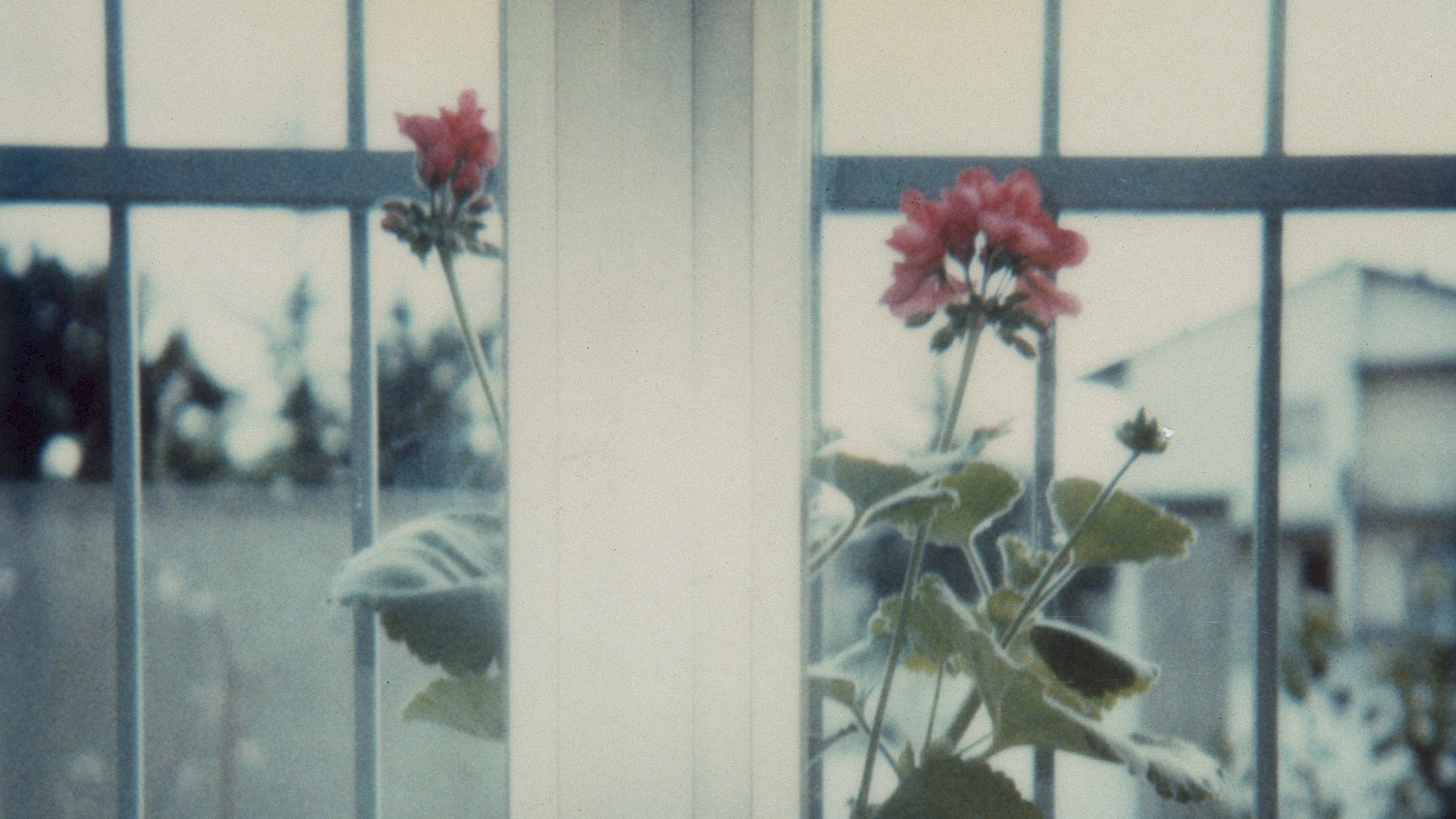
In a time saturated with fast-paced, spectacular images, Luigi Ghirri's work remains surprisingly essential. His quiet, precise photography reminds us that the world is not revealed in grand visual gestures, but in the margins: in an unremarkable facade, in a milky sky, in the minimalist geometry of a roadside fence, in a sign that blends into the landscape. For Ghirri, looking is not about consuming images, but about learning to see.
Luigi Ghirri: Polaroid '79–'83, the new exhibition at the Centro Pecci, revisits that way of seeing he developed throughout the seventies and eighties, when color was still considered suspect territory for “serious” photography and the European landscape seemed condemned to repeat old clichés. Far from the epic and the postcard, Ghirri understood the landscape as a cultural construct: a system of signs where maps, architecture, memory, desires, and projections coexist. His photographs don't describe a territory; they interrogate it.
 Ghirri's artistic research lies at the intersection of a conceptual inquiry into the photographic medium itself and the capacity of images to generate empathy. His images are inhabited by objects laden with memory and by the complex stratification of the Italian landscape and its everyday life. This familiarity—an ordinary house, an ordinary sky, an ordinary road—creates a space in which the viewer can recognize themselves, while the artist's analytical gaze simultaneously questions the way in which we visually construct reality.
The questions that permeate his work are intimately linked to photographic technique. In his compositions, Ghirri simultaneously includes and excludes; in the duplication of reality inherent in photography, multiple temporalities coexist, revealing what might have remained hidden or unnoticed, even though clearly before our eyes. For him, photography is a way of thinking.
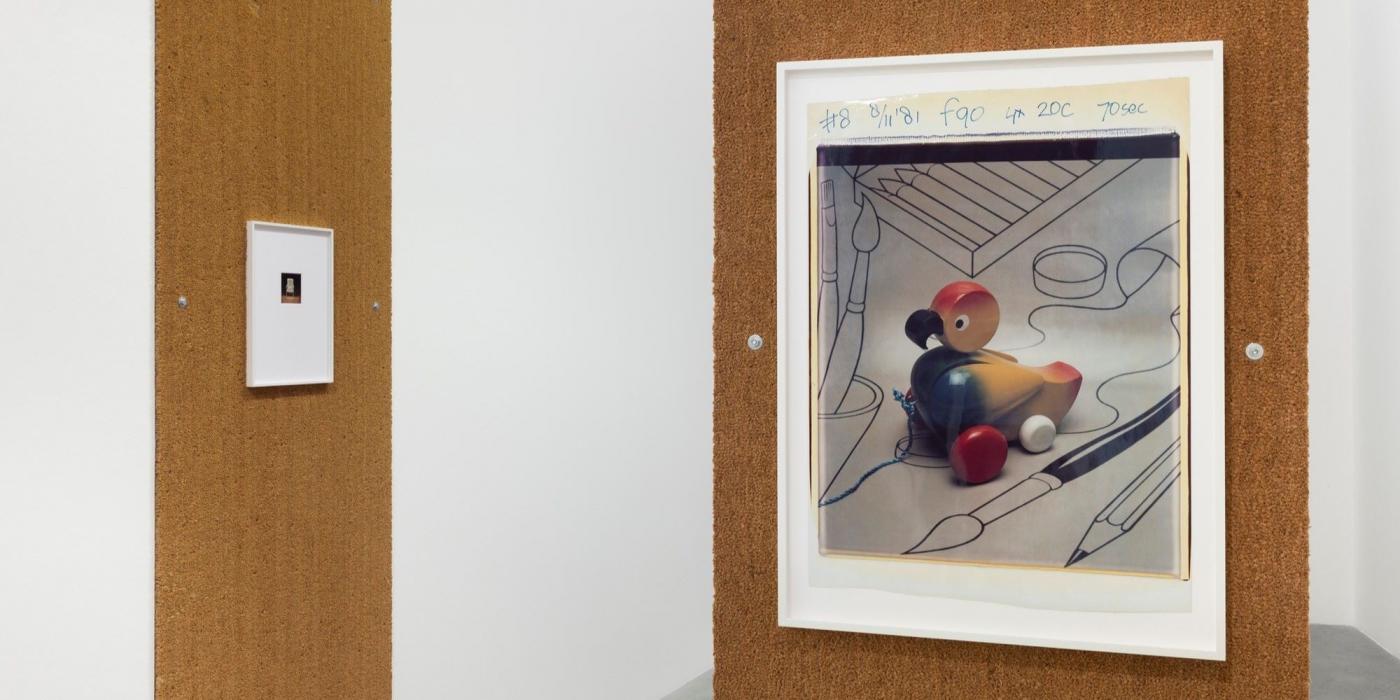
The exhibition at the Pecci Center presents a wide selection of Polaroids taken between 1979 and 1983, a pivotal period in his career. During those years, Polaroid provided him with cameras and film, introducing him to the practice of instant photography. Between 1980 and 1981, he was invited to Amsterdam, then the company's European headquarters, to experiment with the Polaroid 20x24 Instant Land Camera, capable of producing large-format prints in just over a minute.
These Polaroids, both small and large format, reveal a lesser-known facet of his work. After a decade of rigorous conceptual and technical control, Ghirri embraced the unpredictability and immediacy of instant photography. Far from his native Emilia-Romagna, he reconstructed his own world of objects and memories, arranging before the camera the items he had brought with him from Italy in a suitcase. In this tension between control and chance, between analysis and emotion, his work reaches one of its deepest and most delicate expressions.
The exhibition at the Pecci Center engages in dialogue with the show at La Virreina Centre de la Imatge , establishing an expanded exploration of Luigi Ghirri's work that traverses geographies and cultural contexts. Between Prato and Barcelona, his Polaroids find a new framework for interpretation: not as isolated episodes, but as part of a coherent investigation into the gaze, the landscape, and memory.


You may be
interested
...