Exhibitions
Pedro Casqueiro: The art of diversion and pictorial irony over four decades
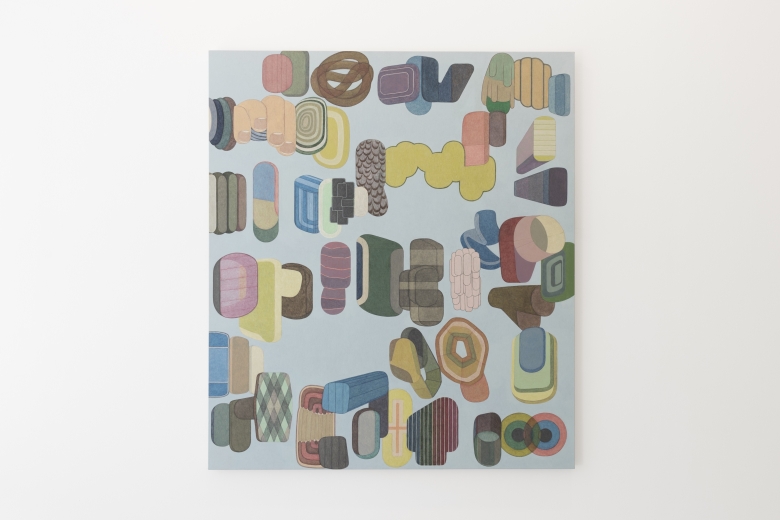
A retrospective exhibition dedicated to Pedro Casqueiro (Lisbon, 1959) at the Museu de Arte, Arquitetura e Tecnologia (MAAT) reviews more than four decades of pictorial production through nearly eighty works, all of them paintings made between 1980 and 2025. Far from being presented as a linear or evolutionary reading, the exhibition entitled Detour , proposes a journey through a coherent and at the same time mutable body of work, marked by constant experimentation and a critical —often ironic— relationship with reality and with the very languages of painting.
An artist represented in the EDP Foundation Art Collection, Casqueiro was part of one of the many informal constellations of creators that emerged around the Escola Superior de Belas-Artes de Lisboa (ESBAL, now FBAUL) during the 1980s. In that context, his painting was distinguished early on by the use of vibrant colors, an uncompromising compositional boldness, and a deliberate refusal to establish clear boundaries between figuration and non-figuration. This was complemented by a constant dialogue between image and word, as well as a systematic desire to subvert perspectives, visual hierarchies, and material conventions.
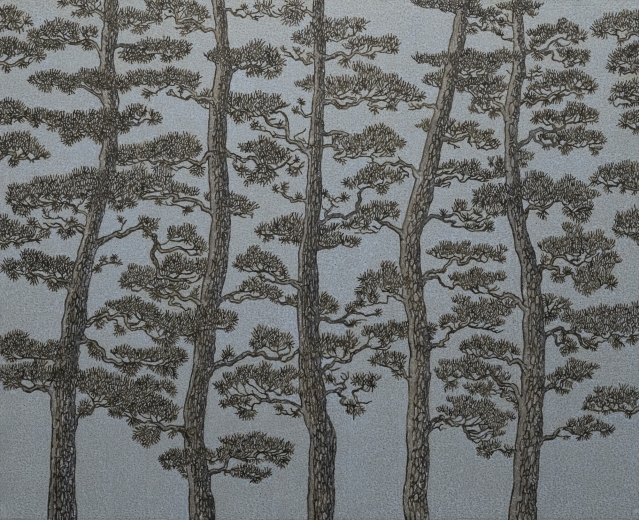
In its early stages, Casqueiro's work is characterized by dense surfaces, vibrant textures, and seemingly effortless lines that envelop intense chromatic fields. Over time, these elements evolve into a more graphic language, where lighter, more defined lines outline soft or muted colors. Irregular patterns then emerge, along with texts that occupy the entire pictorial plane—letters transformed into visual matter, neutral or deliberately ambiguous phrases—and modernist architectural spaces altered by intentional errors, misalignments, and internal tensions.
Far from settling into a single or definitive style, Casqueiro's work unfolds as a field of constant friction between order and deviation, structure and accident, legibility and opacity. Over the decades, his painting has maintained a critical, detached, and profoundly ironic relationship with reality, questioning both the codes of representation and the very certainties of the act of painting itself. This retrospective allows us to understand the breadth and complexity of a body of work that, without sacrificing visual pleasure, establishes itself as a space for reflection on the image, language, and its multiple forms of instability.
You may be
interested
...