Podcasts
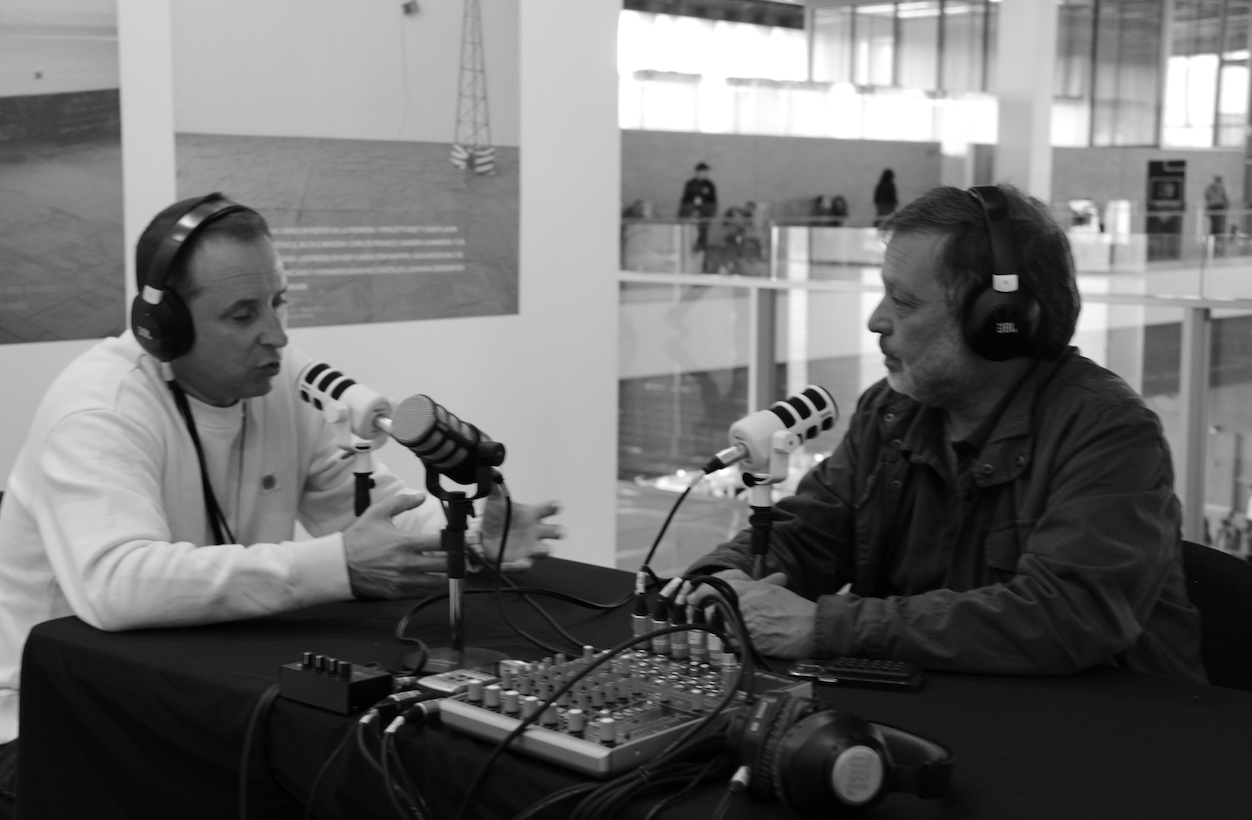
Bonart International Dialogues with Alejandro Castaño art as a driver of urban transformation
The first step was to acquire, in 2009, an old abandoned factory that would end up becoming La Bodega, the space intended to house his private collection. That large building, like many other constructions in the neighborhood, preserved a functional architecture and a spaciousness that offered new possibilities of use. Castaño knew how to recognize in these characteristics an opportunity to recover buildings and put them at the service of contemporary creation. From that first intervention, he began acquiring and rehabilitating other properties, which he later offered for rent to artists to set up their workshops and studios. The initiative generated a dynamic of attraction that encouraged gallery owners, cultural managers, and entrepreneurs to establish themselves in the area.
La Bodega thus became much more than a collection's storage. Its activity took on a public dimension, with meetings and visits from professionals, collectors, and international institutions during ARTBO week. Castaño's collection, focused especially on Latin American contemporary art and built over more than two decades, gathers around a thousand works, according to data published about his trajectory as a collector. Among the visitors who have passed through La Bodega are representatives of institutions such as the MoMA in New York, the Tate in London, and the Museum of Fine Arts in Houston. The project has also considered the possibility of giving the collection a museological vocation, expanding its access to the public and reinforcing its dimension as shared cultural heritage.
Castaño's initial vision took shape thanks to the gradual incorporation of other cultural agents. The arrival of galleries, independent spaces, and creation platforms contributed to shaping an artistic geography that gained recognition both inside and outside Colombia. However, San Felipe is not only the result of an individual initiative: its consolidation also responds to the involvement of gallery owners, artists, curators, and managers who have contributed projects and their own languages. Among the milestones of this process is the arrival of FLORA ars+natura and other spaces that expanded the neighborhood’s cultural reach.
The birth of the Bogotá Art District, also known as BAD, opened a new chapter for San Felipe. The old residential and industrial fabric began to coexist with galleries, studios, exhibition spaces, design proposals, gastronomy, and cultural activities. The transformation has placed the neighborhood on the map of Colombian contemporary art and created a recognizable circuit capable of attracting both local audiences and international visitors. But it also raises questions about the balance between cultural dynamization, neighborhood identity, and real estate transformation—issues that accompany many art districts that have emerged in other cities around the world.
Precisely, the history of San Felipe allows addressing a question that goes beyond the creation of a new artistic hub: how can art intervene in the city and modify its forms of relationship, its uses, and its imaginaries? Architecture, in this case, does not only function as a container for artworks but as a tool to activate spaces, recover buildings, and generate new forms of coexistence. Castaño’s intuition found in the neighborhood a territory where collecting, architectural rehabilitation, and cultural entrepreneurship could establish a productive relationship.
In this conversation with Bonart, Alejandro Castaño revisits the origins of that intuition, the decisions that made the project possible, and the challenges of an art district that continues to evolve. A perspective from architecture and collecting that helps understand how a personal initiative can trigger far-reaching urban transformations, but also how these processes need to preserve the diversity, independence, and cultural identity that gave them meaning.
The interview foregrounds one of the protagonists of a singular transformation of Bogotá and revives a fundamental question: can art change a city without losing what makes it unique?
You may be
interested
...