Exhibitions
Colita discovers the gypsy world through the camera
An exhibition recovers 37 analogue photographs from the professional beginnings of the Barcelona photographer, an unpublished testimony of life in the neighborhoods of Somorrostro and Montjuïc that brought her closer to cinema, flamenco and the legendary figure of Carmen Amaya.
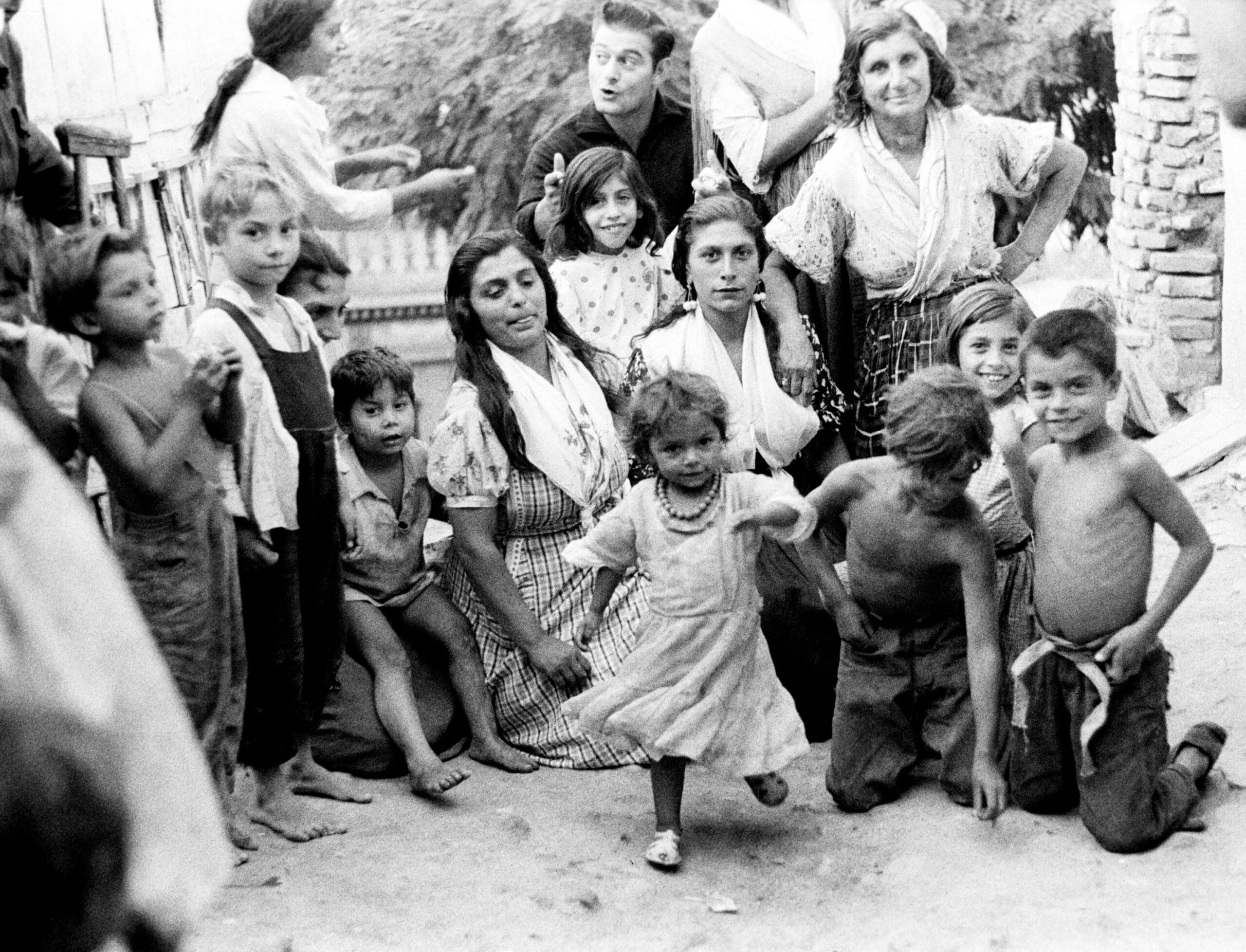
Colita's gaze soon found in photography a way to approach human realities, to portray life without artifice and to preserve memories that are part of Barcelona's cultural history. From November 10 to 27, Món Gitano 1962-1963 recovers one of the first chapters of the career of Isabel Steva Hernández (Barcelona, 1940-2023), Colita, with an exhibition never before seen in the city that brings together 37 analog photographs, among which three portraits of Carmen Amaya that had never been shown publicly stand out.
At just 22 years old, Colita received her first major professional assignment from her mentor and friend Paco Rebés: to photograph the extras in Los Tarantos (1963), the film directed by Francesc Rovira Beleta. To document that universe, the young photographer delved into the shantytowns of Somorrostro and the mountain of Montjuïc, where she found a reality that went far beyond the precarious conditions in which her protagonists lived.
The images reveal a community full of life, in which dancing, singing, playing and popular celebrations occupy a central place. Far from a folkloristic or prejudiced view, Colita approaches her protagonists with naturalness, complicity and a special sensitivity towards children, whom she portrays in everyday scenes and in the midst of flamenco festivals. The camera thus becomes a tool of proximity, capable of capturing the dignity, energy and vitality of a world often relegated to the margins of social representation.
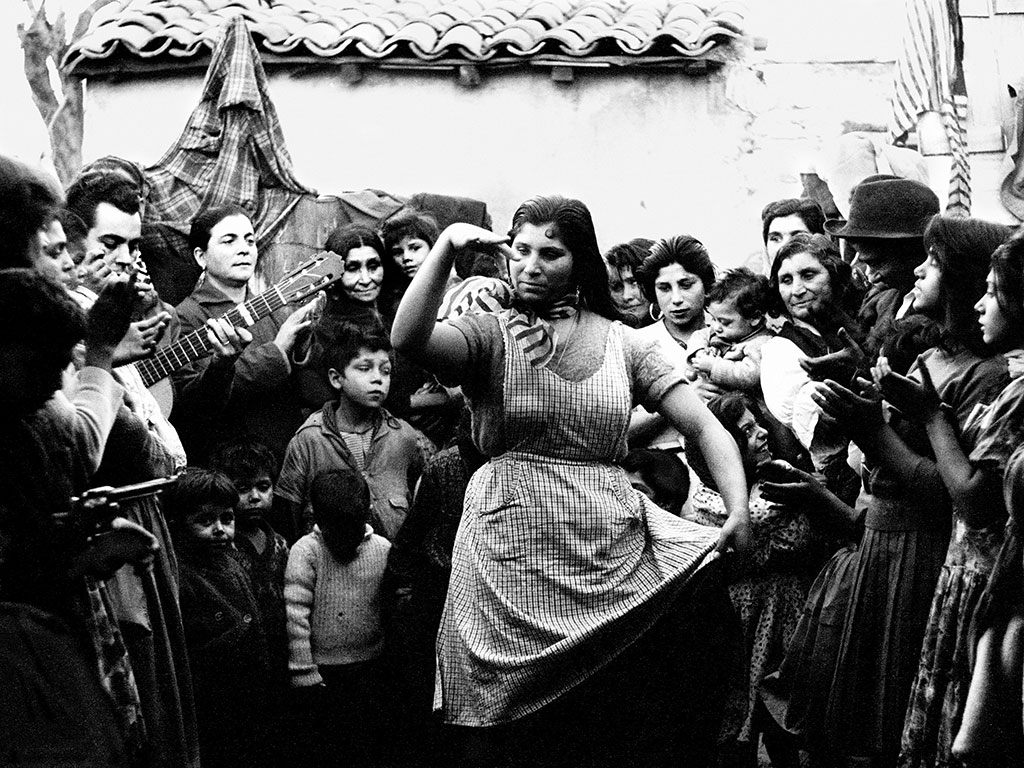
That work marked the beginning of a professional career and opened two paths that would become fundamental in his life: cinema and flamenco. During the filming of Los Tarantos , Colita immortalized some young talents who would eventually achieve extraordinary recognition, such as La Singla, Antonio Gades and the singer José Menese. His photographs today constitute a valuable document about a moment of transformation in popular culture and about figures who would end up occupying a prominent place in the history of flamenco.
But among all the encounters of that period, there was one that would leave a definitive mark: that of Carmen Amaya. The legendary dancer had returned from Mexico in 1963 to participate in Rovira Beleta's film. Her stage power, character and personality captivated Colita, who would end up dedicating a good part of her life to preserving and reclaiming the memory of one of the most universal figures of flamenco. The three photographs of Carmen Amaya included in the exhibition are author's copies, positived by the photographer herself in the laboratory and framed especially for this occasion.

You may be
interested
...