Exhibitions
Zurbarán dazzles at the Louvre with the power of light and silence
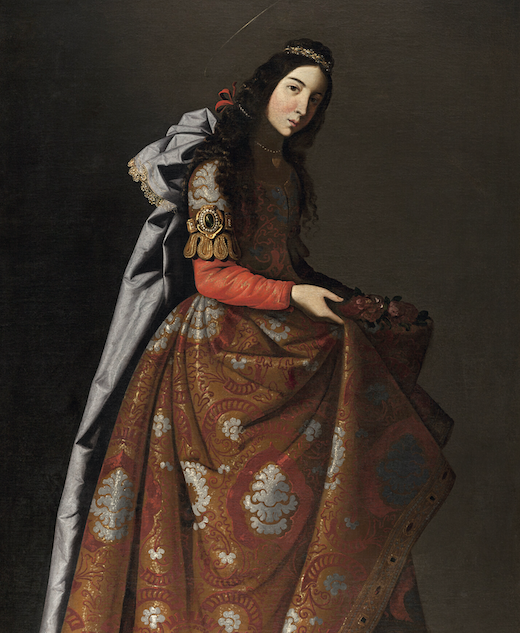
Chiaroscuro as language, matter as presence, and light as an instrument of revelation. The Louvre Museum is dedicating one of its major international exhibitions of late 2026 to Francisco de Zurbarán (1598–1664), a key figure in 17th-century Spanish painting and one of the artists who best knew how to transform the intensity of religious imagery into a visually powerful experience. Open to the public from October 7, 2020, until January 25, 2027, the exhibition brings together 65 works, 50 of them by the Extremaduran master, to explore the singularity of a style of painting that finds one of its most radical expressions in formal austerity and precision of detail.
The exhibition offers a journey through a universe of crucified figures, immaculate virgins, martyrs, and devotional objects in which light acquires an almost tangible dimension. Bodies emerge from the darkness, fabrics seem to gain weight and substance, and faces concentrate an emotional intensity that transcends religious representation. In Zurbarán's work, lighting does not merely define volumes: it organizes the scene, directs the viewer's gaze, and establishes a direct relationship between the spectator and what they contemplate.
Curated by Charlotte Chastel-Rousseau, chief curator of the Louvre's Department of Painting, the exhibition underscores the artist's ability to construct images of great intensity through refined compositions and extraordinarily effective contrasts of light. The association with Caravaggio, which helped solidify Zurbarán's image as the great Spanish interpreter of chiaroscuro, allows us to situate his work within the context of a Baroque Europe fascinated by the relationship between light, the body, and spiritual experience. However, his artistic language maintains its own distinct identity, based on the simplification of forms, the monumentality of the figures, and meticulous attention to the physical presence of objects.
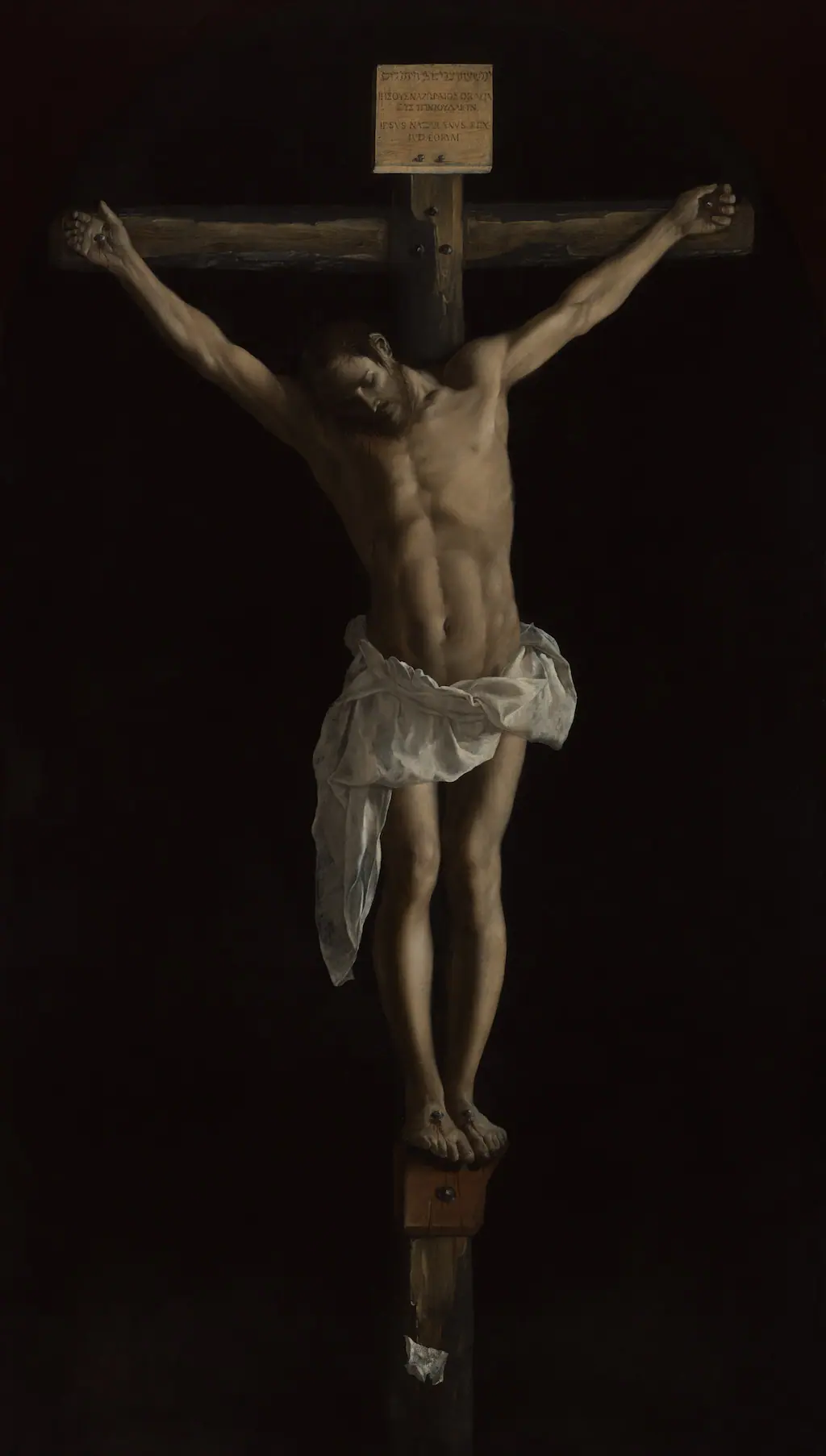
Among the works that structure the exhibition , Christ on the Cross stands out, its composition encapsulating some of the essential characteristics of Zurbarán's painting. The body of Christ, isolated against a dark background, acquires a sculptural dimension that reinforces both its physical presence and its symbolic weight. The economy of elements and anatomical precision intensify the contemplative experience, demonstrating how Zurbarán could achieve enormous expressiveness without resorting to complex narrative or excessive gesture.
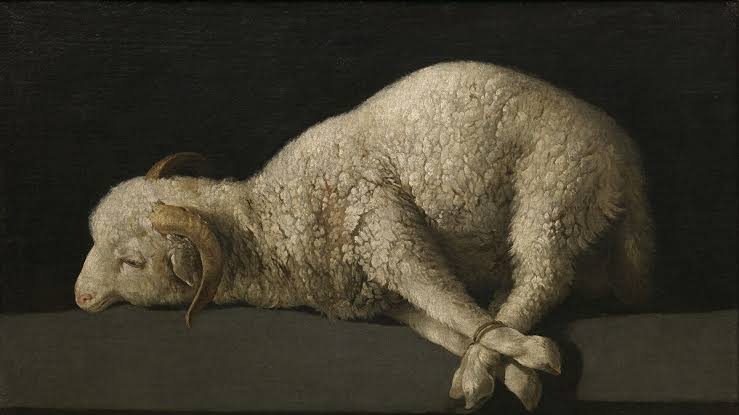
Truthfulness is another key element of his artistic universe. The folds of garments, textures, faces, and small objects are rendered with a precision that lends the images an extraordinary material consistency. This attention to detail reaches one of its most famous manifestations in Agnus Dei , also known as Borreguillo , from the Prado Museum. The lamb, with its legs bound and placed on a gray surface, is depicted with almost hypnotic meticulousness. The simplicity of the motif contrasts with the density of its symbolic meaning, linked to the Christian tradition of sacrifice and redemption.
The exhibition places these images within the context of the intense religious activity that characterized Zurbarán's career, especially through commissions from Andalusian convents and monasteries. His series dedicated to saints and martyrs, as well as his depictions of virgins and consecrated figures, reflect a visual culture in which painting was meant to foster devotion and make the transcendent perceptible. But the exhibition avoids reducing the artist to a single dimension and allows visitors to discover other facets of his work, from portraits to still lifes and historical and mythological compositions.
The presence of these latter works is especially significant for understanding the breadth of her interests. In her still lifes, the representation of containers, flowers, and everyday objects acquires a visual autonomy that anticipates a modern sensibility toward form and matter. The compositional restraint, the isolation of the elements, and the precision with which their surfaces are described reveal a vision capable of transforming the ordinary into an aesthetic experience of great intensity.
Dialogue with the next generation also occupies a specific place in the exhibition. One section is dedicated to Juan de Zurbarán, the painter's son, whose career was cut short by the plague that ravaged Seville in 1649, when he was only 29 years old. Despite the brevity of his career, his still lifes reveal a distinct artistic personality and a particular sensitivity to the arrangement of objects, light, and the representation of textures.
Zurbarán's influence did not end in the 17th century. His reception in France gained particular prominence during the 19th century, when the works in the so-called Spanish Gallery of Louis Philippe, housed in the Louvre, helped to disseminate Spanish painting among artists and collectors. Decades later, the geometric construction of his compositions and the formal autonomy of his objects sparked the interest of artists such as Paul Cézanne, Pablo Picasso, and Juan Gris. His painting, deeply rooted in religious tradition, also offered a lesson in structure, synthesis, and visual concentration that transcended its original context.
The international dispersal of the master's works has made organizing this retrospective a significant collaborative effort between institutions. The Louvre has worked with the National Gallery in London and the Art Institute of Chicago to assemble a collection that allows for a review of the artist's career from complementary perspectives. The exhibition is the first major international presentation dedicated to Zurbarán since the retrospective organized by the Metropolitan Museum of Art and the Grand Palais in 1987 and 1988. Before arriving in Paris, the exhibition was shown in England and will travel to the United States in February 2027.
The Parisian program also establishes a dialogue with Sculpting Color , a presentation of polychrome religious sculptures from the National Sculpture Museum of Valladolid. Both exhibitions offer an in-depth look at the close relationship between painting and sculpture in 17th-century Spain, especially in the realm of religious imagery and the forms of representation intended to intensify devotional experience.


You may be
interested
...