Exhibitions
Fenosa, a sculptor on the map of Barcelona
'Atles Fenosa' travels through 31 spaces in the city to reconstruct the career of one of the great Catalan sculptors of the 20th century and his involvement in the artistic, political and social life of the country.
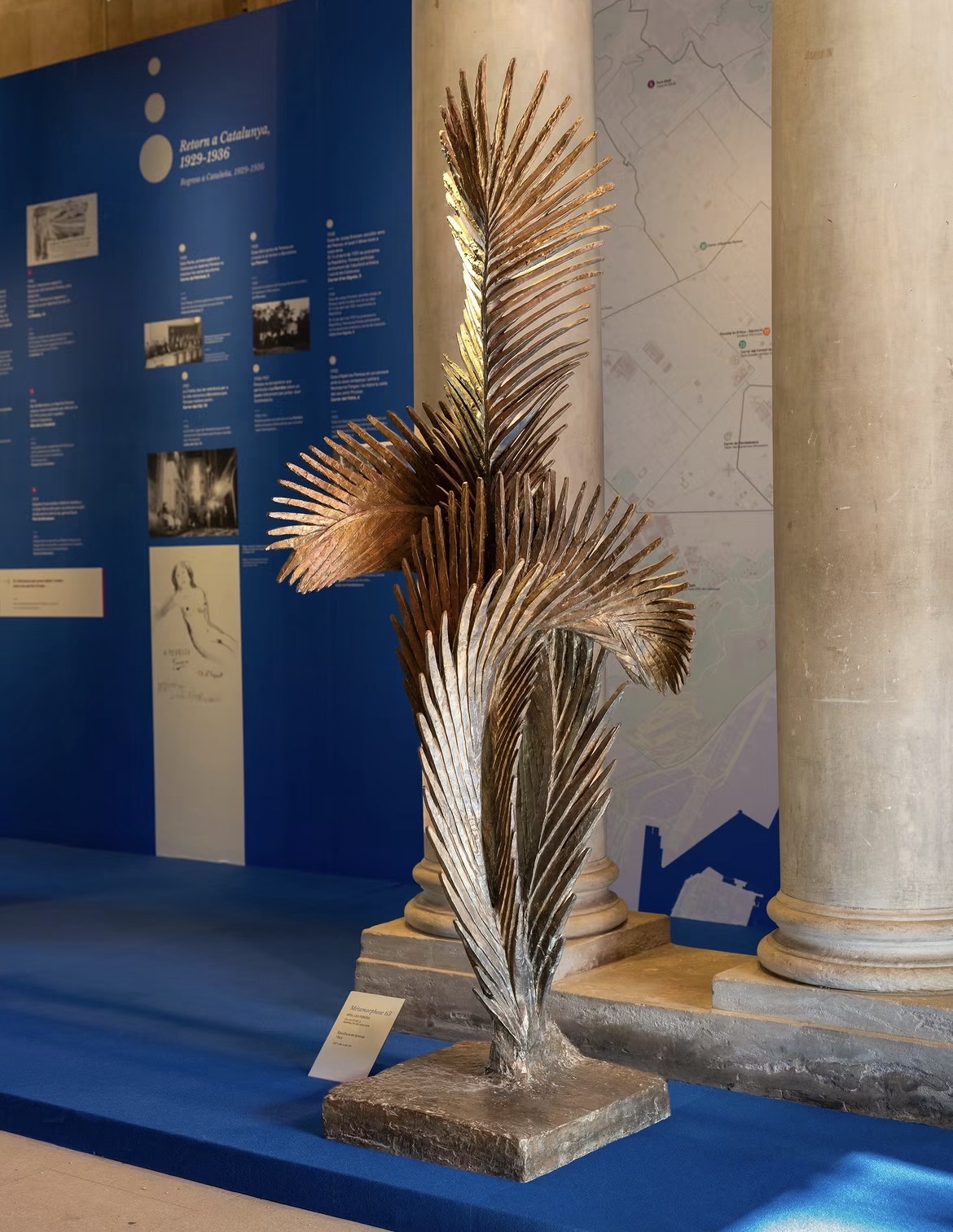
Barcelona is a map of memories, exiles, spaces of creation and commitments. In this vital territory lies the career of Apel·les Fenosa, one of the most outstanding Catalan sculptors of the 20th century, a figure who maintained a particularly intense relationship with the city throughout his life. This link is the starting point of Atlas Fenosa , the exhibition that the Palau Robert presents until December 8 in its showcase.
Curated by Nekane Aramburu, cultural manager, museologist and current director of the Apel·les Fenosa Foundation, the exhibition proposes to reconstruct the sculptor's life and work based on 31 points in Barcelona. The map thus becomes a tool for understanding not only where Fenosa lived, studied or worked, but also the spaces from which he participated in some of the most tumultuous and transformative moments in Catalan cultural and political history of the 20th century.
Born in Barcelona in 1899, Fenosa grew up in a family and social environment that marked his early years. The tour begins with the spaces related to his childhood and education, including the house where he was born, near the Sagrada Família, the schools where he studied —including the Horaciana School, linked to new pedagogical trends and the Montessori method, and the School of Arts and Crafts—, as well as other places related to his social and family activity, such as the vegetarian restaurant that his father ran on La Rambla.
Fenosa's Barcelona is also the city of a generation of artists and intellectuals who experienced the political and cultural changes of the first decades of the 20th century with intensity. In 1920, the sculptor deserted military service and went into exile in France with his brother. This first exile would profoundly mark his career and open a decisive stage in his relationship with the French art scene.
The return to Catalonia, between 1929 and 1936, constitutes the second major chapter of the Fenosa Atlas . Barcelona then recovers a Fenosa fully immersed in the cultural effervescence of the moment. The Parés Hall, where he presented his first sculptures, the houses where he lived and the spaces where he worked allow us to reconstruct his artistic activity, but also his participation in the collective life of a city that experienced the arrival of the Republic as a moment of intense transformation.
With the outbreak of the Civil War, Fenosa's activity took on a particularly significant political and heritage dimension. The sculptor was involved in various actions aimed at protecting artistic heritage from the destruction caused by the conflict. The itinerary points out spaces such as the headquarters of the Artists' Union and the churches of Santa Anna and Santa Maria del Pi, which allow us to recover this lesser-known facet of his career. In 1939, the Republican defeat led him back to French exile.
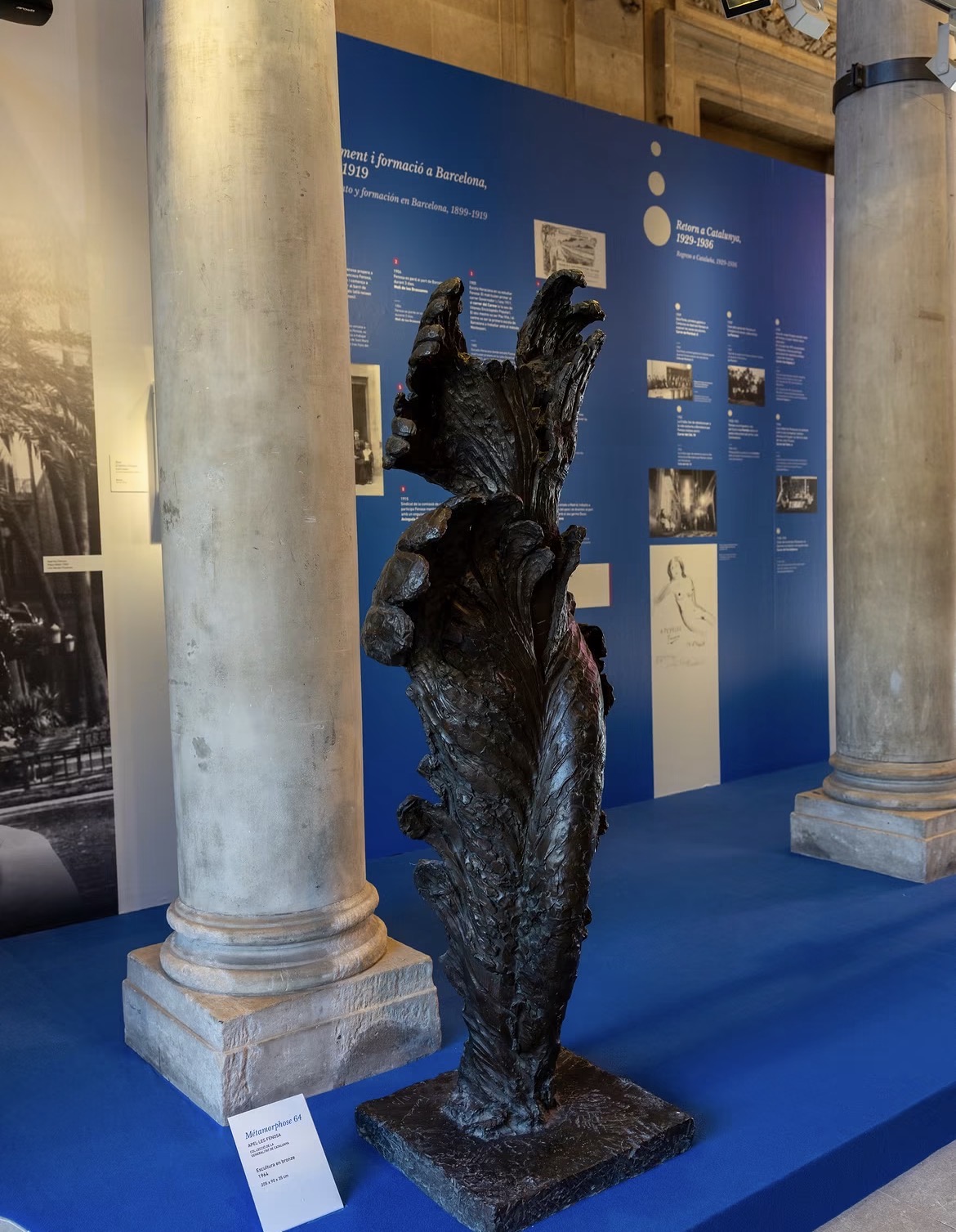
The relationship with Barcelona was not broken, however, by distance. Over time, Fenosa gained broad institutional recognition and his work began to occupy different spaces in the city. The fourth area of the exhibition traces this recovery of the figure of the sculptor through retrospective exhibitions and the presence of his sculptures in public space. Among the most outstanding recognitions are the Gold Medal of the Generalitat, awarded in 1982, and the Gold Medal of the City of Barcelona, in 1987.
The exhibition also includes several pieces that allow us to get directly into his sculptural universe. Two versions of Metamorfosi are presented, dated 1963 and 1964, as well as a model of the monument dedicated to Pau Casals located in Turó Park. The set is completed by a bust of Fenosa made by Vivette Monod. It is a bronze portrait that is being presented for the first time in Barcelona and that has been donated to the city by the Association des Amis d'Apel·les Fenosa of Paris.
The Fenosa Atlas thus vindicates a figure who has often been sidelined in the great narratives of 20th-century Catalan art, despite the relevance of his sculpture and the international dimension of his career. Fenosa developed a body of work marked by constant research into the figure, the body and the transformation of matter, while maintaining a close relationship with the artistic and cultural movements of his time.
The exhibition allows us to understand this trajectory from a different perspective: not through a chronological succession of works, but from the places that shaped a life marked by creation, commitment, war and exile. Barcelona becomes, in this sense, much more than the setting of Fenosa's biography. It is the territory from which we can understand the construction of an artist who made sculpture a way of relating to his time.
In addition to the exhibition, the project includes several complementary activities. An activation with the artist Marcel·lí Antúnez Roca, a guided tour and a discussion will expand the possible readings of Fenosa's work and legacy.

You may be
interested
...