Opinion
Art also plays basketball
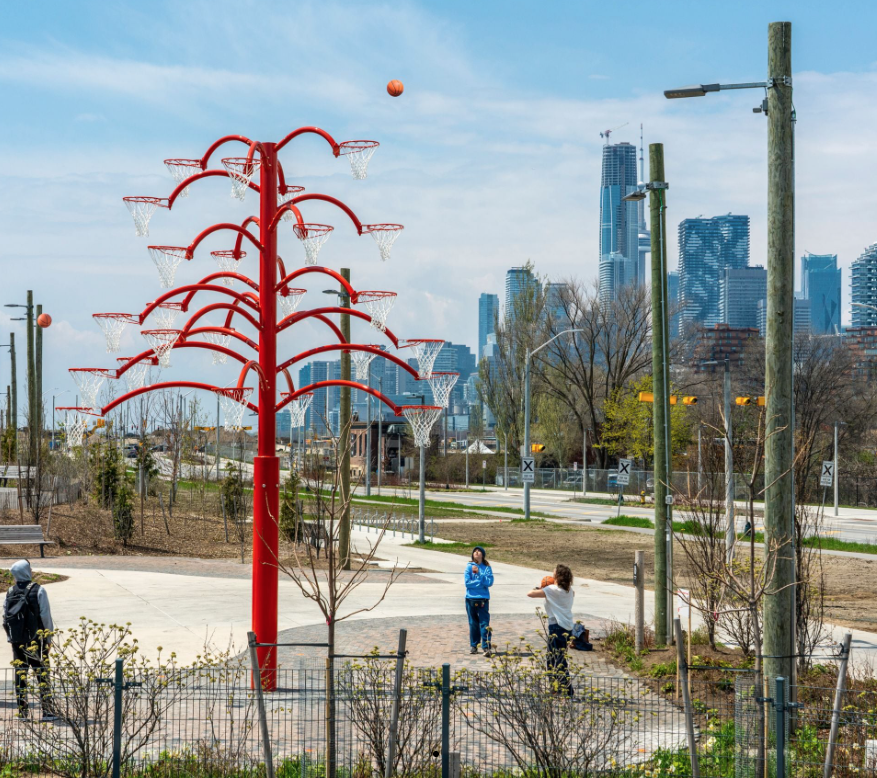
Toronto knows what a basketball hoop means. It recognizes it as part of its urban landscape, its collective rituals, and a sporting culture that counts the Toronto Raptors of the NBA among its mainstays and, since 2026, also includes the Toronto Tempo in the WNBA. In this context, Alexandre Arrechea's installation of Orange Functional in Biidaasige Park is not a mere coincidence: it's an opportunity to consider what happens when basketball leaves the court and enters the realm of art.
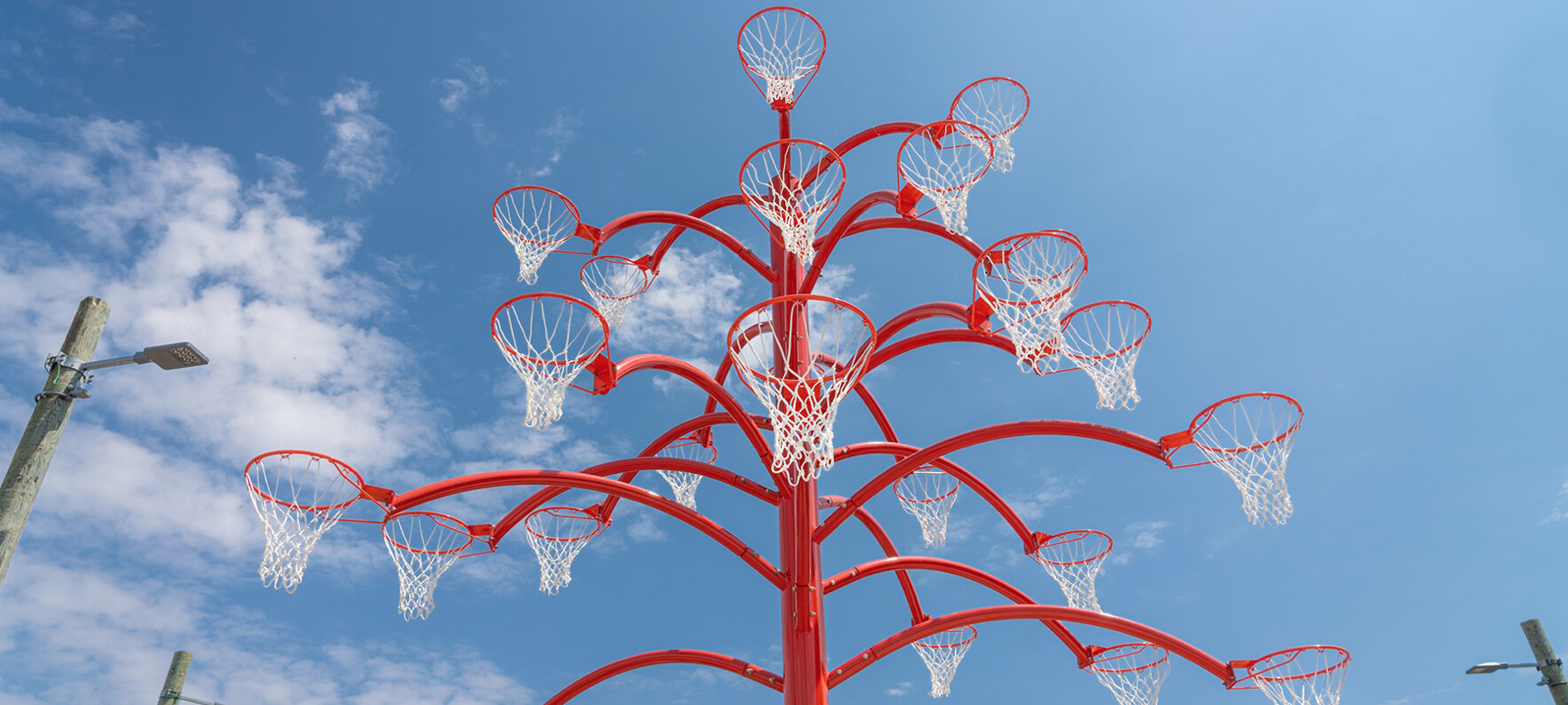
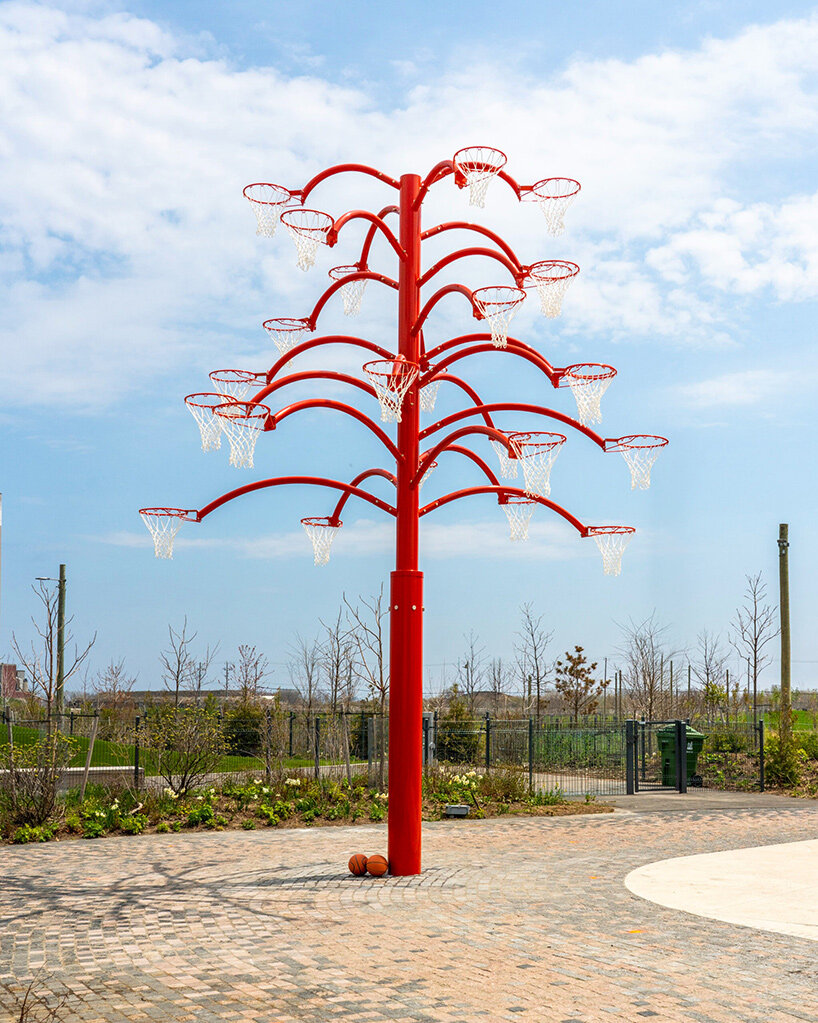
The piece immediately catches the eye. A large red metal trunk branches out into multiple limbs from which hang more than twenty basketball hoops. Some are at an accessible height; others require you to look up and search for a much more complicated trajectory. At first glance, it seems like an impossible tree. Then, when a ball appears, it becomes clear that it's also a basketball court.
Orange Functional is not a sculpture about basketball, but a sculpture that allows you to play basketball. The difference is important. The artist takes one of the most recognizable elements of this sport and modifies its rules, transforming it into an open, unpredictable, and participatory experience.
The player knows what to do: throw the ball and try to score. What they don't know is where it will end up. One basket might be too high; another might appear unexpectedly in the path of a missed shot. A mistake can become a success. The usual logic of the game is disrupted, forcing the player to invent new ways of interacting with the object.
Arrechea thus works on a recurring idea in his production: altering recognizable elements of architecture and urban infrastructure to modify how we use and perceive them. In Orange Functional , this operation takes on a particularly compelling dimension because the object retains its function. It remains a basketball hoop, but it no longer operates according to the logic of a conventional court.
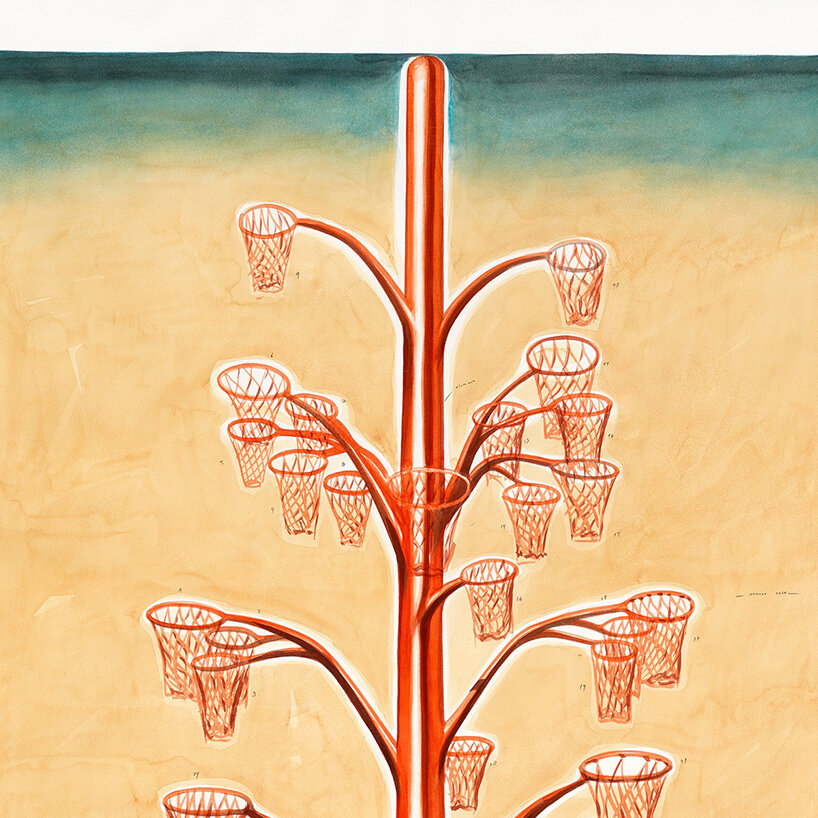
The work also has a precedent. In 2010, Arrechea developed Orange Tree , a branching structure whose ends terminated in basketball hoops, thus establishing the image of a strange tree whose fruit were basketballs. In 2022, with a new version created for Art Omi in Ghent, New York, that idea acquired a functional dimension: the public could actually use the hoops. The sculpture ceased to be merely a representation of the game and became part of the game.
The fact that this piece is now coming to Toronto is no small matter.
Toronto is a city deeply connected to basketball. The Toronto Raptors have made the NBA a recognizable part of its sporting and cultural identity, while the Toronto Tempo's arrival in the WNBA in 2026 opens a new dimension for professional women's basketball in Canada. In this context, installing a sculpture that transforms a basketball hoop into an artistic, urban, and participatory element means introducing sport into a territory we traditionally associate with public art.
And perhaps therein lies one of the keys to Orange Functional : understanding that sport is also part of a city's visual culture.
For too long, art and sport have been considered separate universes. The former associated with museums, galleries, and cultural spaces; the latter, with stadiums, arenas, and tracks. However, they both share something fundamental: they build communities, generate rituals, and produce images capable of becoming ingrained in the collective memory.
A basketball hoop in a street or park is not just a piece of sports equipment. It's also an invitation. It suggests that someone can shoot a ball, compete, learn, make mistakes, or simply play. Arrechea brings this inviting power into the realm of sculpture, allowing the viewer to abandon their passive role for a few minutes.
The context of the Lassonde Art Trail further reinforces this interpretation. The artwork is not confined to a museum or isolated from daily life, but rather integrated into a transforming public space, surrounded by vegetation, paths, and meeting places. Its tree-like form establishes a clear dialogue with the park's new plantings, while its baskets introduce immediate human activity.
The metaphor is completed when the shots begin. The balls rise among the branches and fall back to the ground like fruit. Basketball then becomes a kind of harvest, a playful image that connects the sport with nature and with the idea of community.
But perhaps the most interesting thing is that the work requires no prior knowledge. It's not necessary to know Arrechea's career or anything about contemporary art. Nor is it necessary to go to a museum. All you need is to recognize a basketball hoop and have a ball. The work can be understood even before it's explained.
This accessibility doesn't mean sacrificing complexity. On the contrary. Orange Functional poses a rather sophisticated question through an extremely simple gesture: what happens when we change the rules of something we think we know?
In Toronto, the question takes on a special resonance. While the Raptors have represented the professional and global dimension of men's basketball for years, and the Toronto Tempo are ushering in a new era for elite women's basketball, Arrechea situates the game in another territory: that of everyday, shared, and public experience.
There's no scoreboard. No referee. No mandatory competition. No single basket to defend. Just branches, hoops, balls, and people willing to try.



You may be
interested
...