News
Pilar Albarracín wins the 2026 National Prize for Visual Arts
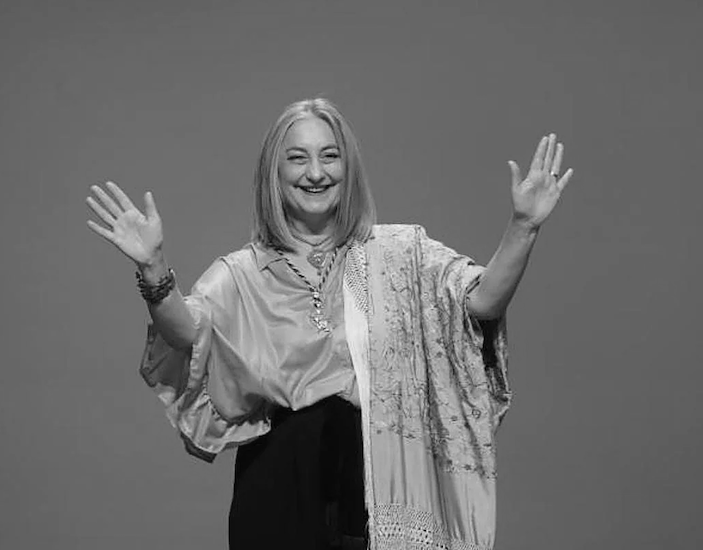
Pilar Albarracín (Seville, 1968) has been awarded the 2026 National Prize for Visual Arts, a recognition that highlights one of the most unique careers in contemporary Spanish art of recent decades. With a practice that encompasses performance, photography, video, and installation, the artist has developed a critical perspective on Spanish cultural imaginaries, especially those related to folklore, popular traditions, and the representation of women.
The jury for the prize, awarded by the Ministry of Culture and worth 30,000 euros, highlighted Albarracín's unique style and the national and international acclaim she has achieved. Her work addresses issues related to gender, tradition, folklore, collective identity, and power structures, employing irony, theatricality, and incisive social critique.
Andalusian women and the construction of what we understand as 'Spanishness' occupy a central place in much of her work. Albarracín delves into traditions, rituals, and imaginaries still present in the daily lives of certain social sectors in southern Spain to question them from within. The body, identity, and gender roles thus become territories of confrontation, while the artist herself frequently assumes the role of protagonist in her actions.
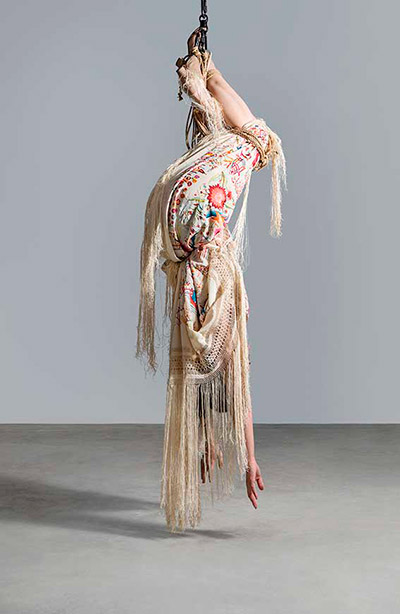
Her approach to folklore seeks not only to recover or represent a popular culture, but also to highlight the tensions that exist behind its images and codes. In her works, the seemingly everyday or recognizable acquires a critical dimension: festivals, traditions, symbolic violence, female stereotypes, and forms of authority are transformed into materials for questioning the social structures that sustain them.
The National Prize also underscores the international dimension of a career that has extended far beyond the Spanish context. Her works have been exhibited at institutions such as MoMA PS1 in New York, the Hamburger Bahnhof in Berlin, the Musée d'Art Moderne de la Ville de Paris, and Kiasma in Helsinki, among other international museums, art centers, and exhibitions. This presence has helped to integrate her reflections on Spanish culture into the debates of international contemporary art.
The award also includes the organization of a solo exhibition at the Reina Sofía Museum, which will allow a review of a career developed over several decades and characterized by the ability to transform the codes of popular culture into a subject of artistic and social analysis.
Albarracín succeeds Fina Miralles, honored in 2025, and joins a list of artists that includes, among others, Teresa Lanceta, Rogelio López Cuenca, Dora García, José María Yturralde, Àngels Ribé, Ángel Bados, Ángela de la Cruz and Juan Hidalgo.


You may be
interested
...