Exhibitions
Asiatica, Asia's hidden treasure in Biarritz
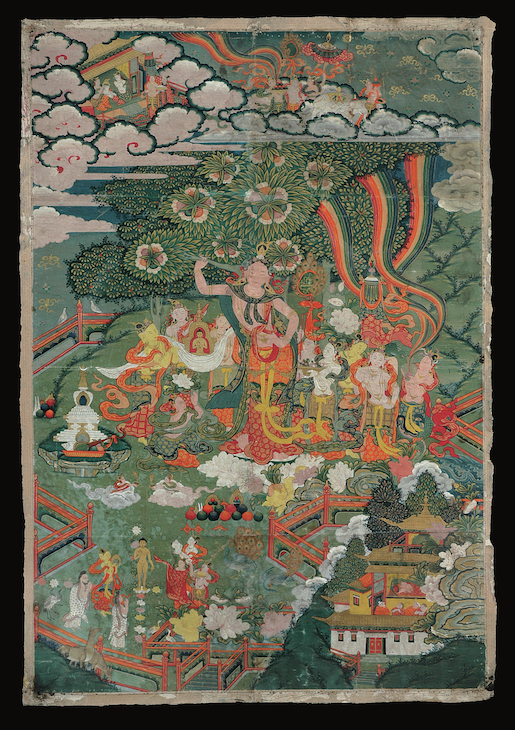
In the heart of Biarritz, the Musée Asiatica offers a journey through some of Asia's great artistic and spiritual traditions. Its collection, comprising over 1,000 works, spans from prehistory to the contemporary era and includes pieces primarily from India, Nepal, Tibet, and China. Thanks to the richness of its holdings and the unique nature of the works on display, the museum is among Europe's leading centers dedicated to Asian art.
Among its various sections, the one dedicated to Tibet offers an exploration of the evolution of Tibetan art between the 8th and 19th centuries. Bronze sculptures and thangka paintings reveal the close relationship between artistic creation, spirituality, and religious practice. Unlike other artistic traditions of the Himalayan region, Tibetan art also gives prominence to the representation of great lamas and legendary hermits. The exhibition also includes objects used in Tibetan Buddhist rituals and pieces related to Bön, an ancient spiritual tradition of Tibet, offering a glimpse into the religious and cultural complexity of this region.
The section dedicated to China offers a journey through approximately 7,000 years of civilization, from the Neolithic Hongshan culture to the end of the Qing dynasty. Spread across two rooms, it brings together sculptures made from materials such as wood, jade, ivory, and stone, as well as porcelain, antique snuff bottles, and furniture. The collection allows visitors to observe the extraordinary evolution of Chinese decorative arts and the sophistication achieved by its artisans over the centuries.
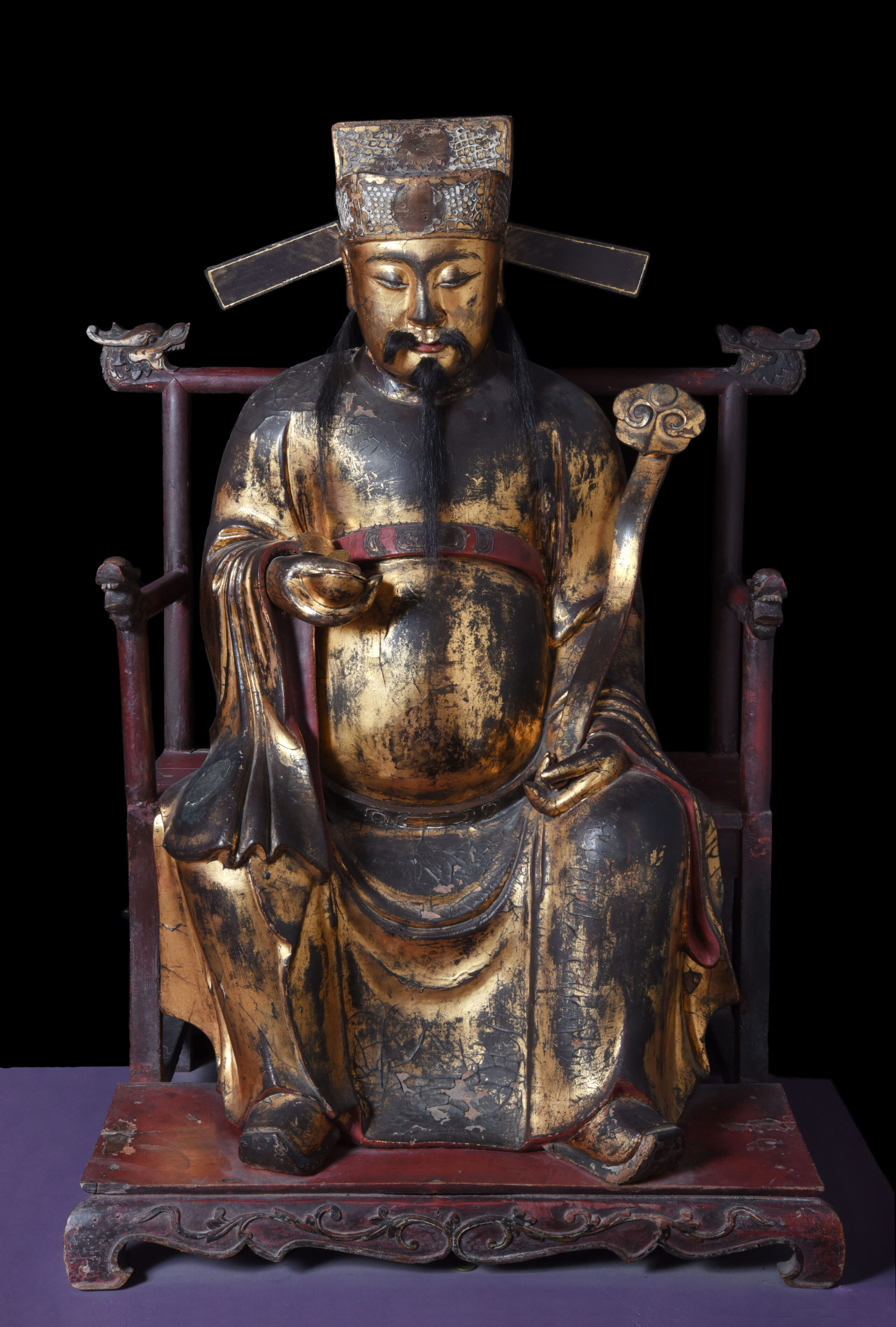
God of prosperity.
The third major section is dedicated to Nepalese art, with a selection of gilded bronze sculptures and ritual objects dating from the 8th to the 19th centuries. The pieces reflect the coexistence and exchange between Hinduism and Buddhism, two traditions that have profoundly influenced the artistic culture of the Kathmandu Valley.
Wood also occupies a prominent place in this section. The carvings evoke the architectural forms of Kathmandu's pagodas and showcase the extraordinary specialization of the valley's artisans. Their influence transcended the borders of present-day Nepal, reaching Tibet and China, facilitated by the movement of artists and the establishment of artisan communities.
Beyond these three sections, Asiatica allows us to understand Eastern art as a territory of constant exchange. The pieces not only represent different civilizations, but also the cultural, religious, and artistic connections that for centuries united the Himalayas, the Indian subcontinent, and China.
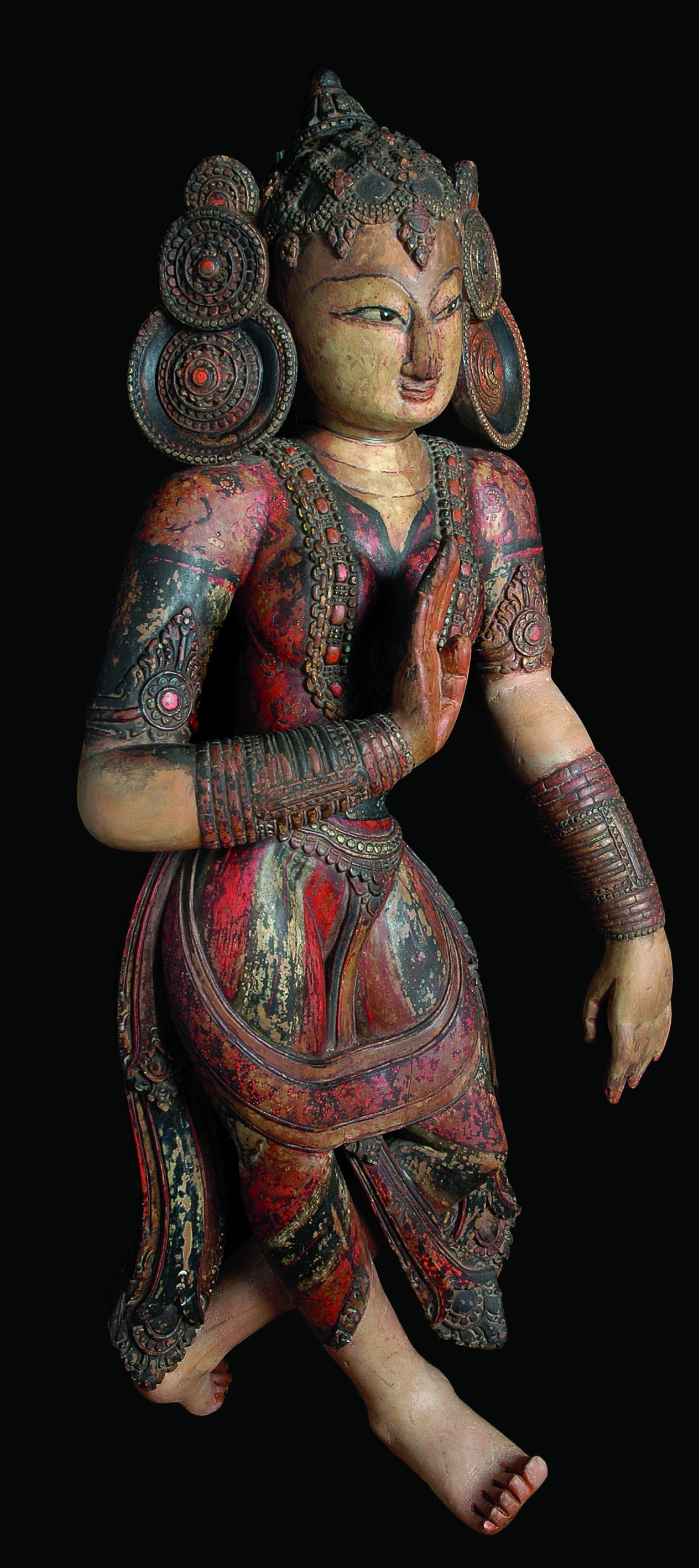
Temple dancer from Nepal.
Located at 1 rue Guy Petit in Biarritz, the museum is one of the city's unique cultural offerings. The city of Biarritz itself emphasizes that its collections encompass works from four major geographical areas and different historical periods, making a visit a journey through thousands of years of artistic creation.
Biarritz's cultural program continues to incorporate activities linked to Asiatica: the City Council has announced, for example, a meeting with the museum on September 9, 2026, designed to bring the richness of its collections closer to the public.



You may be
interested
...