Exhibitions
The mythologies of the world are found in Bayonne
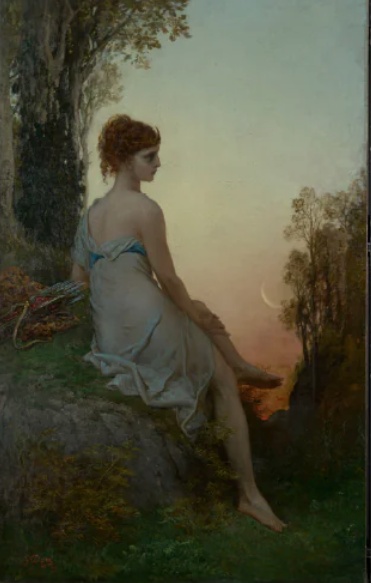
The Musée Bonnat-Helleu in Bayonne presents Mythologies , its first temporary exhibition since reopening, running until November 9, 2026. The exhibition proposes a dialogue between the great foundational narratives that have shaped the history of humankind, from Pharaonic Egypt to modern Japan, from Ancient Greece to the traditions of the Basque mountains.
Conceived in collaboration with the Louvre Museum and with the exceptional participation of the Quai Branly–Jacques Chirac Museum, the exhibition brings together nearly one hundred works from different eras and continents. The journey begins with some of humanity's oldest questions: How was the world created? What forces inhabit it? What role do heroes and heroines play in its destiny?
Myths arose, to a large extent, to explain what eluded knowledge, to conjure the unknown, and to reflect on the human condition. But these stories have never remained static. They circulate, transform, and cross-pollinate between cultures, generating surprising coincidences between peoples separated by thousands of kilometers and centuries of history.
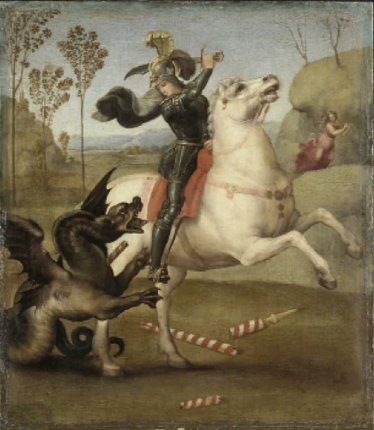
Raffaelo Santi, dit Raphaël, Saint Georges luttant avec le dragon, vers 1503-1505, musée du Louvre, département des Peintures, © 2004 musée du Louvre, dist. GrandPalaisRmn / Jean-Gilles Berizzi.
Mythologies presents precisely this encounter. Pyrenean traditions engage in dialogue with the great cultures of the Mediterranean, the Near East, and the Middle East, as well as with imagery from Mexico, Oceania, and Africa. In this unique kaleidoscope appear the laminak, the bird-women of Basque mythology; Tartalo, the cyclops; and the basajaunak, the wild men of the mountains, alongside the Titans battling the Greek gods, Ulysses reuniting with Penelope, and Hercules completing his twelve labors.
The dialogue between cultures is made especially visible thanks to the Louvre's exceptional loans. Among them is Raphael's celebrated Saint George Slaying the Dragon , one of the masterpieces of the Italian Renaissance, which establishes new points of connection between civilizations and diverse ways of representing the confrontation between the hero and the forces of chaos.
The participation of the Quai Branly–Jacques Chirac further expands the exhibition's mythological map. A Ciwara mask from Mali shares space with a bust of Homer; Quetzalcoatl, the feathered serpent of Aztec tradition, engages in dialogue with the Serpent Woman, a legendary Pyrenean figure depicted on the Oo Stone; and a Japanese Noh theater mask meets a Hartza costume from the Souletin masquerade.
But the myths presented by Bayona don't belong solely to the past. The exhibition extends its reach into the contemporary imagination and reminds us that these stories continue to shape our understanding of the world. Heroes, heroines, monsters, demons, and origin stories remain present in literature, film, and video games.
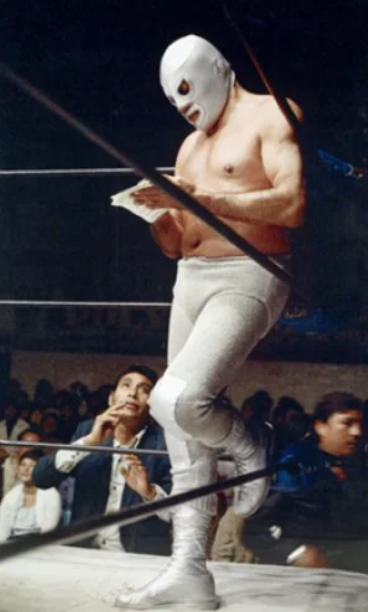
Lourdes Grobet, El Santo, Pista Arena Revolucion, Mexico City, 1980 © musée du quai Branly - Jacques Chirac.
In this sense, Mythologies also recovers an idea associated with Roland Barthes, born in Bayonne: myth is not a relic of other eras, but a mechanism that continues to operate in the present. The forms, the characters, and the means change, but some of the fundamental questions about origin, fear, desire, death, and destiny remain.
The exhibition is curated by Benjamin Caule and Barthélemy Etchegoyen Glama of the Musée Bonnat-Helleu, and François Bridey and Dominique de Font-Réaulx of the Louvre Museum. With them, Bayonne transforms its museum reopening into an opportunity to bring together seemingly disparate worlds and demonstrate that, beneath the diversity of their images and narratives, mythologies share many of the same fundamental questions.


You may be
interested
...