News
Manuel Martín Bueno, a key figure in Spanish archaeology and a pioneer of underwater archaeology, has died.
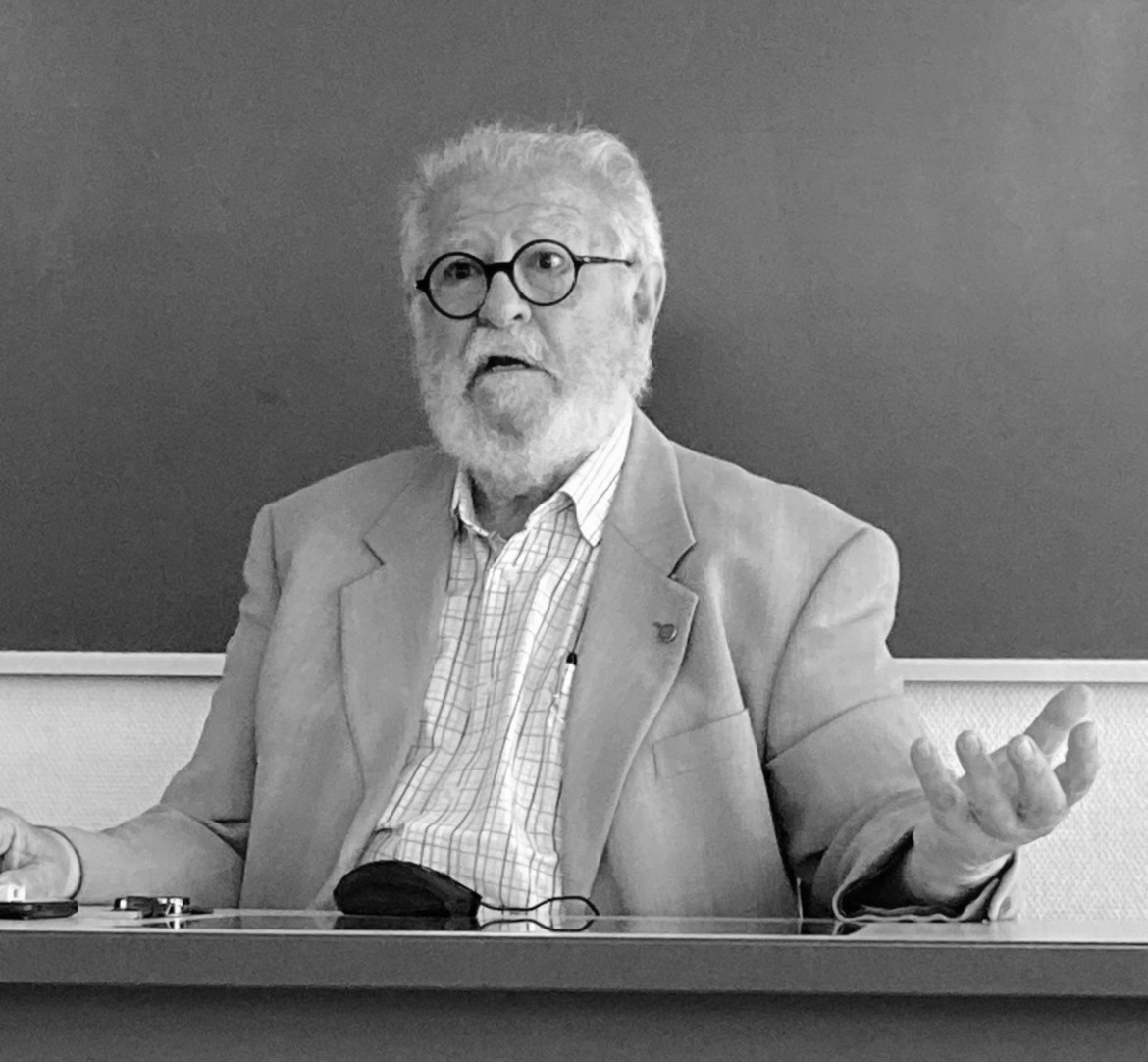
Spanish archaeology has lost one of its leading figures. Manuel Martín Bueno, Professor of Archaeology, Epigraphy, and Numismatics at the University of Zaragoza, has passed away, leaving behind a career marked by research, teaching, public administration, and, especially, his pioneering role in the development of underwater archaeology in Spain.
Born in Zaragoza in 1946, Martín Bueno was one of the most influential voices in the defense and study of Spanish historical heritage. His time in the public administration, as Deputy Director General of Archaeology and Ethnography at the Ministry of Culture, was particularly significant during the drafting of the 1985 Spanish Historical Heritage Law, which is still in force. In this role, he contributed to incorporating a solid scientific and technical perspective into the protection of archaeological heritage.
One of his main contributions was his advocacy for underwater cultural heritage as an integral part of Spain's historical heritage. This vision anticipated the development of a discipline that, thanks also to his work, would eventually become a leading scientific field. Therefore, his role can be considered fundamental in the development of Spanish underwater archaeology, both in academia and in field management and intervention.
His career was linked to numerous archaeological campaigns carried out in different parts of the world. From Antarctica, where he participated in the San Telmo project, to the Galician coast, Martín Bueno led investigations that contributed to expanding the knowledge and protection of underwater heritage.
Among his interventions, the work carried out at Cape Finisterre stands out, where he excavated the remains of the Armada galleon San Jerónimo, sunk in 1596. His research also contributed to the training of a first generation of underwater archaeologists in Galicia, consolidating a school of work that would continue in the following decades.
Other projects took him to Corsica and the Strait of Gibraltar, expanding the scope of a career dedicated to recovering, studying and protecting a heritage that for decades remained virtually invisible underwater.


You may be
interested
...