
News
Alvar Aalto enters the history of UNESCO's world heritage
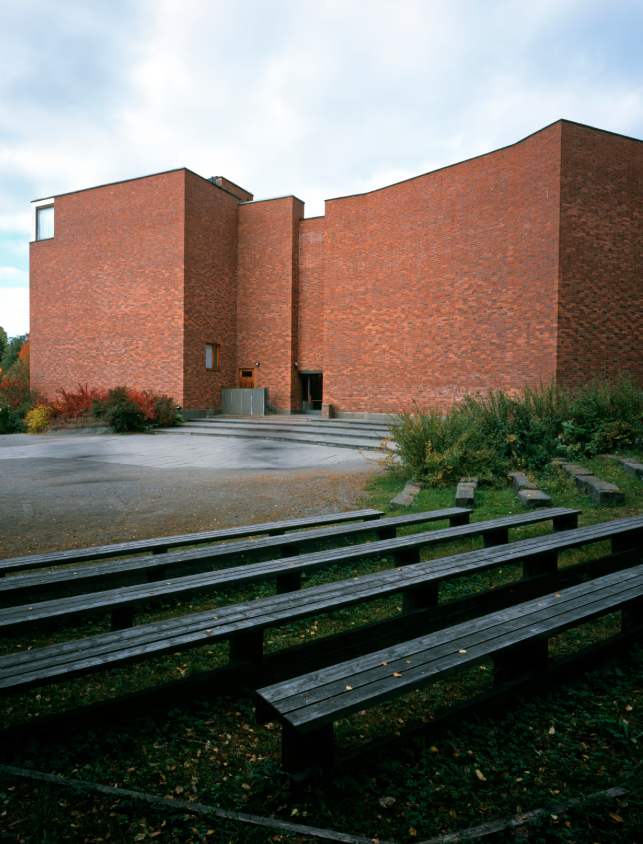
Alvar Aalto has achieved further international recognition with the addition of his architectural legacy to UNESCO's World Heritage List. The World Heritage Committee has inscribed Aalto Works, a selection of thirteen buildings and architectural ensembles created in Finland by Alvar Aalto with his collaborators and wives, Aino Marsio-Aalto and Elissa Aalto, recognizing their exceptional importance within 20th-century modern architecture.
The declaration highlights a career that redefined the principles of the Modern Movement through an architecture more closely aligned with human experience, where spaces are understood not merely as functional structures, but as places designed to enhance daily life, promote well-being, and establish a balanced relationship between architecture, nature, and society. The inscription also recognizes the collective dimension of the Aalto studio and the fundamental role of Aino and Elissa in developing an architectural practice that transcended the individual figure of the architect.

Finland's nomination, submitted in early 2025, comprised thirteen buildings constructed between the late 1920s and the 1980s, a collection that reflects the evolution of Aalto's thinking from his early rationalist experiments to an architecture deeply integrated with the landscape and human needs. With this addition, Finland consolidates the international relevance of one of its most influential cultural figures.
Among the recognized buildings is the Paimio Sanatorium, completed in 1933, a seminal work of modern European architecture, where Aalto applied an innovative vision of hospital space based on light, ventilation, and patient comfort. Also included on the list are Alvar Aalto's residence in Helsinki (1936), the Sunila residential complex (1938-1954), and Villa Mairea (1939), considered one of his masterpieces for its fusion of modernity, natural materials, and Finnish tradition.
The recognition also includes the Säynätsalo Town Hall (1952), a benchmark of 20th-century civic architecture; the Aalto Campus (1954-1971) and the Aalto Center in Seinäjoki (1960-1988), examples of urban planning and public architecture; the Experimental House in Muuratsalo (1953-1954), conceived as a personal laboratory for material research; and the Helsinki House of Culture (1958), one of the most representative constructions of his creative maturity.
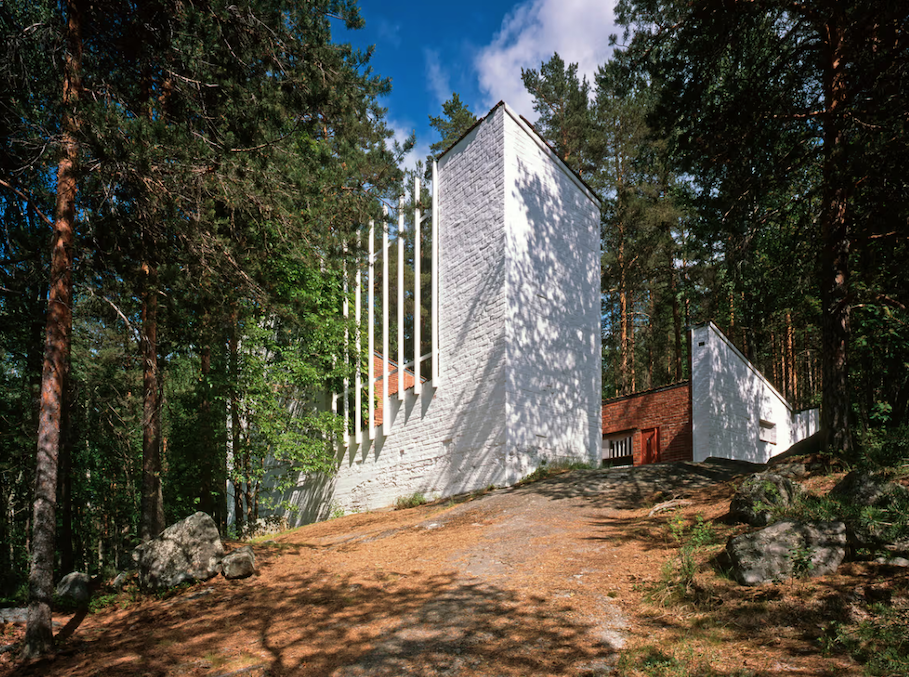
Completing the selection are the headquarters of the Finnish Social Security Institution (1957), the Aalto Studio (1955 and 1964 extension), the Church of the Three Crosses in Vuoksenniska (1958) and Finlandia Hall (1971-1975), one of Helsinki's great architectural icons.
The inclusion of Aalto Works places Alvar Aalto alongside other great names in modern architecture already considered part of the world's heritage, such as Le Corbusier and Frank Lloyd Wright. For experts, this distinction confirms the enduring relevance of an architecture that, far from being confined to a specific era, remains profoundly contemporary due to its ability to combine innovation, sustainability, human scale, and respect for the environment.
Architect Jenni Reuter, head of the Architecture Department at Aalto University, noted that Aalto's international recognition is often more evident outside Finland than within the country itself. His architectural language, based on the warmth of materials, integration with nature, and exceptional attention to the user, has maintained a constant influence and continues to be a reference point for generations of architects worldwide.


You may be
interested
...