News
Simone Forti, pioneer of postmodern dance, dies at 91
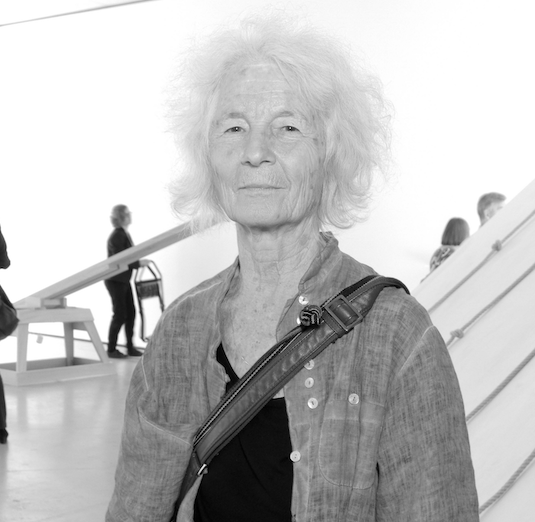
Simone Forti, a key figure in postmodern dance and a pivotal artist in the renewal of 20th-century performance practices, has died at the age of 91 in Los Angeles. The news of her death was announced by the Milanese gallery Raffaella Cortese, which represented her.
Born in Italy and later naturalized as an American citizen, Forti revolutionized contemporary dance from the early 1960s with a practice that broke with traditional choreographic conventions and placed the body, improvisation, and interaction with everyday objects at the center of artistic creation.
Formed in the late 1950s with choreographer Anna Halprin in San Francisco, Forti moved to New York, where she presented her celebrated Dance Constructions , a series of experimental pieces in which performers reacted to simple materials and basic structures through actions such as climbing, bending, moving, or whistling. These works anticipated a new conception of dance that decisively influenced artists such as Yvonne Rainer and Steve Paxton, founders of the historic Judson Dance Theater collective, which would transform modern dance in the following decades.
“This small, radical group of Forti’s works was like a stone thrown into a large, still, complacent pond. The ripples spread,” Paxton wrote years later, highlighting the impact of research that would eventually redefine the boundaries between dance, performance, and visual arts.
After a period associated with an alternative community in Woodstock, Forti developed her career between Los Angeles and New York. In California, she taught at the California Institute of the Arts and later at the University of California, Los Angeles, while maintaining a close collaboration with sound artist Peter Van Riper, to whom she was married between 1974 and 1981.
During the 1980s, he created Logomotion , an innovative method that combined improvised movement and language, and developed his well-known News Animations , performances inspired by reading and physically reinterpreting news published in newspapers. His work explored the connections between thought, body, and social reality for decades.
Forti was also part of various collective projects and artistic communities, such as the company he worked with in Pennsylvania or the Mad Brook Farm community in Vermont, before finally returning to Los Angeles in 1998, the city where he lived until his death.
Institutional recognition of her career came especially in recent decades. In 2014, she was the subject of the first major retrospective dedicated to her work, Thinking with the Body: A Retrospective in Motion , at the Museum der Moderne Salzburg, an exhibition that many critics considered long overdue. A year later, her Dance Constructions were acquired by the Museum of Modern Art (MoMA) in New York, solidifying her place in the history of contemporary art.
In February 2023, already fully recognized as one of the great innovators of 20th-century dance, Simone Forti received the Golden Lion at the Venice Biennale for her artistic career. That same year, the Museum of Contemporary Art in Los Angeles dedicated a retrospective exhibition to her, confirming the enduring relevance of a body of work that continues to influence generations of artists.

You may be
interested
...