News
The Louvre restores the Apollo Gallery
Nine months after the robbery, the museum reopens one of its most emblematic spaces with a new heritage focus and a comprehensive reinforcement of security.
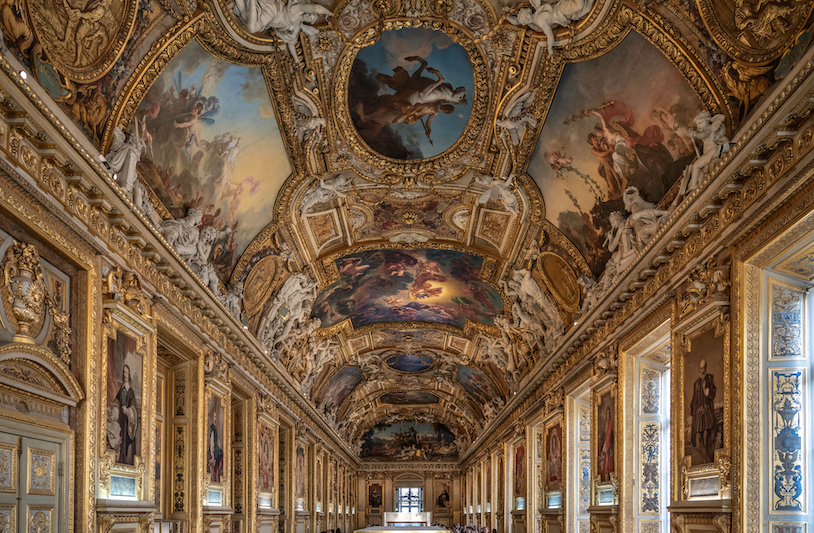
Nine months after the spectacular robbery that rocked the world's most visited museum, the Louvre Museum has reopened the Apollo Gallery to the public. The historic room, closed since the break-in on October 19, 2015, is once again open to visitors with a revamped presentation that highlights its exceptional architecture and decoration, while the stolen Crown Jewels remain missing.
The reopening marks a new chapter for this iconic space within the Parisian palace. In the absence of the stolen pieces, the museum has opted to transform its exhibition narrative and restore prominence to the grand decorative programs that distinguish the gallery. Visitors will be able to appreciate in greater detail the murals and sculptural elements that make this space one of the masterpieces of the French Baroque.
The robbery, considered one of the most serious incidents in the Louvre's recent history, triggered a thorough review of security protocols. Although authorities managed to arrest the suspected perpetrators, the stolen jewels have not yet been recovered.
The investigation also led the museum to rethink the conservation and display of the collection's most valuable pieces. The jewels that were not stolen, including Empress Eugénie's famous crown—currently undergoing restoration after the damage it sustained during the robbery—will be moved in the future to a new, high-security space, specifically designed to guarantee better conservation and protection conditions.
The Apollo Gallery is also reopening with significant security improvements. The museum has reinforced access points by installing bars on the windows, which thieves used to gain entry to the building, as well as expanding the perimeter video surveillance system and adding a mobile police station to the premises.
The president of the Louvre, Christophe Leribault, has stated that modernizing security is a priority for the institution, although he acknowledges that adapting a heritage complex of this size requires long-term planning. The reopening of the Apollo Gallery thus symbolizes the beginning of a new era for one of the museum's most iconic spaces, where architecture and historical heritage regain prominence as the Louvre continues to strengthen the protection of its most valuable collections.



You may be
interested
...