Exhibitions
Joan Fontcuberta turns Altamira into a mirror of the fictions of art
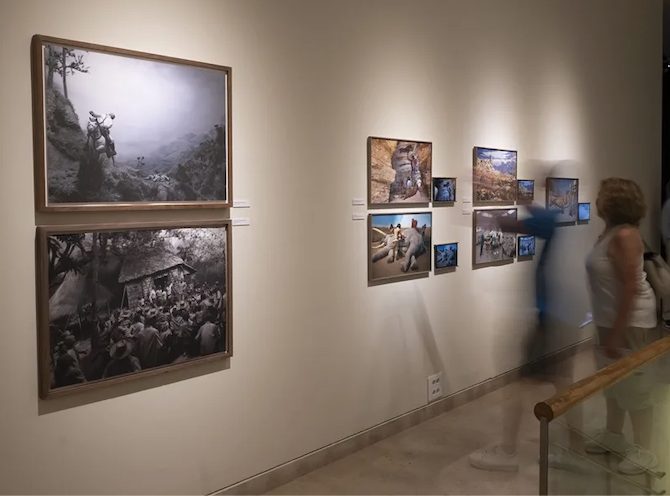
Conceived to mark the 25th anniversary of the current headquarters of the National Museum and Research Center of Altamira, the exhibition "Dioramas by Joan Fontcuberta" proposes a reflection on how the past is reconstructed, interpreted, and transmitted through images. Far from being a retrospective exhibition, the project establishes a dialogue with the experience of visiting the replica cave and with the museographic resources that have made Paleolithic art accessible to contemporary audiences.
The exhibition brings together a dozen photographs taken by the artist from dioramas, three-dimensional recreations used by history and natural history museums to represent vanished scenes. Fontcuberta recovers images captured over decades and combines them with new works conceived specifically for Altamira, focusing on the different ways in which modern society has imagined and represented the inhabitants of prehistory.
The exhibition's starting point is a visual paradox. The replica cave reproduces the original Altamira cave, while the diorama recreates events and scenes impossible to see today. By photographing these reconstructions, Fontcuberta generates a new layer of representation: images of recreations that, in turn, become new fictions. The result is a play of replicas and simulations that questions the idea of authenticity and highlights how knowledge is also constructed through visual artifice.
This reflection connects with one of the constants in the career of the Barcelona-based photographer, whose work has examined for decades the boundaries between document, fiction, and truth. In Dioramas, the artist once again explores photography's capacity to generate narratives and challenge the trust placed in the image as an objective testimony of reality.
The exhibition also incorporates an artistic interpretation of the famous polychrome ceiling of Altamira. Fontcuberta takes some of its most emblematic animals—such as bison and deer—and places them on an imaginary journey through the history of Western art. The Paleolithic figures are reinterpreted through different pictorial languages and styles developed over the centuries, suggesting that those early representations contained, in some way, the germ of all the forms of painting that would follow.
The well-known statement attributed to Pablo Picasso, that "after Altamira everything is decadence," serves as a conceptual starting point for this series of transformations. Rather than illustrating a historical evolution, Fontcuberta proposes a reflection on the continuity of artistic creation and on the capacity of those ancient images to continue engaging with the present.


You may be
interested
...