Exhibitions
The portrait as mask: Picasso and fragmented identity
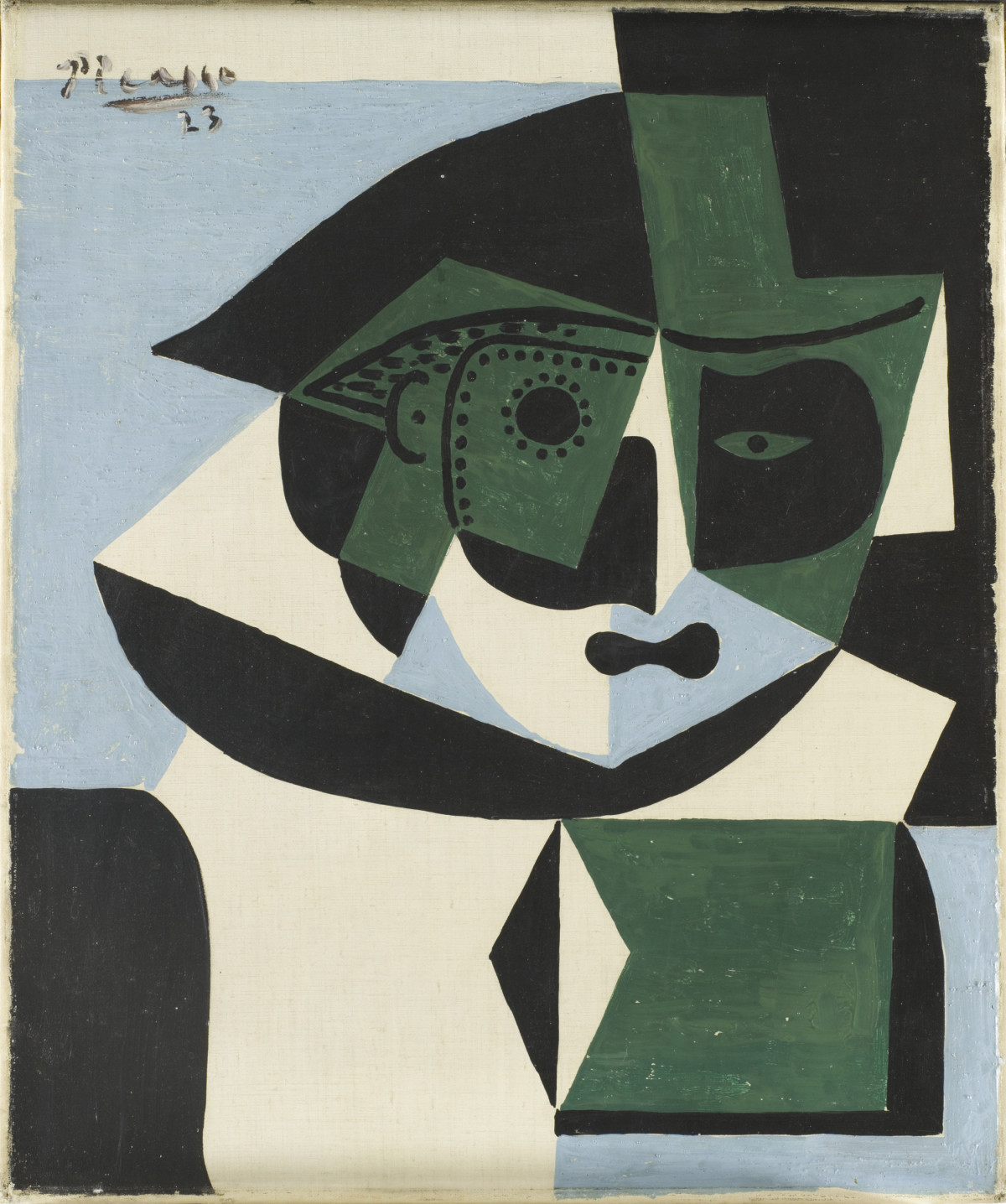
At the Los Angeles County Museum of Art, the exhibition “Picasso—Portraits in Disguise” (June 12 – December 6) proposes a reinterpretation of portraiture in the work of Pablo Picasso not as a faithful representation of the subject, but as a territory of concealment, displacement, and symbolic reconstruction of identity.
The starting point is seemingly classic: portraiture as a genre. However, the exhibition dismantles this expectation by demonstrating how Picasso never treated likeness as an end in itself, but rather as a problem. His figures—lovers, friends, rivals, and even himself—appear filtered through shifting pictorial languages, where Cubism fractures the body, and later stages deform it with increasingly emotional and less descriptive gestures. The result is not an archive of faces, but an archive of transformations.
One of the most thought-provoking conceptual axes of the exhibition is the idea of “disguise.” Far from being a mere anecdote, disguise functions as a profound structure: a nose can be an autonomous sign, a shadow suggests a nonexistent profile, an accessory replaces the entire identity of the character. In this sense, Picasso does not portray individuals, but rather visual codes that stand in for them. Identity becomes an unstable construct, almost a formal hypothesis.
The critical reading proposed by the exhibition also draws on the figure of the harlequin, one of the artist's recurring alter egos. More than a folkloric character, the harlequin appears here as a metaphor for the creative process itself: a multifaceted, unstable subject, capable of mutating without losing internal coherence. In this sense, Picasso does not represent himself directly, but rather as a succession of masks that allow for the exploration of different versions of the self.
From a contemporary perspective, the exhibition poses an uncomfortable question: to what extent does the modern portrait remain a space for recognizing the other, or has it become a device for projecting the artist's own self? In Picasso's case, the answer seems to lean toward the latter. The subject portrayed is absorbed by the logic of style, subordinated to formal experimentation and the psychology of the artist.
The merit of “Portraits in Disguise” lies precisely in making this tension visible. More than celebrating Picasso’s technical mastery—already widely canonized—the exhibition invites us to reflect on the symbolic violence of the act of representation: every image of a face is, to some extent, a self-serving translation, a disguised version of reality.
Ultimately, the exhibition leaves an ambivalent impression. On the one hand, the visual power of the works confirms Picasso's ability to reinvent the language of portraiture. On the other, a less flattering interpretation emerges: identity in his work is not only fragmented, but permanently subordinated to the artist's will to transform everything into style.

You may be
interested
...