Exhibitions
Pablo Merchante and painting as ascension
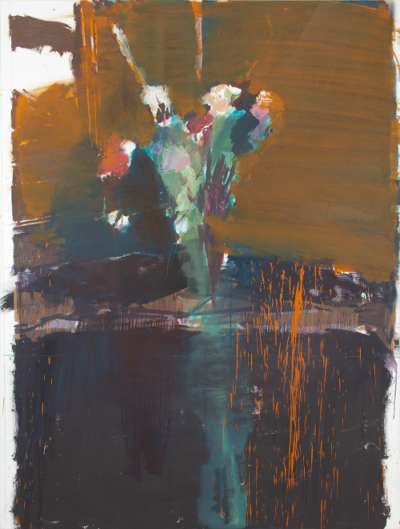
Pablo Merchante's exhibition, Excelso , proposes a reflection on painting's capacity to transcend the visible and become an uplifting experience. The project at the Esteban Vicente Museum arises from a threefold encounter: with the work of Esteban Vicente himself, with the cultural landscape of Segovia, and with a conception of artistic creation understood as an exercise in harmony, rhythm, and contemplation.
From its earliest pieces, the exhibition reveals one of the artist's fundamental interests: the construction of pictorial space through relationships that directly reference musical language. Merchante's musical training becomes a structural element rather than a mere anecdote. His compositions function as visual scores where pauses, tensions, contrasts, and resonances organize the viewer's experience. Color ceases to be a descriptive resource, acquiring a temporal dimension capable of unfolding like a sequence of chords and silences.
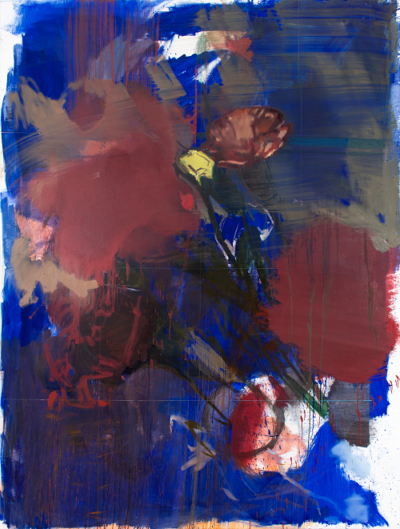
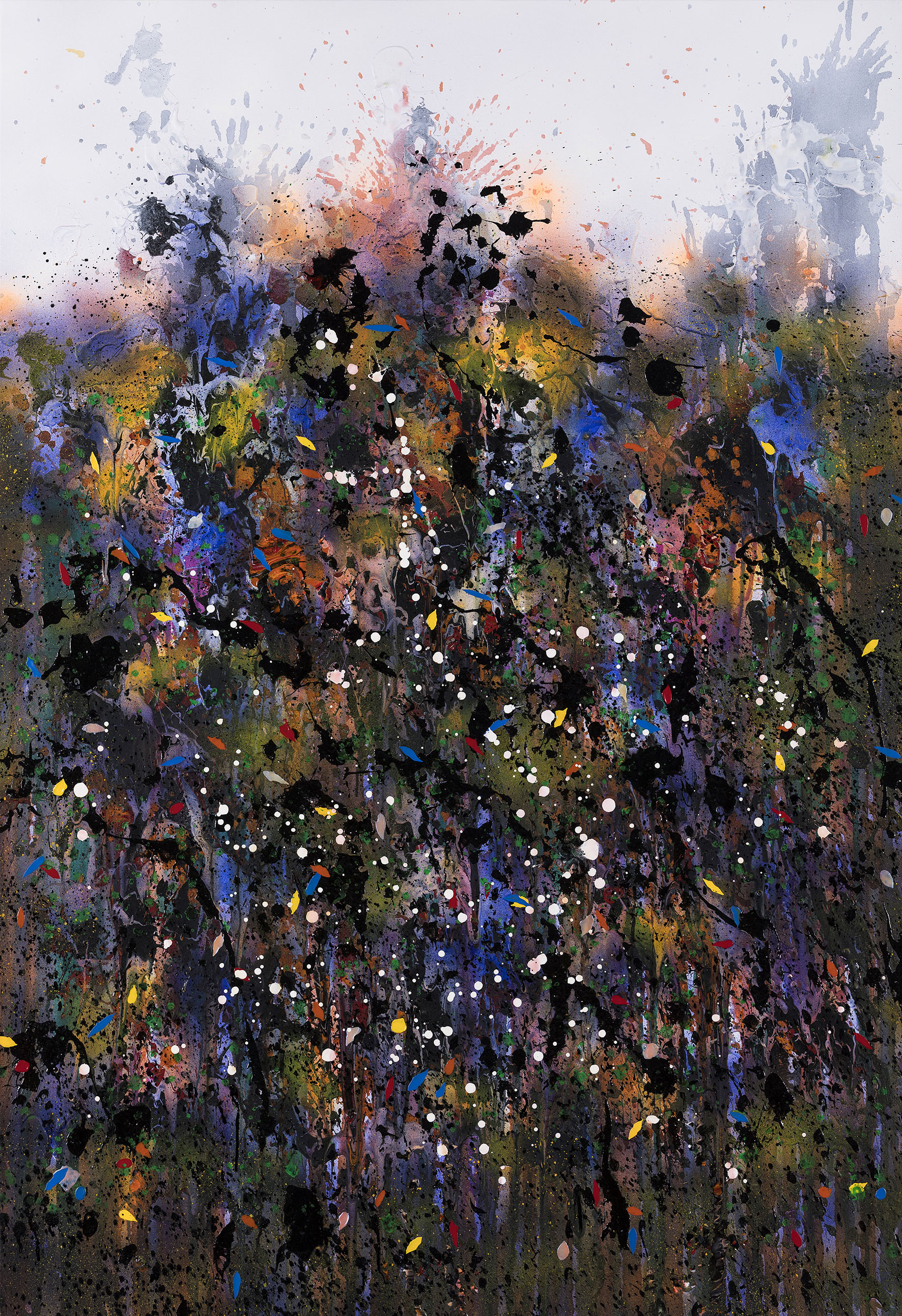
Harriet, 2026 © Pablo Merchante.
Merchante's painting practice occupies a borderland between figuration and abstraction. His images emerge from an open relationship with matter and gesture, in a process where forms constantly appear and disappear. Far from offering visual certainties, the works remain in a state of continuous transformation, inviting an active and contemplative gaze.
The exhibition's title encapsulates the project's core concept. The sublime is understood as a force of ascension, an impulse that connects the tangible with the immaterial and the natural with the spiritual. This idea permeates the entire exhibition through compositions that play with the perception of balance and gravity. Some pieces incorporate inversions and visual shifts that make the viewer aware of the fall, suggesting, precisely from that fall, the possibility of a subsequent ascent. Others remain suspended in a kind of poetic instability, open to the atmospheric and the indeterminate.
Nature is one of the exhibition's major thematic axes. Flowers, leaves, and branches appear recurrently, though stripped of any purely representational intent. In the series *The Possibility of Nature *—which includes a work expressly dedicated to Esteban Vicente—plant elements become spaces for contemplation and emotional resonance. The enlarged scale transforms the flower into a monumental presence that engages in a dialogue on equal footing with human experience.
This approach connects with certain Eastern aesthetic traditions, where nature is not viewed as an object of representation but as a sphere of attention and experience. Glazes, superimpositions, and chromatic gestures construct open surfaces, in constant flux, where the paint seems to breathe to the rhythm of its own internal processes.
The sonic dimension of the project reaches its fullest expression in Todo es Excelso. Cuatro tierras. Cuatro paisajes sonoros. Cuatro tiempos (Everything is Exalted. Four Lands. Four Soundscapes. Four Times) , a choral composition that integrates voice, piano, and natural sounds such as wind and birdsong. Inspired by both sacred music structures and contemporary repetition techniques, the piece expands the scope of the exhibition and confirms the interdisciplinary approach that permeates the entire project.
The presence of Esteban Vicente's works in the adjoining room establishes a particularly suggestive dialogue. Beyond formal and generational differences, both artists share a profound confidence in color, structure, and rhythm as tools capable of constructing spaces for contemplation. The conversation between their works reveals a shared aspiration: to make painting a realm where matter becomes light and allows us to glimpse that which transcends it.
Excelso will be on display until October 25th and is presented as one of those exhibitions that invites you to slow down your gaze. It's a proposal that understands art not as a representation of the world, but as a sensory experience capable of opening spaces for perception, memory, and transcendence.
You may be
interested
...