Exhibitions
Art Basel 2026: the art market regains momentum and looks to the digital future
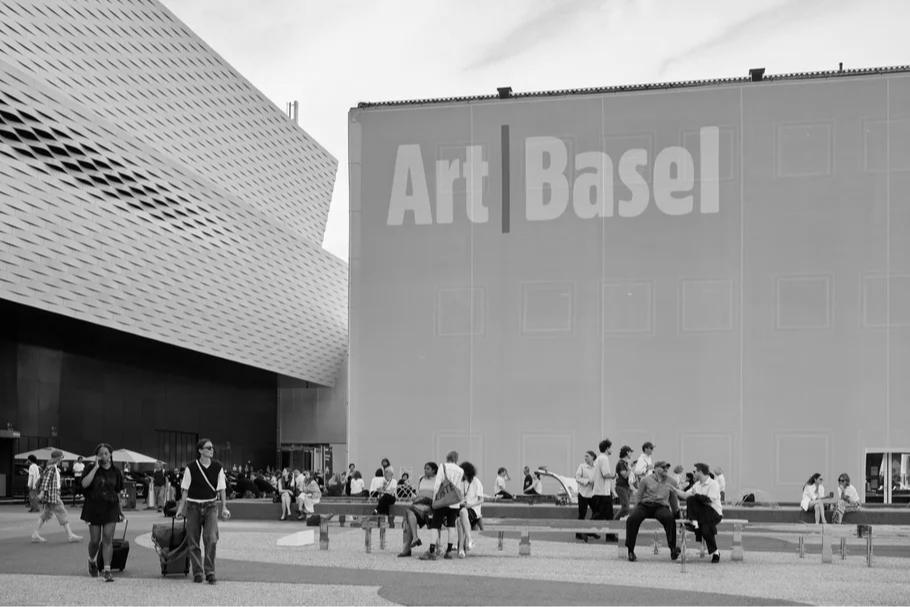
The 2026 edition of Art Basel has opened its doors in Basel with the participation of 290 galleries from 43 countries and nearly 4,000 artists, once again solidifying its position as one of the leading indicators of the global contemporary art market. The first VIP day yielded a significant statistic: sales have surpassed those of the previous year, confirming a sustained recovery in the sector following the correction that began in 2023, although without signs of speculative euphoria.
The pace of transactions has been described as steady and deep, reflecting a greater maturity in the market where collectors seem to be opting for more stable, long-term investment strategies.
One of the main focuses of this edition is the expansion of digital art through the Zero 10 platform, which debuts at the fair's Swiss venue after its first appearance in Miami. Under the theme "The Condition ," it brings together some twenty international galleries dedicated to cutting-edge digital art practices. These include names like Hauser & Wirth, Marian Goodman, and Almin Rech, along with spaces such as Max Estrella (Madrid), Upstream Gallery (Amsterdam), and Oniris (Rennes). The initiative, in the words of the organizers, seeks to "redefine the future of contemporary art" by connecting with a global, digitally native, and highly interconnected audience.
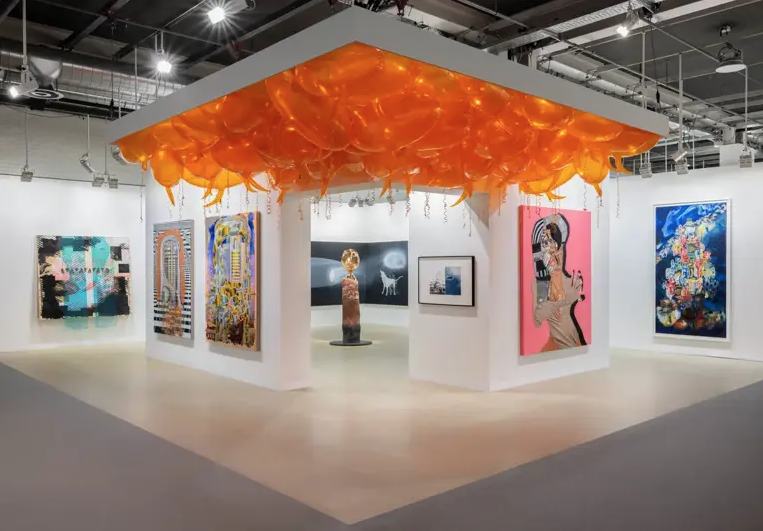
Alongside the main fair, the program expands with several sections that reinforce its multidimensional character. Unlimited brings together 59 projects presented by 66 galleries, featuring monumental installations, performances, film, and immersive experiences that break with the traditional exhibition format. Parcours once again transforms Basel's urban space with works distributed throughout the city, in addition to two site-specific commissions in Messeplatz and Münsterplatz. Basel Exclusive, meanwhile, presents previously unseen pieces by leading figures in modern and contemporary art, reinforcing the event's museum-like profile.
The Hispanic American presence is once again particularly significant. From Spain, galleries such as Elvira González, Elba Benítez, Ehrhardt Flórez, and Leandro Navarro, along with Barcelona's Polígrafa Obra Gráfica, are consolidating their participation in the international circuit. In Latin America, Casas Riegner (Bogotá), kurimanzutto (Mexico City), and the Brazilian galleries Casa Triângulo and Raquel Arnaud (São Paulo) stand out, confirming the region's growing importance in the global contemporary art scene.
The fair also brings together works by key figures in 20th and 21st-century art, including pieces by Louise Bourgeois, Andy Warhol, Henry Moore, Georg Baselitz, and Gerhard Richter, as well as a historical selection of works by the Uruguayan master Joaquín Torres García, exhibited at the Guillermo de Osma Gallery. Contemporary artists featured include Lubaina Himid, Yto Barrada, Oriol Vilanova, Dana Awartani, Guadalupe Maravilla, and Sara Flores, among others.
Overall, this edition of Art Basel points to a central idea: the contemporary art market is regaining momentum, but it is doing so with greater caution than in previous cycles. The expansion of digital art, the strengthening of Latin American galleries, and the diversification of formats suggest an increasingly hybrid ecosystem, where investment, experimentation, and new forms of cultural consumption coexist.

You may be
interested
...