Exhibitions
Mirror of the world: archaeology of memory in the work of Patricia Gómez and María Jesús González
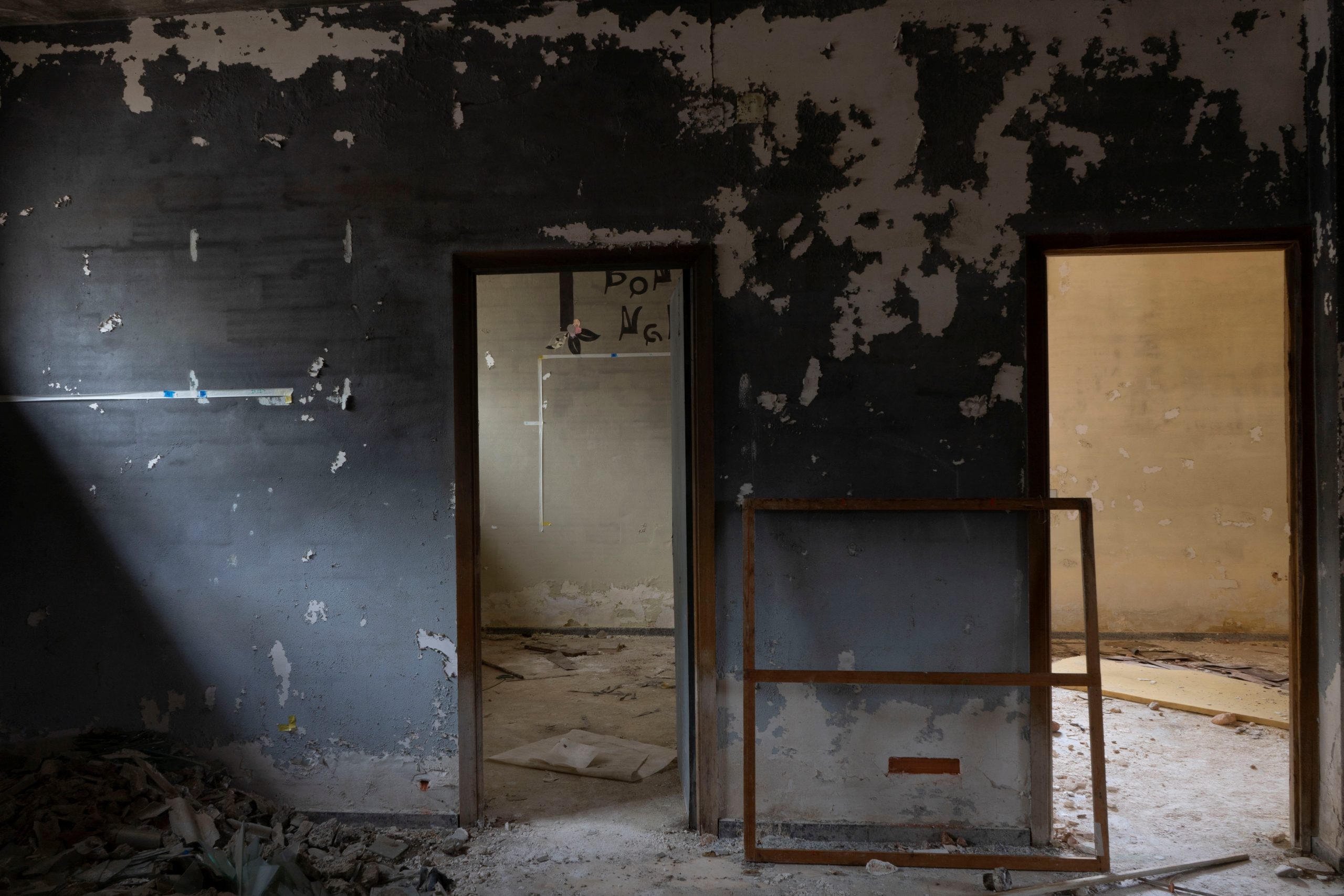
The Helga de Alvear Museum presents the temporary exhibition "Mirror of the World ," a project by artists Patricia Gómez and María Jesús González that invites reflection on memory, identity, and the marks that time leaves on architectural spaces. The exhibition will be on display in Cáceres from June 12 to October 11, before beginning a second phase planned for 2027 at the Tenerife Arts Space (TEA).
The exhibition brings together 19 works from diverse origins, including six pieces created specifically for the Cáceres museum. Overall, the exhibition presents a journey that combines video, photography, installation, documents, and mural pieces, in a constant dialogue between artistic research and historical memory.
Architectures of absence: the “mural uprooting” as an archive of time
The central focus of the project is the "mural removal" technique, a procedure originating in restoration that the artists have adapted to the realm of contemporary creation. Using this method, Gómez and González extract layers of paint, writing, and wear from abandoned surfaces, transforming the material remains into sensitive records of the past.
Their work focuses on spaces of confinement, isolation, and social control—such as prisons, psychiatric hospitals, or detention centers—where time has left deep marks. Far from mere documentation, the artists activate these places through processes of physical transfer, transforming what remains into images that oscillate between the documentary and the poetic.
The Old Prison of Cáceres and the Hospital of Bétera: two research centers
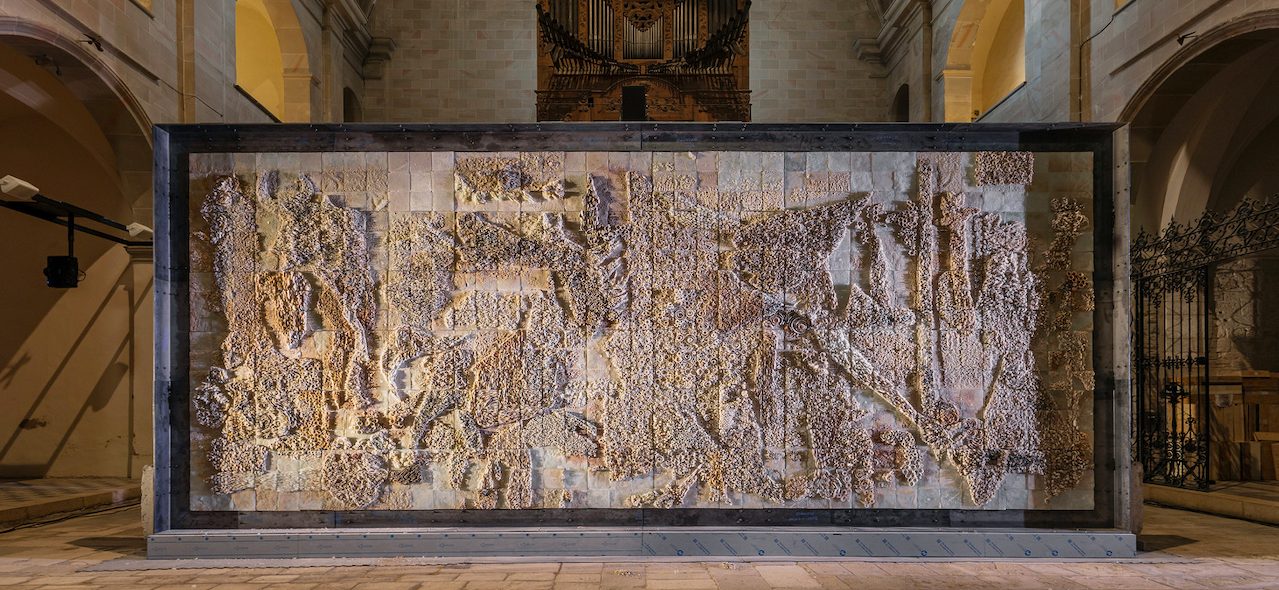
One of the exhibition's main focuses is the intervention at the former Old Prison of Cáceres, used during the Franco regime as a space for the repression of political prisoners. Using its walls, the artists have created a monumental 23-meter mural in the Casa Grande, made by removing sections of the original mural from black canvas, reproducing fragments of a gallery in Module I of the prison complex.
In parallel, the exhibition brings together for the first time in a comprehensive manner the work developed since 2017 around the former Provincial Psychiatric Hospital of Bétera (Valencia). From this context, the artists have created new pieces such as the video *Que se enteren todos* (Let Everyone Know) and the installation *Libros de Pabellón * (Pavilion Books), where they recover diaries and visitor logs to transform them into visual structures that reinterpret the everyday.
An archaeology of the invisible
According to curator María Jesús Ávila, the works not only document the buildings, but also activate them as living archives. Each extracted fragment functions as a superimposed layer of time, where writing, painting, and wear and tear are intertwined.
This approach transforms the seemingly insignificant—stains, signatures, material remains—into tools for historical interpretation. Thus, Gómez and González's work builds a bridge between the individual and the collective, between the intimate experience of spaces and their social and political dimension.
A project in dialogue with the institution
Sandra Guimarães, director of the Helga de Alvear Museum, emphasizes the coherence of this proposal with the center's research focus, which centers on artistic practices that cross boundaries between the local and the global. The collaboration with TEA also reinforces the itinerant nature of the project, which will continue its tour in 2027.
You may be
interested
...