
Exhibitions
Cecilia Vicuña: the threads of memory, justice and land
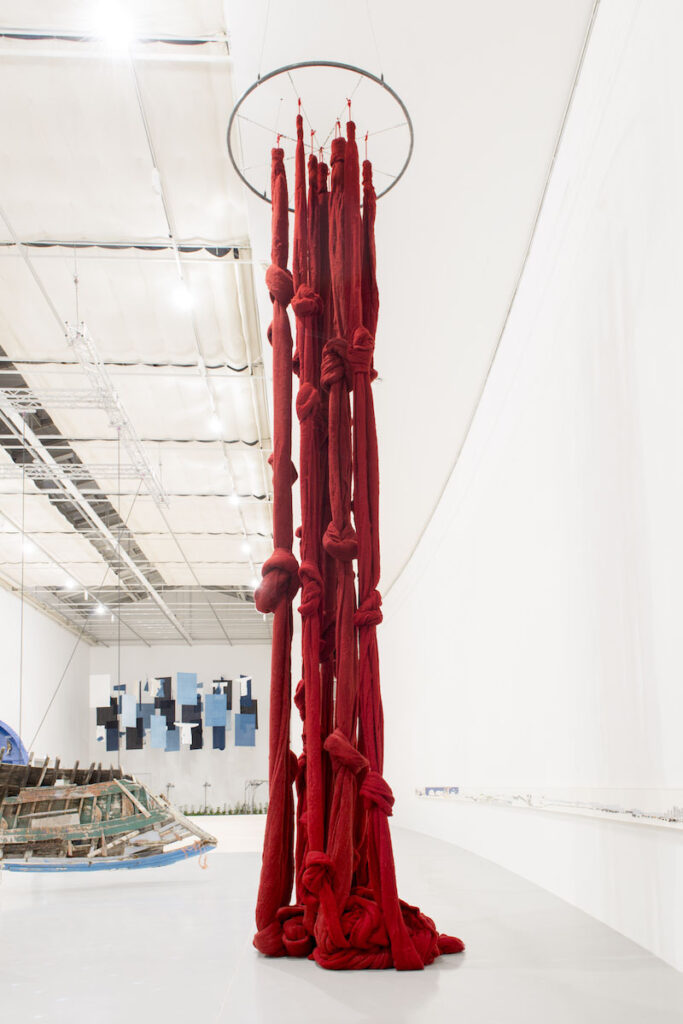
The installation Quipu Gut (Quipu Gut) by Chilean artist and poet Cecilia Vicuña occupies a prominent place within the Pérez Art Museum Miami. The work constitutes one of the most powerful expressions of a creative trajectory marked by historical memory, the defense of human rights, and a profound connection to the ancestral knowledge of the Andean peoples.
Born and raised in La Florida, in the Maipo Valley, Vicuña grew up in a family environment where art, literature, and critical thinking were part of everyday life. From an early age, she heard stories about the persecution of those who fought for social justice in Chile, experiences that would decisively influence her artistic and political vision.
While studying at London's prestigious Slade School of Fine Art on a British Council scholarship, the 1973 coup led by Augusto Pinochet forever altered her destiny. Faced with the beginning of a military dictatorship that would last for seventeen years, the artist chose to remain in exile in the United Kingdom. There, she engaged in intense political activism against fascism and human rights violations, while also presenting her first exhibitions at the Institute of Contemporary Arts and publishing her first book, Sabor a mí (Taste of Me).
More than five decades later, Cecilia Vicuña's work is experiencing one of its greatest moments of international recognition. In 2025, she received the Icon Artist Gold Medal at the Art Basel Awards, an inaugural distinction considered by many to be one of the highest honors in contemporary art. Currently, her work is exhibited simultaneously at major institutions in Europe and the Americas, including the Pérez Art Museum Miami, as well as the Museum of Modern Art in Warsaw, the Irish Museum of Modern Art, the UCR ARTS California Museum of Photography, the Museum Ludwig, and the Kunsthaus Zürich.
Quipu Gut is part of an extensive series of red quipus that began with Quipu Menstrual in 2006. These monumental structures reinterpret the ancient Andean system of recording and communicating using knots and cords, transforming it into a powerful contemporary metaphor. The intense red color, according to the artist, evokes “the blood of the glaciers,” a poetic reference to the environmental devastation caused by mining and the indiscriminate exploitation of natural resources.
Water, blood, fertility, and femininity intertwine in a work that transforms space into a sensory and spiritual experience. Conceived in 2017 for the landmark exhibition documenta 14, Quipu Gut was presented at Documenta Halle in Kassel, Germany, while its sister work, Quipu Womb , was exhibited at the National Museum of Contemporary Art in Athens.
Both installations establish a dialogue between Andean traditions and ancient Mediterranean mythologies. Vicuña describes them as a tribute to a syncretic spirituality that connects menstrual symbolism and the umbilical cord with the mother goddesses of the Andes and the marine narratives of ancient Greece.
The artist defines these creations as “spatial poems.” In Quipu Gut , fifty enormous strands of unspun wool, dyed red and rhythmically knotted along a length of almost ten meters, suspend stories, memories, and ancestral knowledge. The result is an immersive installation where Indigenous textile practices, community rituals, and ecological activism converge in a single narrative.
You may be
interested
...