Opinion
The Biennial: Between Protests, Bizarre Events, and Discoveries
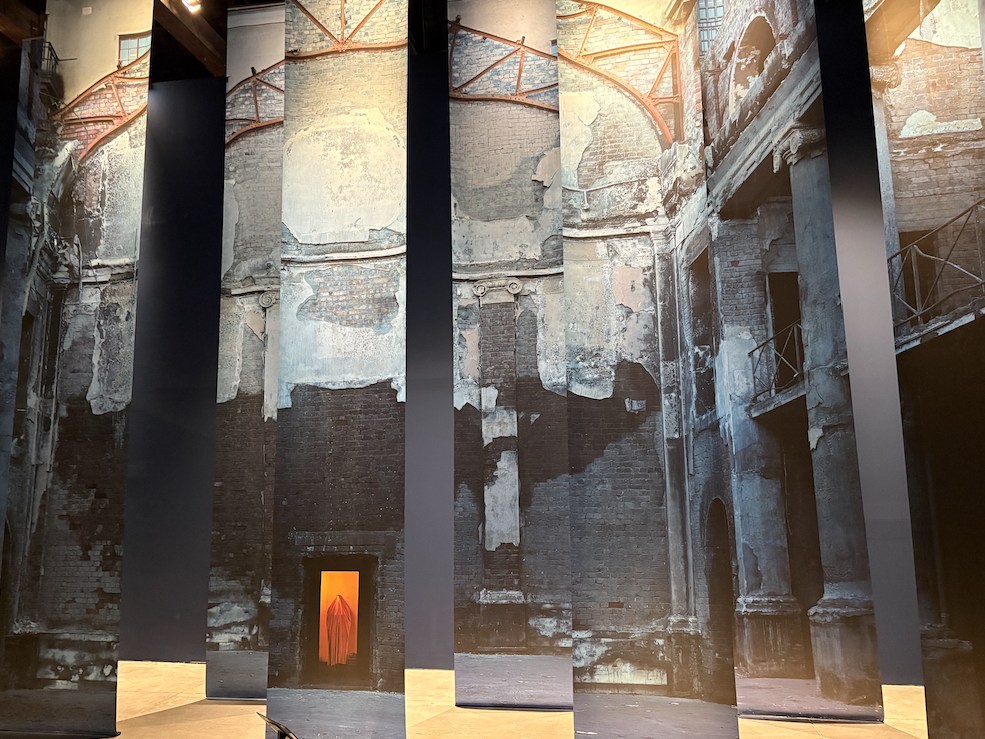
The opening week of the 61st Venice Biennale has ended, and the industry professionals who flocked to the so-called "vernice" have already departed for other events. Now it's the public's turn to express their opinion and, for the first time in the history of the event, which began in 1895, to also award the Lions, the prestigious prizes given since 1949, when Henri Matisse, among others, won one. Without a jury, since its members resigned en masse due to the presence of Israel and Russia (and the United States, I would add), countries that trample on international law, the responsibility of awarding these (until now) highly prestigious accolades falls to the visitors: from thoughtful and reasoned critical judgment, we move to a populist-style poll. The decision in this regard by Pietrangelo Buttafuoco, president of the Biennale, has stirred up all kinds of controversy, plunging the awards into an unprecedented state of instability. More than 50 of the participants in the international exhibition *In Minor Keys *, around 50% and with that number expected to rise, have already withdrawn from the competition, along with the artists from 16 national pavilions. It is clear that replacing the professional jury with a popular vote alters the very nature of the award, and the artists understandably do not recognize its legitimacy.
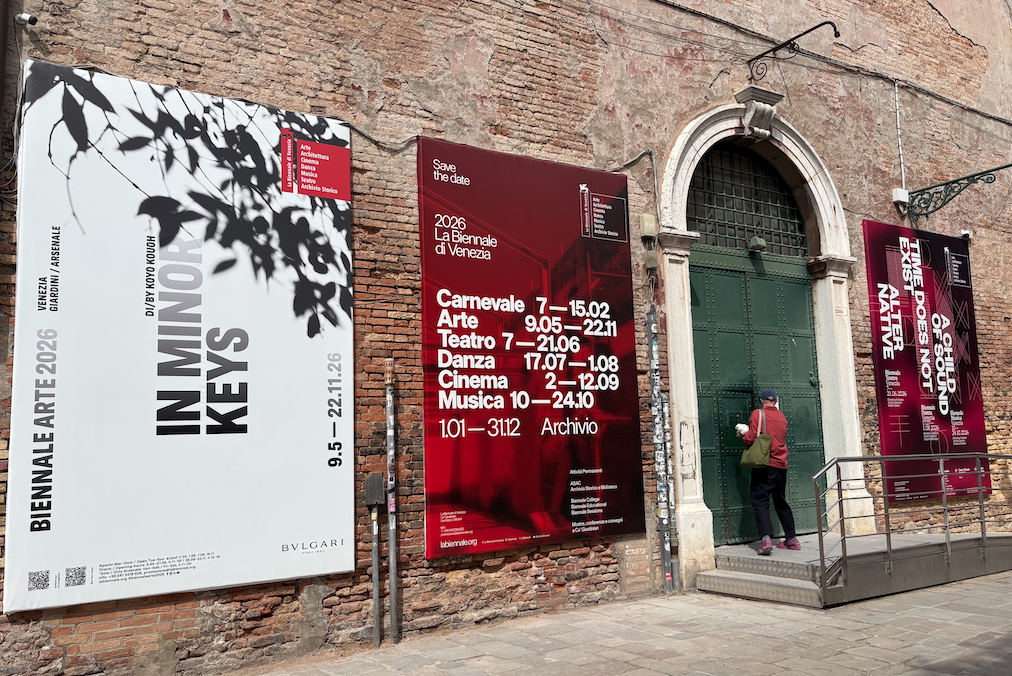
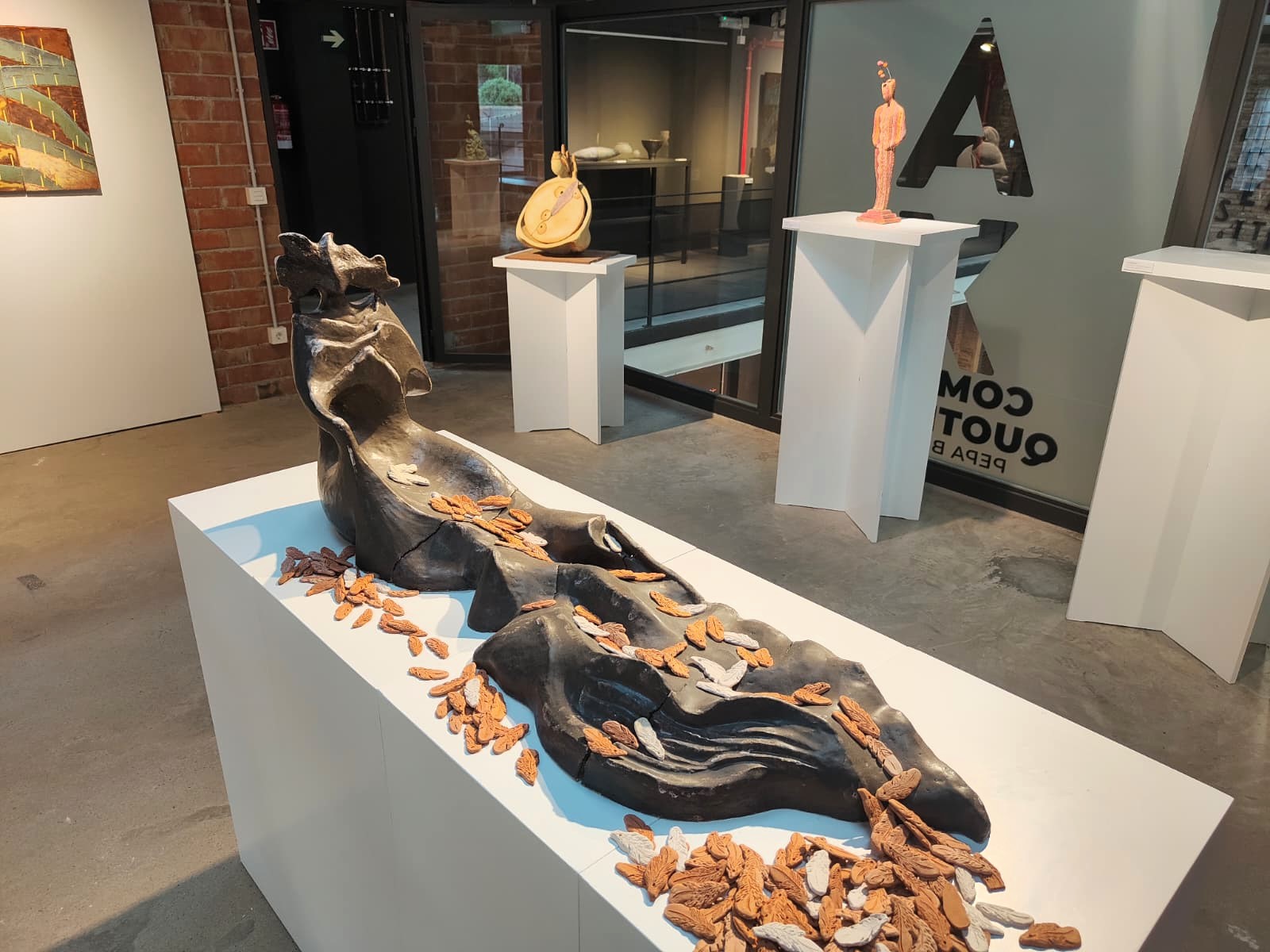
Photo: @arte.edad.silicio.
In any case, anyone wishing to cast their vote for the two remaining awards—Best Artist in the international exhibition curated by Koyo Kouoh and Best National Pavilion—can do so online completely anonymously. After visiting the two main exhibition venues, the Giardini and the Arsenale, all visitors will receive an email with a personal link to cast their vote within 24 hours of their visit. The question is legitimate: does this popular vote represent a democratization of the process or merely a suspension (hopefully not an elimination) of professional critical judgment? Whatever the case, it is clear that after years of debate about the exhaustion of the biennial model based on national participation and diplomatic logic, the awards themselves, another of the event's founding elements, have now also entered a period of crisis.
Despite everything, I don't believe the biggest problem is ultimately the biennial model itself, which, although formulated in the 19th century, remains (sadly or not) a reflection of reality in the 21st. What is truly concerning is the advance of private institutions, whose excellent health is evident. Frenchman François Pinault, owner of luxury brands such as Gucci, Saint Laurent, and Balenciaga, has had two permanent venues in the lagoon for two decades. In 2019, Francesca Thyssen's TBA21 opened its Ocean Space in the Church of San Lorenzo, and this year Bulgari became the Biennial's exclusive partner until 2030. Taking things a step further, Turin-based collector Patrizia Sandretto has purchased the island of San Giacomo and, with a spectacular restructuring, has transformed it into her third exhibition venue in Italy (in addition to the nomadic venue in Madrid) and a haven for art and the artists who will have access to its residencies. While the Biennial cancels festive events and copes as best it can with the unprecedented May 8th strike, private foundations organize parties and cocktails, relying on their astonishing budgets and cosmopolitan, ethical and politically correct programs.
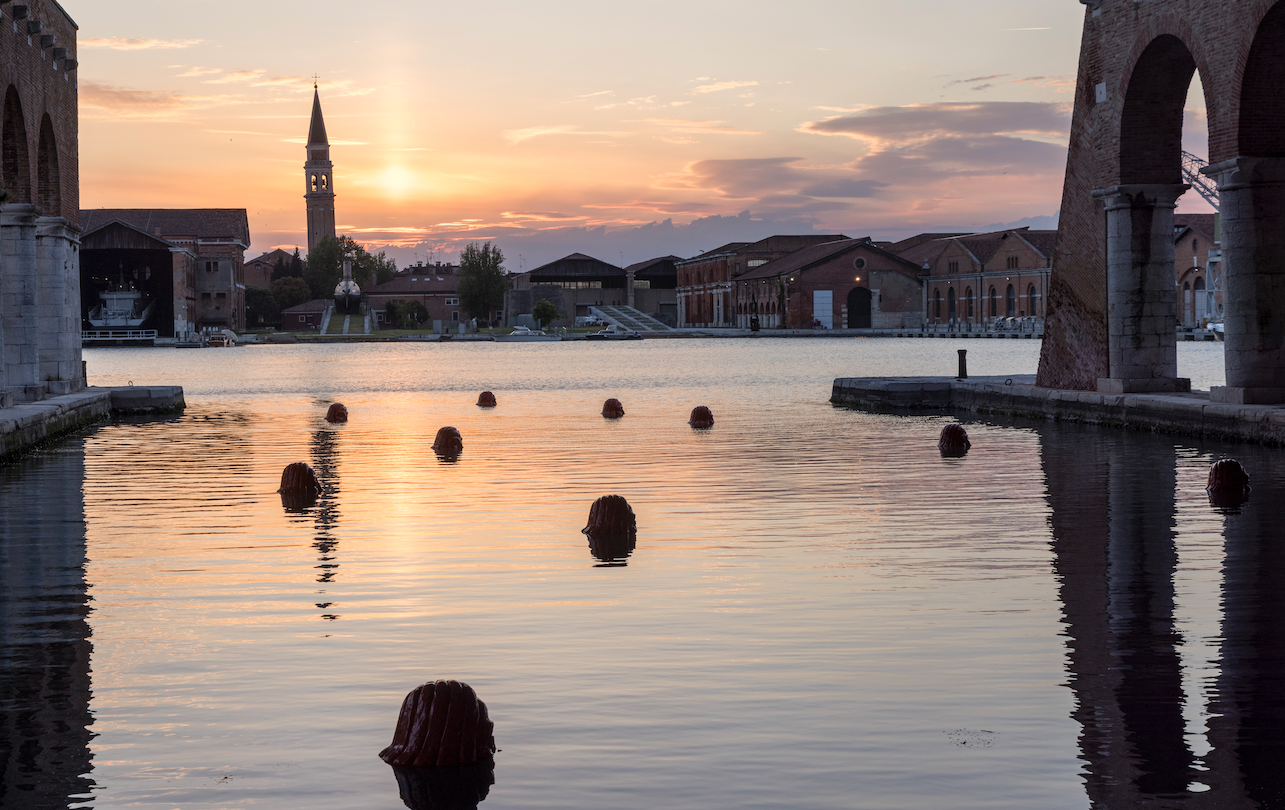
Photo: @arte.edad.silicio
Regarding the central exhibition curated by Koyo Kouoh (Cameroon, 1967–Switzerland, 2025), who was appointed in October and passed away prematurely in May, I am inclined to think that the outcome of her curatorial work was not what she would have wished for had she been able to complete it. Her team, who continued the work, chose not to add or remove artists or works from the initial selection she had made. The result is an overloaded exhibition, in which the works have no room to breathe, but are instead piled up in large, striking bursts of color that initially fascinate but soon become tiresome. Many artists are represented in both the Arsenale and the Central Pavilion of the Giardini, leading to unnecessary repetition. The exhibition's focus on similarities rather than contrasts makes it a stress-free experience, though it certainly features interesting artists such as Guadalupe Maravilla, Alfredo Jaar, Kader Attia, Laurie Anderson, Walid Raad, and even a few surprises—which, after all, is what we've come to expect from the Venice Biennale. Among them are Kenyan artist Wangechi Mutu, a representative of African feminism who draws on her ancestral origins to create hybrid ecologies using bronze, tree branches, human hair, Kenyan soil, cow horns, book paper, and quartz crystals; and Japanese artist Bubu de la Madeleine, a member of the Dumb Type group, known for her representation of the world through technology and currently engaged in queer activism and supporting people with AIDS. Bernie Searle's work, which transforms itself into an abstraction, and Theo Esthetu's installation, which places a thousand-year-old olive tree on a rotating stage and dematerializes it with a video projection, command attention. In the art world, even as it yearns for sustenance from the earth and light, the tree loses its leaves, yet it resists and clings to life, waging a losing battle, like so many people in the world.

Photo: @arte.edad.silicio
And if, as the artist Daniel G. Andújar points out on his website, “The Biennial exhibition asks for silence when everything around it screams. It proposes minor tones in a moment of deafening historical noise,” the pavilions, freed from the yoke of an imposed theme, do not present themselves as a more or less unified whole, but rather offer surprises of all kinds, and in this bizarre situation, even the scatological has its place. With the slogan “I live in your piss,” the Austrian Pavilion invites the public to participate with their excrement, via mobile restrooms, in an out-of-control amusement park. In contrast, at the Luxembourg Pavilion, Aline Bouvy directly proposes an ode to shit: from the title La Merde ( The Shit), to a life-size ET sculpture made of excrement, a sculptural alter ego that merges the artist's body with Spielberg's alien, to the film-essay-manifesto that addresses shame as a social mechanism, examining how bodies are classified, tolerated, disciplined, or relegated to the shadows. Both pavilions are conceived as immersive experiences that invite reflection on purity, gender, and social norms. From excrement to chocolate, the Maltese Pavilion (which inaugurated its own biennial in March, curated by Rosa Martínez) presents a proposal that questions truth and embraces uncertainty. This is the case of the artist Charlie Cauchi, who investigates the transformation of marble and bronze, typical materials of classical statuary, into edible elements. His Gladiator , which represents Russell Crowe weighing 150 kg. The chocolate version transforms the hero, a symbol of strength and resilience, into a mirror of human fragility and precariousness. Regarding the pavilions and the impossibility, according to the Biennale president, of preventing the presence of countries that violate international law and the norms of democratic coexistence, it is worth recalling what happened exactly 50 years ago with the Spanish Pavilion. At that time, the Venetian institution reacted to the last executions by the Franco regime by prohibiting Spain's participation, so the Pavilion remained closed. Instead, an alternative exhibition was held in the Giardini, featuring artists such as Antoni Tàpies and Equipo Crónica.

You may be
interested
...