Exhibitions
Childhood games as an archive of the contemporary world
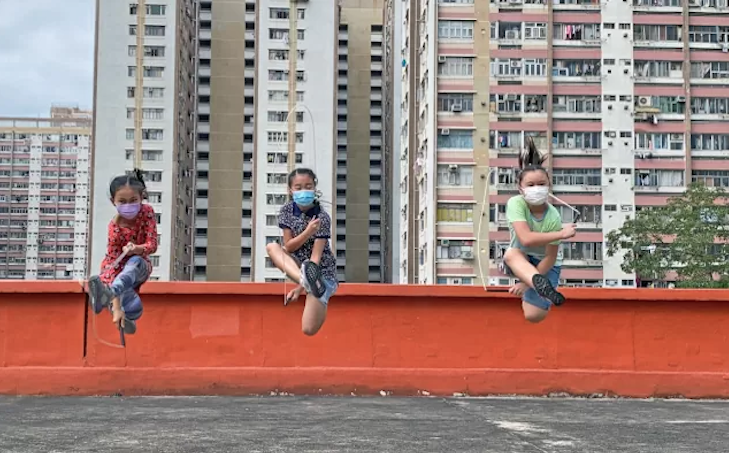
Between 1999 and 2025, the artist Francis Alÿs developed an extensive audiovisual project entitled Children's Games , conceived as a living archive of children's play practices recorded in urban and rural contexts across five continents. This series, which now comprises over fifty videos, is presented as an artistic investigation into the universality and diversity of children's play.
A selection of 27 pieces will be exhibited from April 23 to August 24, 2026 at the Miguel Urrutia Art Museum (MAMU) in Bogotá, where the works will occupy unconventional spaces such as the parking halls and the second floor, configuring an immersive multi-screen experience that evokes a large collective courtyard.
The project is characterized by its focus on the material simplicity of the games recorded: many require only one or two objects, or even none at all. However, within this economy of resources, a complex, spontaneous social organization emerges. Children establish their own rules, negotiate conflicts, create temporary agreements, and generate forms of autonomous sociability, without adult intervention.
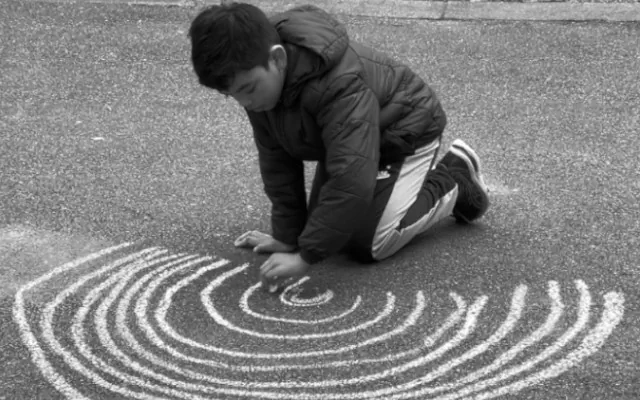
Throughout the archive, surprising resonances emerge between distant cultures. Variations of hopscotch in Afghanistan, games with small bones in India, or particular ways of spinning a top—such as the one recorded in 2025 in the Arara community in Colombia—reveal an invisible network of playful correspondences that crosses geographies and cultural borders.
These coincidences suggest the existence of a global, underground, and non-institutionalized children's culture that challenges the identity categories of the adult world. Far from presenting itself as a homogeneous repertoire, the collection exposes both the diversity of practices and the inequalities within which they are embedded: from scenes of great skill to games played in contexts of precarity, violence, or armed conflict.
In the words of curator Cuauhtémoc Medina, these records function as a form of critical reading of the present. It is not about idealizing childhood, but about documenting practices that could become illegible over time, like fragments of a cultural memory in transformation.
Alÿs has decided that these collaborative works will not enter the art market, emphasizing their documentary and community dimension. In this gesture, the project distances itself from the logic of commodification to position itself as a contemporary ethnographic archive.
You may be
interested
...