Opinion
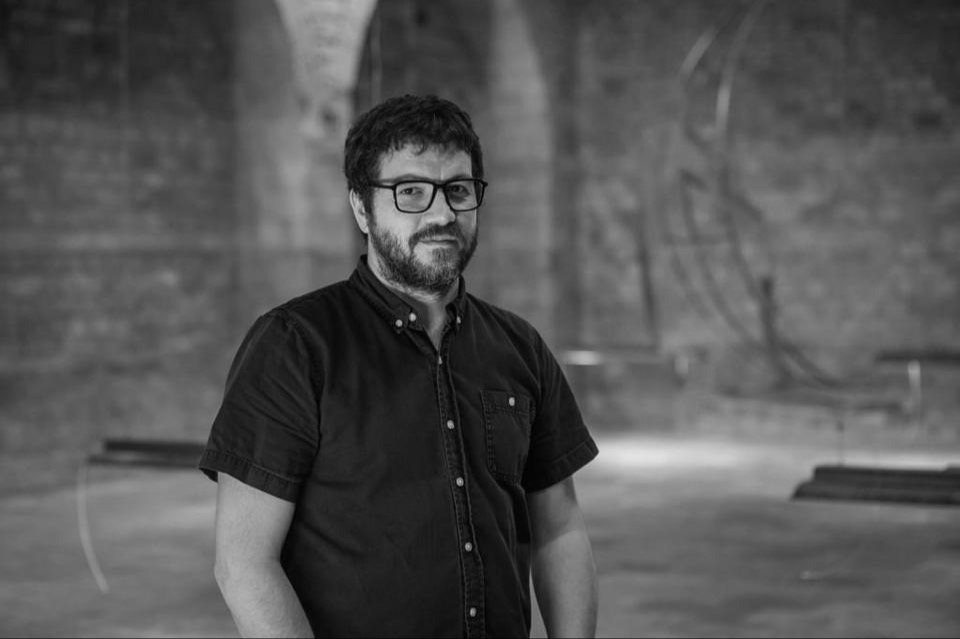
Oriol Vilanova's Infinite Archive
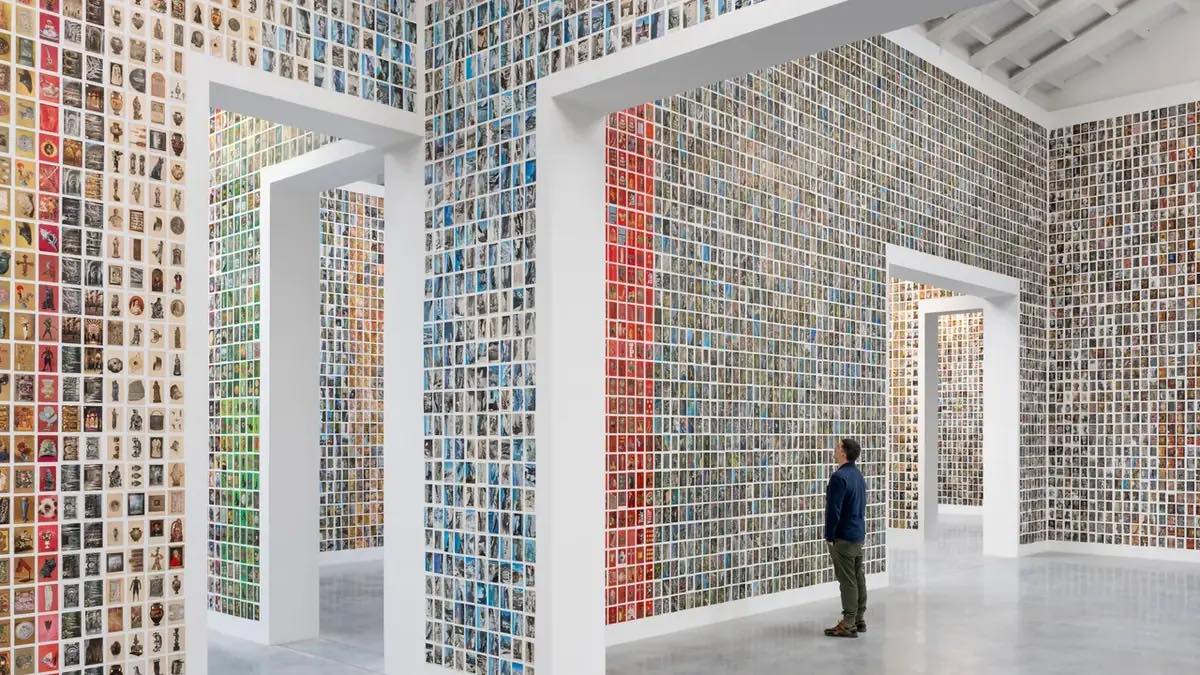
At the Spanish Pavilion at the Venice Biennale, Catalan artist Oriol Vilanova and curator Carles Guerra transformed over 50,000 postcards rescued from oblivion into a reflection on contemporary visual memory, second chances, and the cultural value of what was once considered minor. The installation, titled The Remains , unfolds thousands of images arranged in long vertical compositions that occupy all the pavilion's rooms, forming an immense mosaic of repeated scenes, tourist landscapes, and universal symbols.
Far from nostalgia for the physical object, Vilanova focuses on the power of images and the mechanisms of repetition that have shaped our way of seeing the world. For the artist, postcards condense visual clichés that existed before their appearance and remain relevant today, acting as a collective grammar of representation. This accumulation generates unexpected connections, tensions, and contradictions between seemingly identical images, revealing how shared imaginaries survive the passage of time and continue to engage the contemporary viewer.
In contemporary art, the methodical and sustained collection of data, images, and objects has become a fundamental strategy for constructing meaning. Far from understanding the artwork solely as spontaneous inspiration, many artists develop processes akin to archiving, research, and cataloging. In this context, the accumulation of information ceases to be mere storage and is transformed into visual language, collective memory, and cultural critique.
The artist Oriol Vilanova takes this practice to the extreme in the project The Remains , presented in the Spanish Pavilion at the Venice Biennale. His proposal transforms the exhibition space into a 'pseudo-museum' constructed from thousands of postcards collected over more than twenty years in flea markets, secondhand shops, and informal markets.
Data as artistic material
In Vilanova's practice, each postcard functions as a visual data point. It is not merely a tourist or decorative image, but a cultural fragment laden with historical, political, and emotional information. The repetition of these images generates patterns: monuments, landscapes, national scenes, ruins, or symbols of identity appear again and again, revealing how societies construct collective imaginaries.
The artist's methodology is based on sustained observation and classification. The archive does not arise by chance, but from a constant exercise of searching and organizing. This process transforms accumulation into a form of knowledge. The viewer no longer contemplates a single, self-contained work, but rather a visual system composed of thousands of interconnected fragments.
According to the official presentation of the Spanish pavilion, Los restos transforms the space into an “anti-museum” marked by accumulation, repetition, and the passage of time. This idea connects directly with data-driven artistic practices: gathering, organizing, comparing, and reinterpreting information to produce new readings of reality.
Archive, memory and visual culture
Methodical collection in contemporary art also questions how societies preserve memory. Traditionally, museums selected objects considered valuable or exceptional. Vilanova, on the other hand, works with minor, everyday materials: mass-produced postcards intended for tourist consumption.
This is precisely where the conceptual value of his work lies. By rescuing forgotten images, the artist demonstrates that cultural memory is also built from seemingly insignificant objects. Each postcard contains traces of an era, an ideology, and a way of representing the world.
In recent interviews, Vilanova has described his work as “an ode to the flea market,” highlighting the poetic potential of discarded objects and the unintentional compositions that emerge in these spaces. His sustained collection thus becomes a form of contemporary visual archaeology.
The Spanish pavilion as an immersive experience
The Spanish pavilion installation does not present the postcards as individual pieces, but rather as an immersive visual mass. The visitor passes through a space saturated with images where the accumulation generates a physical and perceptual experience. The work functions simultaneously as an archive, museum, database, and visual landscape.
This strategy engages with the overproduction of images in today's digital world. Just as the internet accumulates photographs and data endlessly, Los restos shows an analog accumulation that anticipates many contemporary behaviors: constantly storing, classifying, repeating, and consuming images.
The proposal also challenges traditional systems of artistic legitimation. By transforming found materials into works of art, Vilanova breaks down the separation between everyday document and museum object.
You may be
interested
...