Exhibitions
Frieze New York 2025 or the pulse of contemporary art in Manhattan
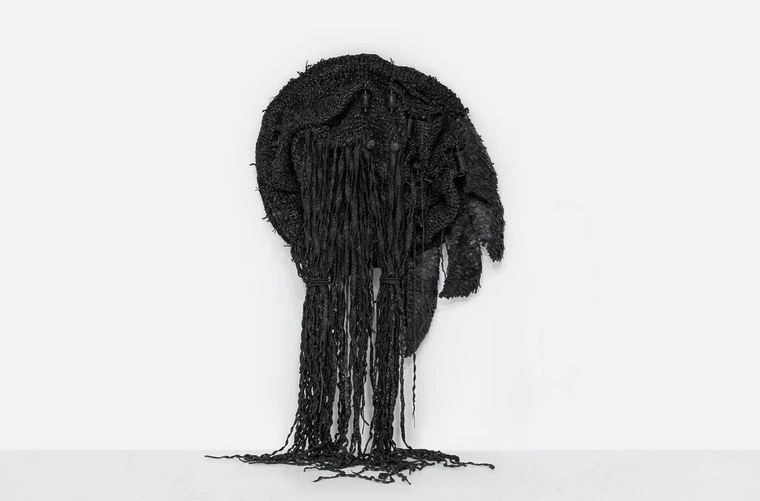
Frieze New York has established itself as one of the most influential contemporary art fairs on the international circuit, not only for its ability to bring together top-tier galleries, emerging artists, and established figures, but also for its role as a lens through which to interpret the current art scene. Frieze NY functions as a space where aesthetic production, the circulation of symbolic capital, and the dynamics of the global art market converge.
Within the context of Manhattan Art Week—which includes events like TEFAF New York, NADA New York, and the Independent Art Fair—Frieze takes on a central role as a barometer of trends and tensions within the contemporary art system. The city thus becomes an intensive ecosystem where art circulates through exhibition, negotiation, and institutional validation.
The edition held from May 13 to 17 at The Shed in Hudson Yards reaffirms this status. With over 65 international galleries, the fair offers a journey that oscillates between the curatorial and the labyrinthine, where the physical proximity of artworks and discourses generates an experience of visual overload. In this space, the encounter between emerging artists and established names responds not only to market forces but also to a narrative construction of contemporary art as an expanding and constantly redefining field.
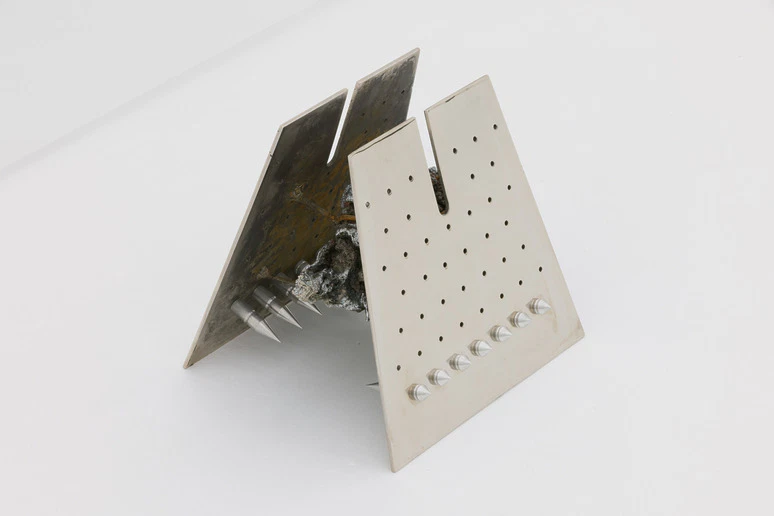
Yeni Mao, fig 21.6 beat box, (2023). PHOTO: COURTESY OF THE ARTIST AND SARGENT'S DAUGHTERS.
One of the most significant aspects of this edition is the emphasis on Latin America as a territory of growing centrality. The presence of galleries such as OMR and Kurimanzutto (Mexico City), alongside Fortes D'Aloia & Gabriel, A Gentil Carioca, and Mitre Galeria (Brazil), demonstrates a geopolitical shift on the map of contemporary art. This turn is not merely representative but rather reflects a broader transformation of the international circuit, in which new curatorial voices—such as Fátima González and Omayra Alvarado—are contributing to redefining the criteria of visibility and legitimacy.
Within this framework, the fair not only exhibits works but also constructs narratives. Joe Bradley's presentation at David Zwirner, for example, emphasizes the tension between abstraction and figuration, articulating a pictorial language that oscillates between spontaneous gesture and deliberate construction. His work, heir to certain modernist traditions, reopens questions about the autonomy of painting in a context dominated by the hybridization of languages.
In parallel, the Vermelho gallery offers a broader perspective on the contemporary Latin American art scene, featuring artists such as Iván Argote, Ximena Garrido-Lecca, and Carlos Motta, whose practices engage with issues of power, identity, and historical memory. However, it is Tania Candiani's work that introduces a particularly compelling dimension: her series Root Systems translates, through black cotton threads on raw canvas, the complexity of nature's subterranean systems, proposing an aesthetic of interdependence and ecological fragility.
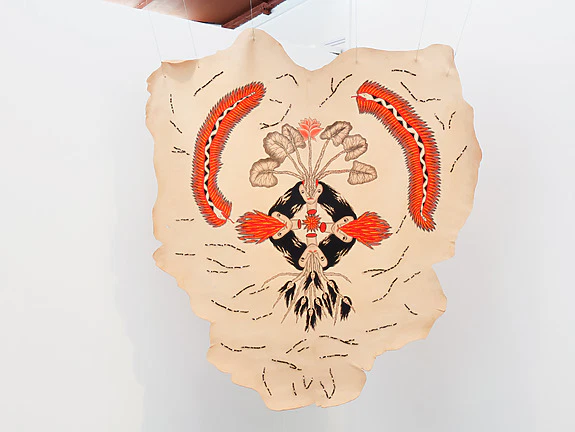
Citra Sasmita, Timur Merah Project XIV: Tribe of Fire 4, (2024). Photo: COURTESY OF YEO WORKSHOP.
The fair's global dimension is further enhanced by the presence of Southeast Asia, through Yeo Workshop in collaboration with G Gallery, which presents Citra Sasmita, Maryanto, and Noor Mahnun (Anum). Their works address the enduring legacy of colonialism, the construction of memory, and processes of cultural identity from intergenerational perspectives. In this sense, Frieze not only expands its geographical reach but also incorporates critical narratives that destabilize the traditional hierarchies of Western art history.
Taken together, this edition of Frieze New York confirms its dual nature: on the one hand, as a central platform in the global art market; on the other, as a space where critical discourses on cultural globalization, ecology, memory, and power dynamics are articulated. Between the spectacularization of the market and the conceptual density of some of the proposals, the fair reveals the constitutive tensions of contemporary art: its dependence on the economic system that sustains it and, at the same time, its capacity to question it.

You may be
interested
...