Exhibitions
The Venice Biennale 2026 and art in times of global fracture
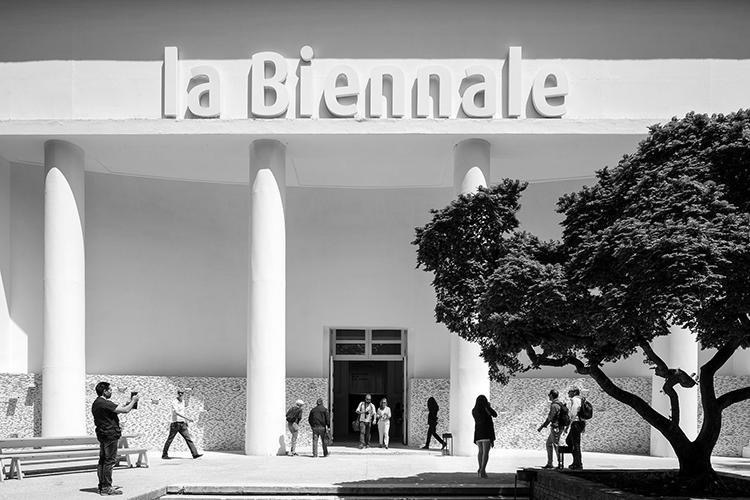
The 61st Venice Biennale International Art Exhibition, titled In Minor Keys and curated by Koyo Kouoh, will take place from May 9 to November 22, 2026, with pre-opening days on May 6, 7, and 8. As usual, the event will unfold in the iconic spaces of the Giardini, the Arsenale, and various locations throughout the city of Venice.
However, this edition is not presented solely as an artistic event, but as a reflection of contemporary tensions. The global context—marked by a political shift to the right following the COVID-19 pandemic, the impact of mass tourism and the climate crisis on a particularly vulnerable city like Venice, and a growing instability of the international order—inevitably permeates the curatorial discourse.
Kouoh's proposal seems to challenge the concept of a "benign internationalism," highlighting its shortcomings and contradictions. In this sense, the Biennial is rooted in a historical tradition linked to power structures inherited from colonialism—both in its classical and contemporary forms—as well as to the cultural dominance of the West and the hegemony of the United States. This backdrop transforms the exhibition into a space for observing, and even confronting, current geopolitical fractures.
The controversy quickly materialized. Russia's participation has generated a strong institutional reaction from the European Union. Executive Vice-President Henna Virkkunen warned that Brussels could suspend a two-million-euro grant awarded to the Biennale if a breach of the principles associated with said funding is confirmed.
Virkkunen was emphatic: she condemned the decision to allow Russian participation and underscored the symbolic contradiction of the opening coinciding with Europe Day. “It should be a day to celebrate peace, not for Russia to shine at the Biennale,” she declared. She also reiterated that European funds must protect democratic values and diversity, which, she asserted, are not respected in present-day Russia.
The warning was formalized following a notification sent on April 10 by the Education and Culture Executive Agency, which gave the Biennale 30 days to clarify its position. It has not yet been confirmed whether the institution has officially responded.
The institutional crisis has worsened with the mass resignation of the international jury , prompted by the presence of both the Russian and Israeli pavilions. Among those who resigned are president Solange Farkas, along with Zoe Butt, Elvira Dyangani Ose, Marta Kuzma, and Giovanna Zapperi.
For its part, the Biennale defended its decision by appealing to its founding principle of openness: any country recognized by Italy can participate. The institution reiterated its rejection of “any form of censorship of art and culture,” asserting the autonomy of the art world in the face of political pressure.

You may be
interested
...