
Exhibitions
Thread as memory: the vindication of textile art in contemporary times
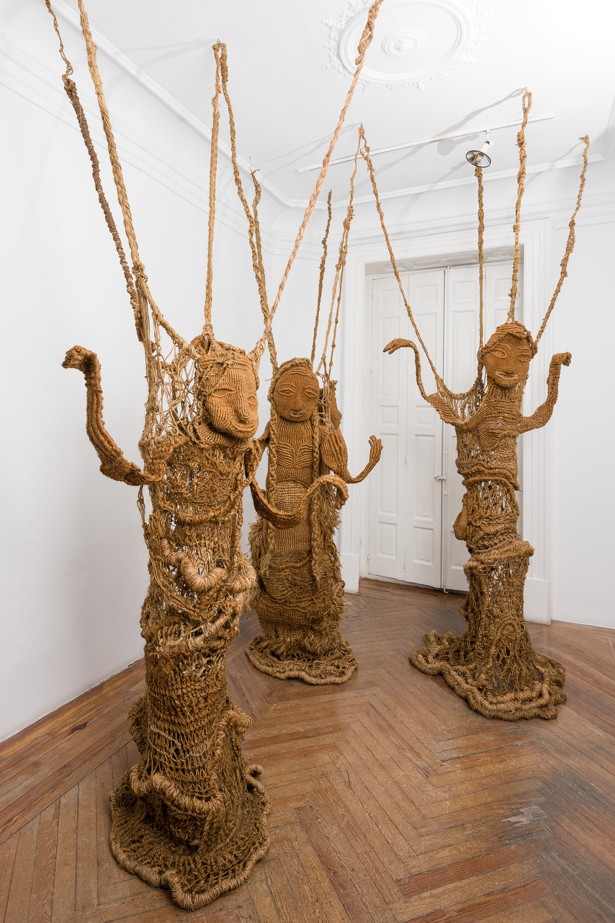
In recent years, textile art has moved from a marginal position to the heart of the contemporary art scene. Institutions such as the Museo Nacional Centro de Arte Reina Sofía (MNCARS) and the Museu d'Art Contemporani de Barcelona have made decisive contributions to this recognition with the major exhibition dedicated to Aurelia Muñoz. Meanwhile, the Galería José de la Mano is now reviving the work of Ester Chacón Ávila under the title Creaturas textiles (Textile Creatures ), furthering a process of historical reinterpretation that highlights forgotten artistic trajectories.
Born in Santiago, Chile in 1936, Chacón developed her career between New York in the 1960s and Paris from the following decade onward. Her approach to textile art was self-taught, which is reflected in a profoundly intuitive practice. Her early works—which she herself called “structures”—emerge from direct gesture: knots made without preliminary sketches, as if each piece responded to an organic, unpredictable, and almost playful language.
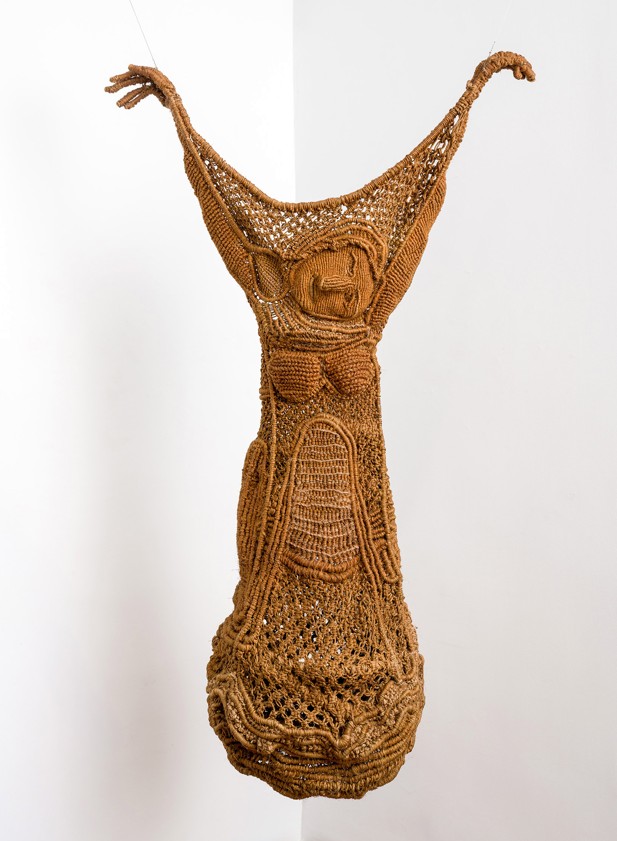
His work is marked by the context of the dictatorship established after the 1973 coup in Chile, which brought Pinochet to power. Like many Chilean artists of his generation, he experienced the impact of the democratic breakdown, repression, and exile—in his case, developing much of his career in Europe.
This context is especially reflected in pieces like Epitaph (1974), where textile language becomes a form of mourning and protest. Her works from the seventies and eighties are not explicit propaganda, but they do contain a clear political charge: they speak of loss, memory, violence, and displacement. In that sense, they function as an artistic response to the climate created by the Pinochet dictatorship.
Furthermore, some of her pieces have been interpreted—and used in subsequent exhibitions—as symbols of the Chilean political situation during that period. Her work connects with a broader line of Latin American artists who, from exile or distance, developed critical discourses against authoritarian regimes.
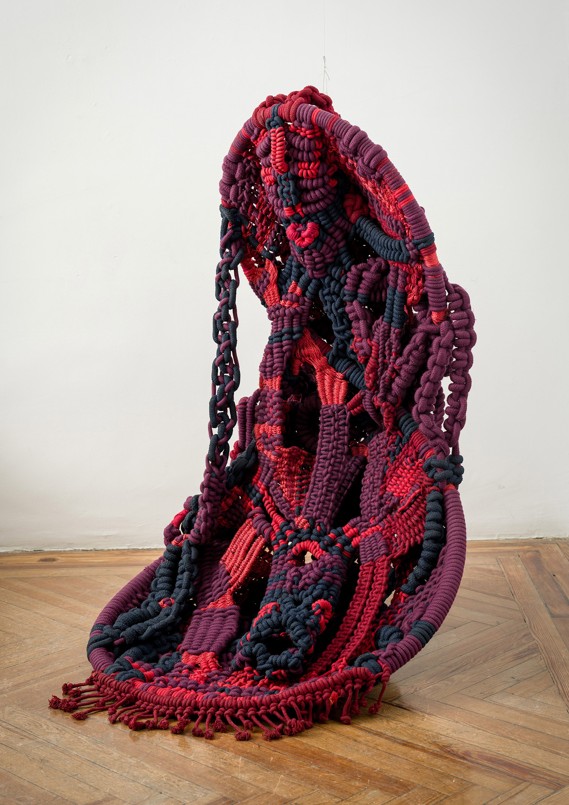
Chacón's creative universe is built from humble materials—raffia, hemp, wool, sisal, or cotton—transformed into volumes of great expressive power. In her hands, the act of knotting transcends the technical to become a narrative process. Each intertwined fiber seems to contain memory, thought, and emotion, evoking an ancestral tradition in which threads served to record stories, as with the Andean quipus.
This interest in the “art of knotting” led the artist to research in ethnographic and anthropological museums in Paris, where she studied Polynesian masks, oriental weavings, and symbolic textile systems. Drawing on these influences, Chacón transcended the realm of artisanal macramé to situate her work within the field of contemporary art, expanding the expressive possibilities of textiles.
The current exhibition brings together eight large-format pieces created between 1974 and 1988, a particularly significant period both in the evolution of her artistic language and in the political context that shaped her work. In these pieces, textiles become a space of resistance and reflection. Themes such as womanhood, motherhood, and displacement permeate her oeuvre, offering a critical reading of the present from an intimate and material sensibility. The forms, suspended between the organic and the symbolic, invite the viewer into a dialogue that oscillates between the personal and the collective.
You may be
interested
...